The Direct Buyer Answer
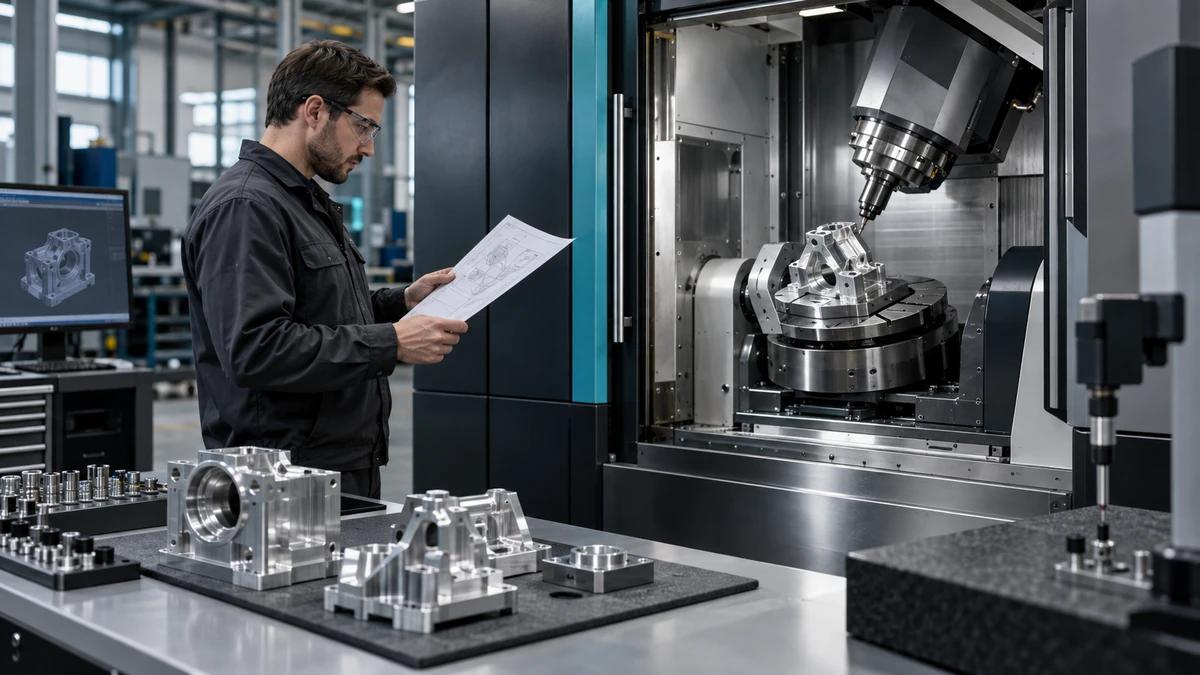
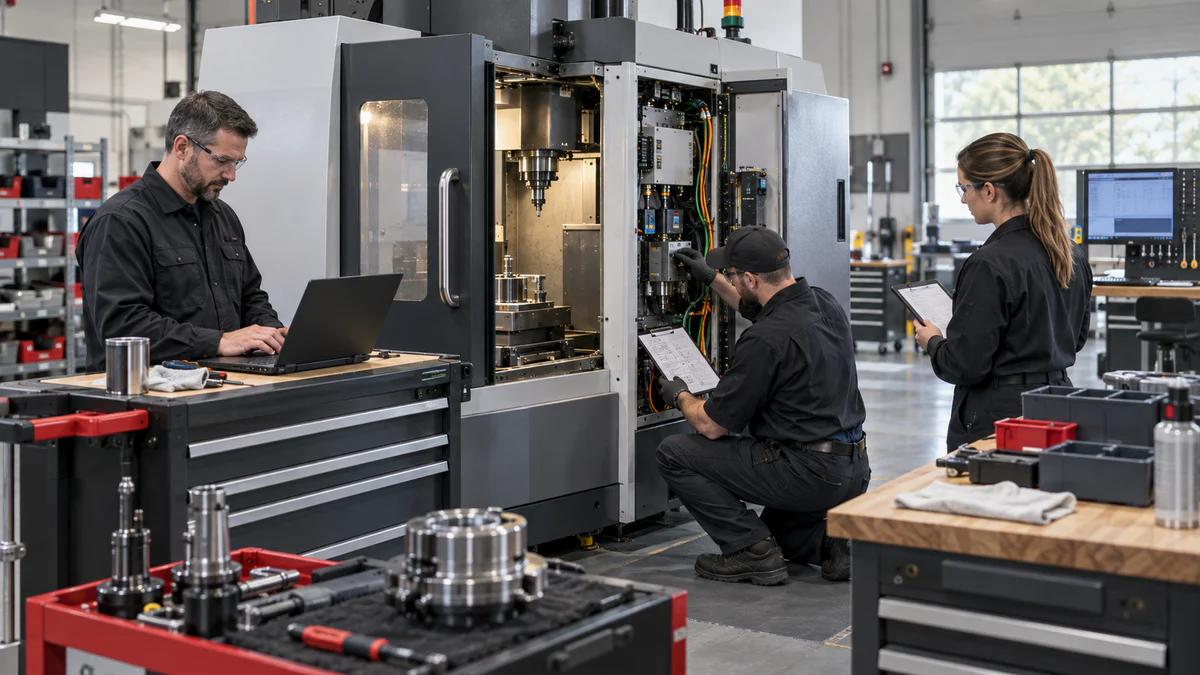
Prototype work rewards a controlled loop more than a heroic first part. For aluminum prototypes, the loop must connect billet, datum, thin-wall strategy, burr control, tool condition, inspection, design feedback and the next revision. Zhihe CNC frames a CNC milling machining center for aluminum prototypes as a learning system: each run should reduce uncertainty without turning temporary assumptions into permanent production claims.
Prototype Loop, Not One-Off Heroics: Working Map
| Loop stage | What changes hands | Proof to retain |
|---|---|---|
| Brief | Revision, material, stock and critical features | Released drawing and change list |
| Prepare | Fixture, tools, probes and program | Setup passport and checksum |
| Cut | Rough, finish, burr and chip route | Event notes and tool state |
| Inspect | Datums, dimensions and surfaces | Raw data and disposition |
| Learn | Issue, cause, change and owner | Revision decision record |
Write the Prototype Brief
Capture revision, alloy or material condition, stock allowance, critical surfaces, wall thickness, holes, threads, datum scheme and intended use. Mark what is exploratory and what must already meet a drawing limit. This prevents a prototype conversation from mixing visual learning with a final acceptance claim.
Add a change list from the previous revision. A small fillet, shifted hole or thinner wall can alter tool reach, clamping and inspection. Zhihe CNC recommends naming the feature owner so a later correction has a clear decision path.
Freeze the Billet and Datum
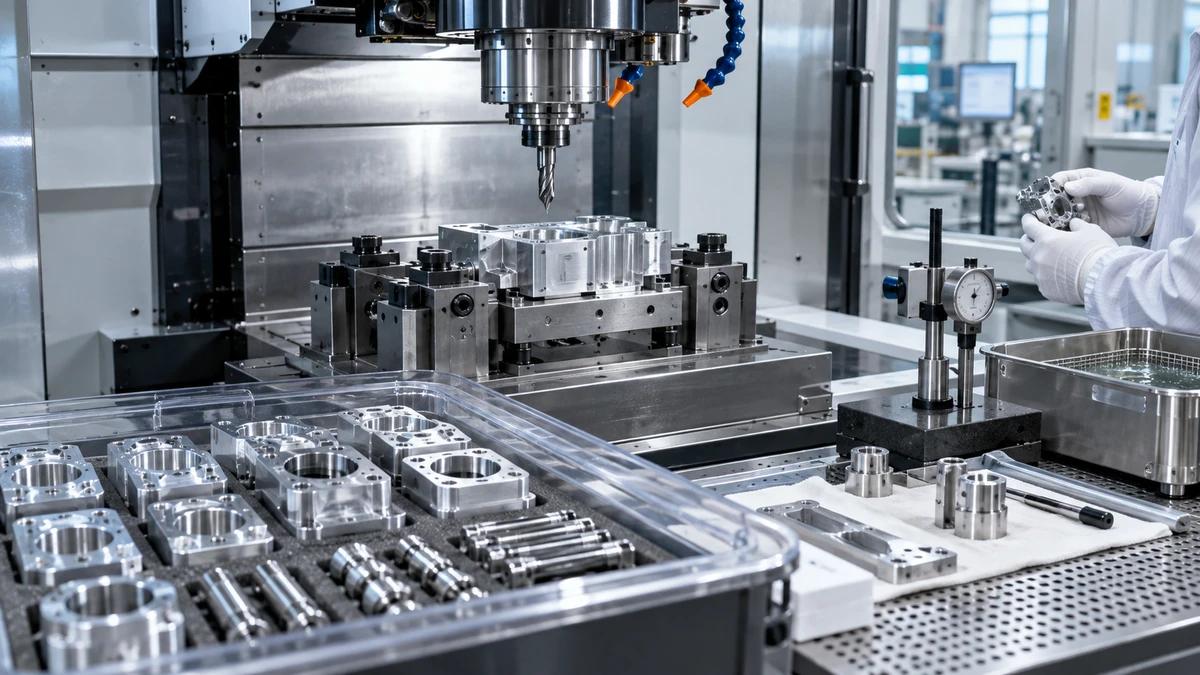
Record billet dimensions, flatness, saw condition, clamping faces, workholding sequence and probe references. Aluminum can move or distort when support is weak or stock removal is unbalanced. A controlled starting condition makes feedback useful instead of turning material variation into a design conclusion.
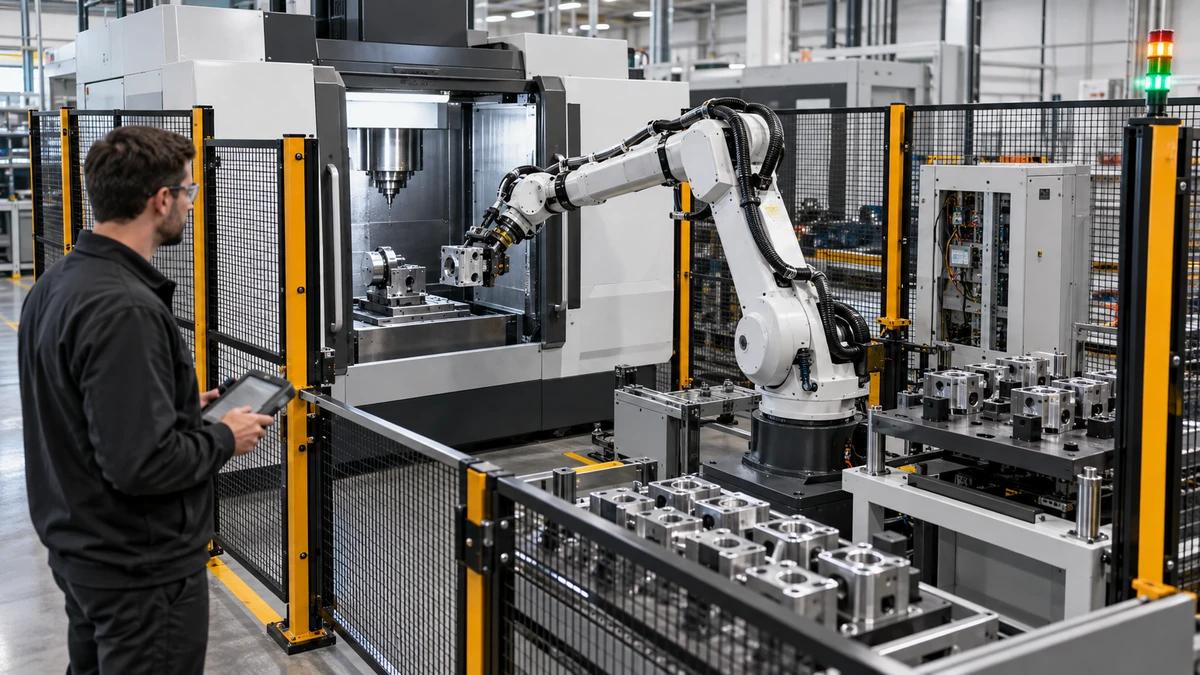
Trial load and unload the part. Check seating, clamp access, chip path and the measurement datum. For a CNC milling machining center for aluminum prototypes, repeatable seating is a prerequisite for comparing revisions.
Choose a Thin-Wall Strategy
Separate roughing, semi-finishing and finishing. State engagement, tool diameter, projection, stepdown, coolant, workholding support and the order of material removal. Keep a record of where walls are first exposed and when support changes.
Inspect the same wall locations before and after the finishing pass. If form changes with clamp release, preserve the evidence and correct the support or sequence before chasing machine parameters.
Control Burrs and Chips
List edges, slots, cross holes, pockets and intersections that can raise burr or recut risk. Define coolant, chip evacuation, deburring, cleaning and operator protection. A prototype is not useful when a burr hides a fit issue or a chip changes seating during inspection.
Observe a complete cycle including cleanup. Record who performs the work, how long it takes and what is checked before measurement. Zhihe CNC includes this support work in the loop rather than calling it free prototype labor.
Use a Revision Passport
Give each prototype a visible identity tied to drawing revision, billet, setup, program, tools, offsets, machine state, inspection file and disposition. Keep the passport with photos or marked-up features where useful. It should be possible to tell which evidence belongs to which design state.
When a correction is made, record the reason, affected feature, new revision and approval. Do not overwrite the previous result. This protects the learning trail when a prototype is shown to engineering, purchasing or a customer.
Make Inspection a Conversation
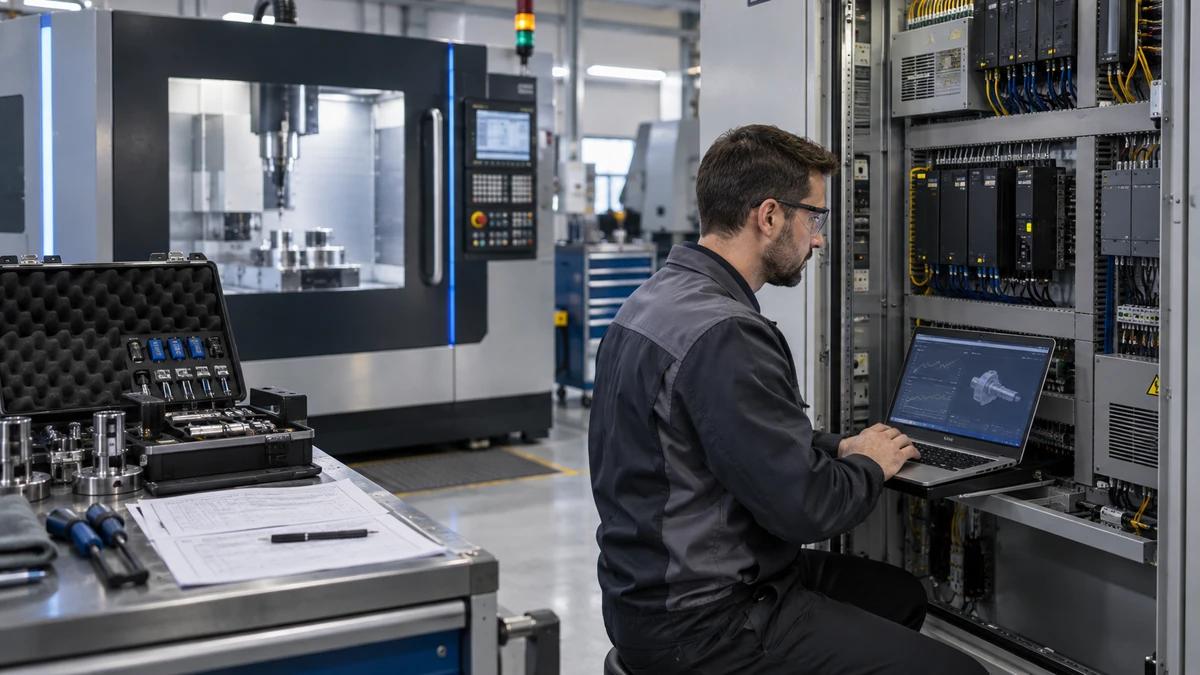
Review datum alignment, gauge method, calibration, sampling and raw data before cutting. For surfaces, state measurement locations and fixture condition. For holes, record size, position, depth, burr and tool state. The measurement plan should answer the design question behind each feature.
Separate “not yet measured” from “failed” and “accepted with limitation.” This language keeps the next iteration focused. A CNC milling machining center for aluminum prototypes should accelerate decisions, not create ambiguous status labels.
Run the First Learning Window
The first window confirms setup, program, tools and safety. It is not a universal capability demonstration. Record material, tool batch, coolant, temperature context, cutting events, interruptions and held work so later revisions can distinguish process learning from design learning.
Use a controlled stop or planned tool check. Record machine state, affected quantity, containment, retest and restart owner. Never create unsafe conditions just to make the loop look complete.
Feed Results Into Design
Translate each finding into a design action, process action, measurement action or open question. For example, a thin wall may need a geometry change, support change, path change or more defined inspection. Assign one owner and a target revision date.
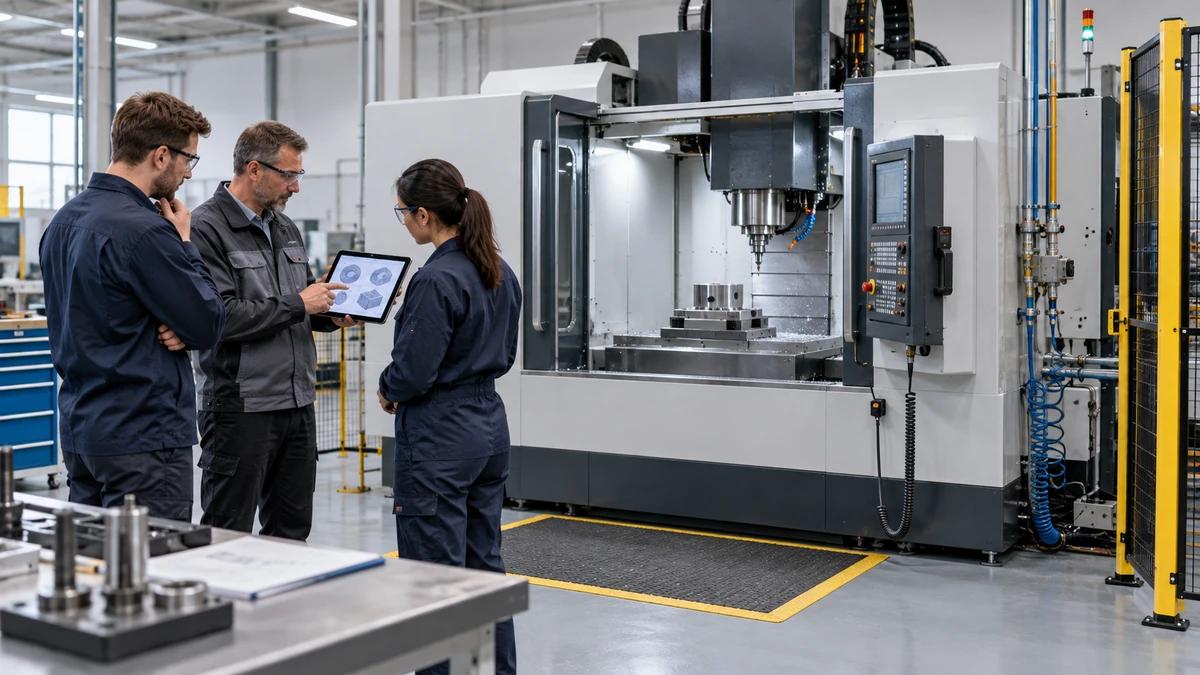
Zhihe CNC recommends a short review immediately after the raw data is available. Waiting until memory fades makes it harder to separate a design limitation from a temporary setup issue.
Compare Two Revisions
When practical, run the same critical features on two revisions or two controlled setups. Keep the same gauge route and record what changed. A paired comparison is stronger than a narrative that the latest part “looks better.”
State what the comparison cannot prove. Prototype evidence may not cover production volume, long tool life, automation or every material lot. Clear limits protect the next purchasing decision.
Estimate the Next Lot
Use the accepted prototype route to estimate setup, cutting, inspection, cleanup, tool replacement and revision risk. Do not invent savings or payback. State the volume, mix, operator coverage and support assumptions used in the estimate.
Ask which assumption is most likely to change. If it is the design, plan a revision gate. If it is tooling or inspection, plan a repeatability trial. Zhihe CNC keeps the estimate conditional until the evidence catches up.
Evidence Ledger
| Prototype signal | Possible cause | Next controlled action |
|---|---|---|
| Wall movement | Support, sequence, heat or release | Repeat with support and marked measurements |
| Burr variation | Tool edge, chip route or intersection | Check tool state and cleanup method |
| Hole drift | Datum, fixture, tool or program | Repeat probe and raw-data route |
| Surface change | Tool wear, engagement or clamping | Compare tool event and release state |
Protect the Learning Budget
Prototype teams have limited time, so decide which uncertainty deserves another cut and which can be closed through drawing review, simulation, measurement or supplier evidence. Put a timebox and owner on each question. A controlled loop helps the buyer spend effort on the feature most likely to change the design or the next process decision.
At the end of the loop, archive both the accepted result and the reasons a result was not accepted. The history becomes useful when a revision returns months later or when a production team inherits the prototype route. Zhihe CNC can then start from evidence instead of a remembered success story.
Keep the Prototype Route Comparable
When the next revision arrives, retain the same critical measurement points, setup identity and tool-state notes wherever the design allows. An aluminum prototype machining center route becomes more valuable when engineers can compare two revisions without wondering whether the fixture, probe or inspection method changed at the same time. Zhihe CNC recommends a short comparison sheet that names the feature, old result, new result, cause hypothesis and next owner.
Use the comparison to decide whether the aluminum prototype machining center should move toward a repeatable pilot lot, return to design, or remain an exploratory route. State the decision boundary in plain language. This prevents a fast prototype from being mistaken for a production qualification and gives purchasing a clear next step when the design is ready for a larger commitment.
Close the Prototype Gate
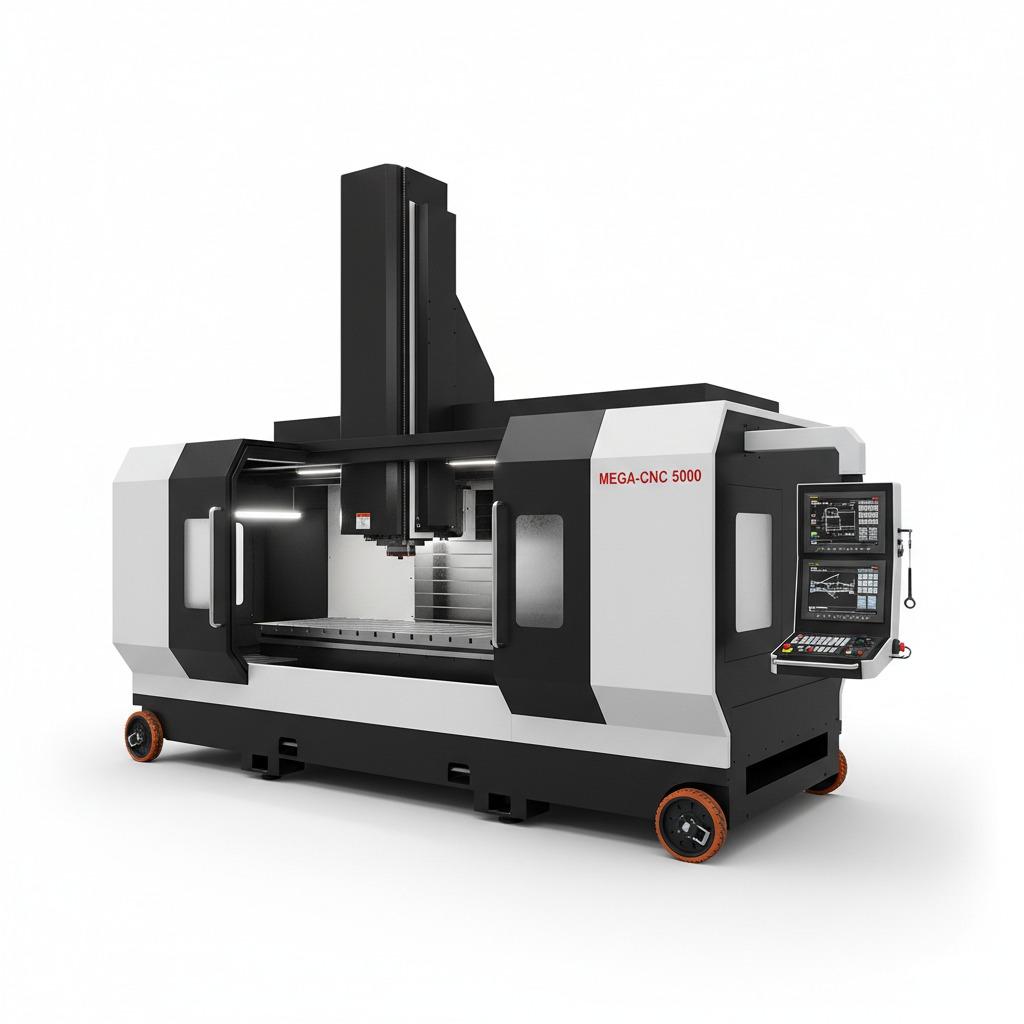
Treat the aluminum prototype machining center as a controlled learning route until the drawing, inspection, tools and production assumptions are released. The aluminum prototype machining center can support a strong decision when every revision carries its own passport and the evidence shows what changed.
Before moving to a pilot, ask whether the aluminum prototype machining center has demonstrated the required feature family, not just one attractive sample. Keep the unanswered question, evidence owner and review date visible so the next investment follows the actual design risk.
Buyer FAQ: aluminum prototype machining center
What makes prototype machining repeatable?
A revision passport linking billet, setup, tools, program, inspection and disposition.
Why is aluminum thin-wall work sensitive?
Material removal, support, heat, tool condition and clamp release can change form.
Should every prototype meet production tolerances?
Classify features clearly; exploratory learning and final acceptance should not be mixed.
How should burrs be reviewed?
Include edge locations, chip route, tool state, cleanup time and the inspection effect.
What is a revision passport?
It is an identity record for drawing revision, setup, tools, machine state, raw data and decisions.
How does Zhihe CNC handle a correction?
Zhihe CNC records cause, affected feature, new revision, evidence and approval owner.
When should two revisions be compared?
When the design question is important enough that a controlled paired comparison reduces uncertainty.
Can prototype cycle time predict production?
Only conditionally; include support work, mix, tool events, inspection and stated assumptions.
What should not be claimed from one prototype?
Do not claim universal capacity, tool life, automation readiness or material-lot performance.
What should buyers send first?
Send the drawing revision, alloy, stock, critical features, expected changes and inspection questions.
Bring the Decision to Zhihe CNC
Send Zhihe CNC the controlled drawings or CAD, material and stock, critical features, annual volume, batch mix, fixture concept, tool limits, inspection route, site conditions and service region. Review the Zhihe CNC product portfolio, the company and factory profile, and the engineering inquiry route. For aluminum prototype machining center, request a dated configuration, representative trial, acceptance boundary, open-assumption list and named support owner.
Reference Boundary
The ISO machining-centre reference and OSHA machine-guarding guidance offer machine-test or safeguarding context. They do not replace drawing-specific acceptance, local risk assessment, product certification, regulatory release or the buyer's operating procedures.