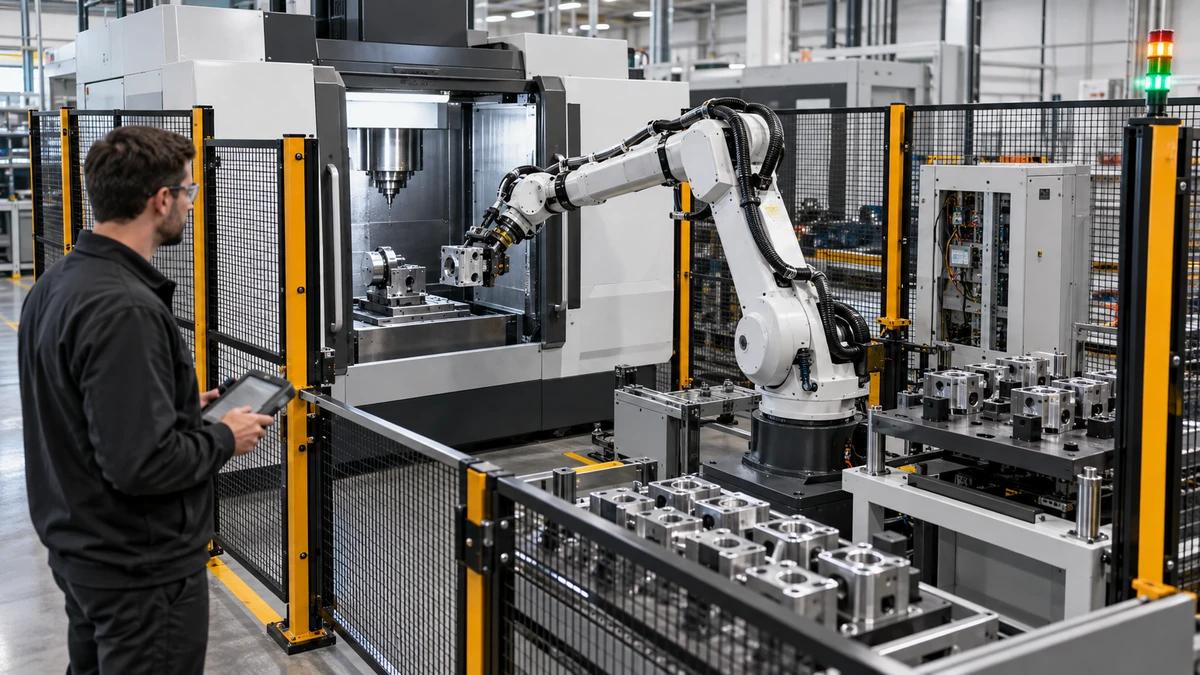
Custom CNC Machining Center Solution: From Workpiece Analysis to Machine Delivery
A custom CNC machining center solution should never begin with a random machine model. In real industrial purchasing, the smarter starting point is always the workpiece. What material is being machined? How large is the part? Which surfaces need precision? Is the process mainly milling, drilling, tapping, contouring, or multi-face machining?
These questions sound basic, but they decide almost everything that follows.
Many buyers first ask for a vertical machining center, a five-axis machining center, or a drilling and tapping center. That is understandable. Machine categories are easy to discuss. The problem is that a machine category does not automatically solve a production problem. Two buyers may both ask for a CNC machining center, but one is machining aluminum profiles, another is producing mold cavities, and a third is making automotive housings with tight hole-position requirements. Their machines should not be selected in the same way.
For a manufacturer such as Zhongshan Zhihe CNC Technology Co., Ltd., the value of a custom solution is not just selling equipment. It is helping the buyer connect the part family, machining process, control system, fixture method, and delivery support into one workable plan.
Why Workpiece Analysis Comes First
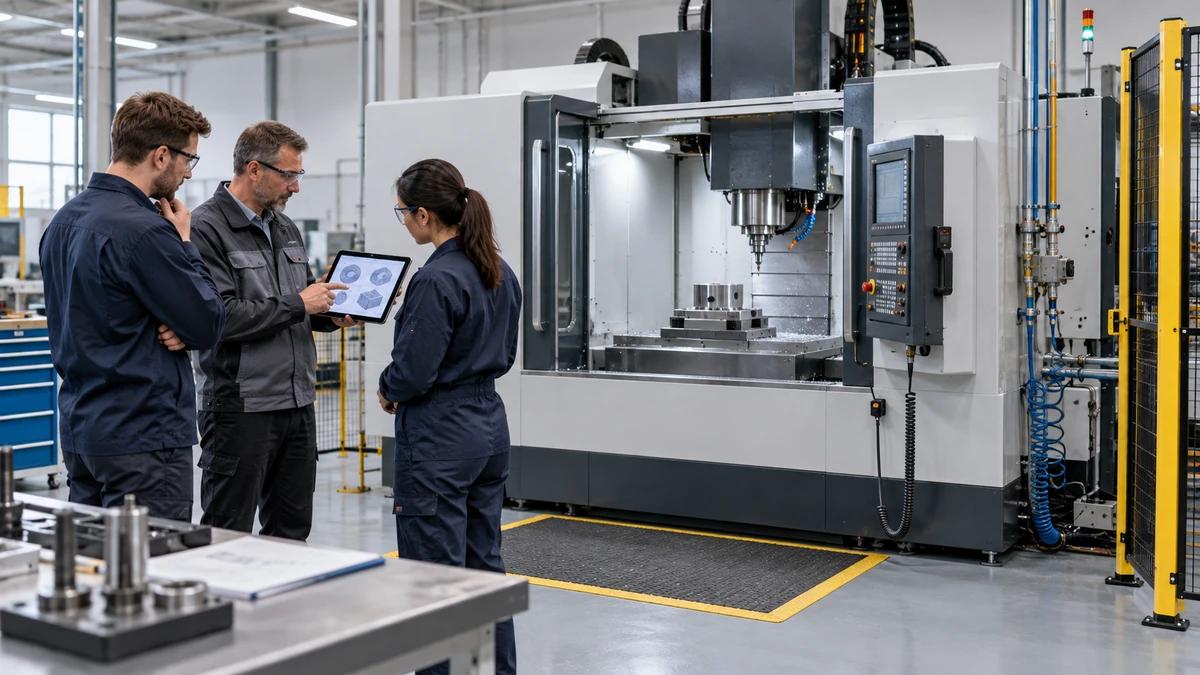
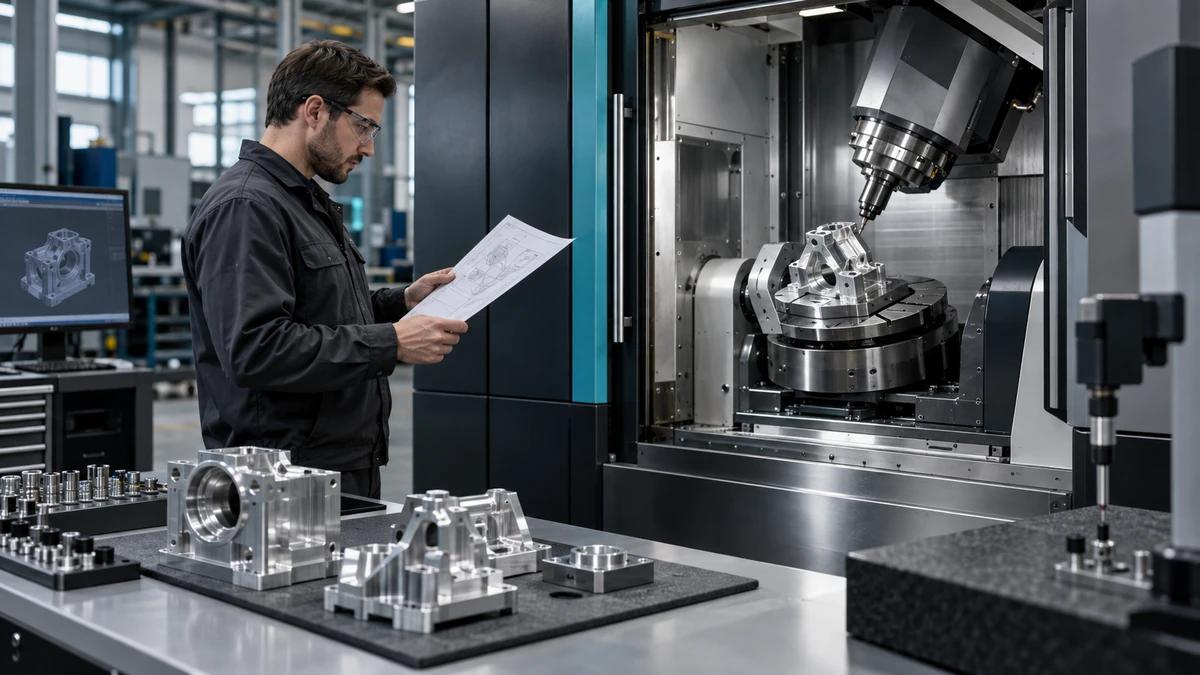
A CNC machining center is only useful when it matches the parts it will produce. That is why a custom CNC machining center solution usually begins with drawings, material information, tolerance requirements, surface finish expectations, and production volume.
A workpiece drawing shows more than size. It tells engineers where the machining risk may appear. Deep cavities, thin walls, long profiles, multi-face features, angled holes, and tight datum relationships can all influence machine choice.
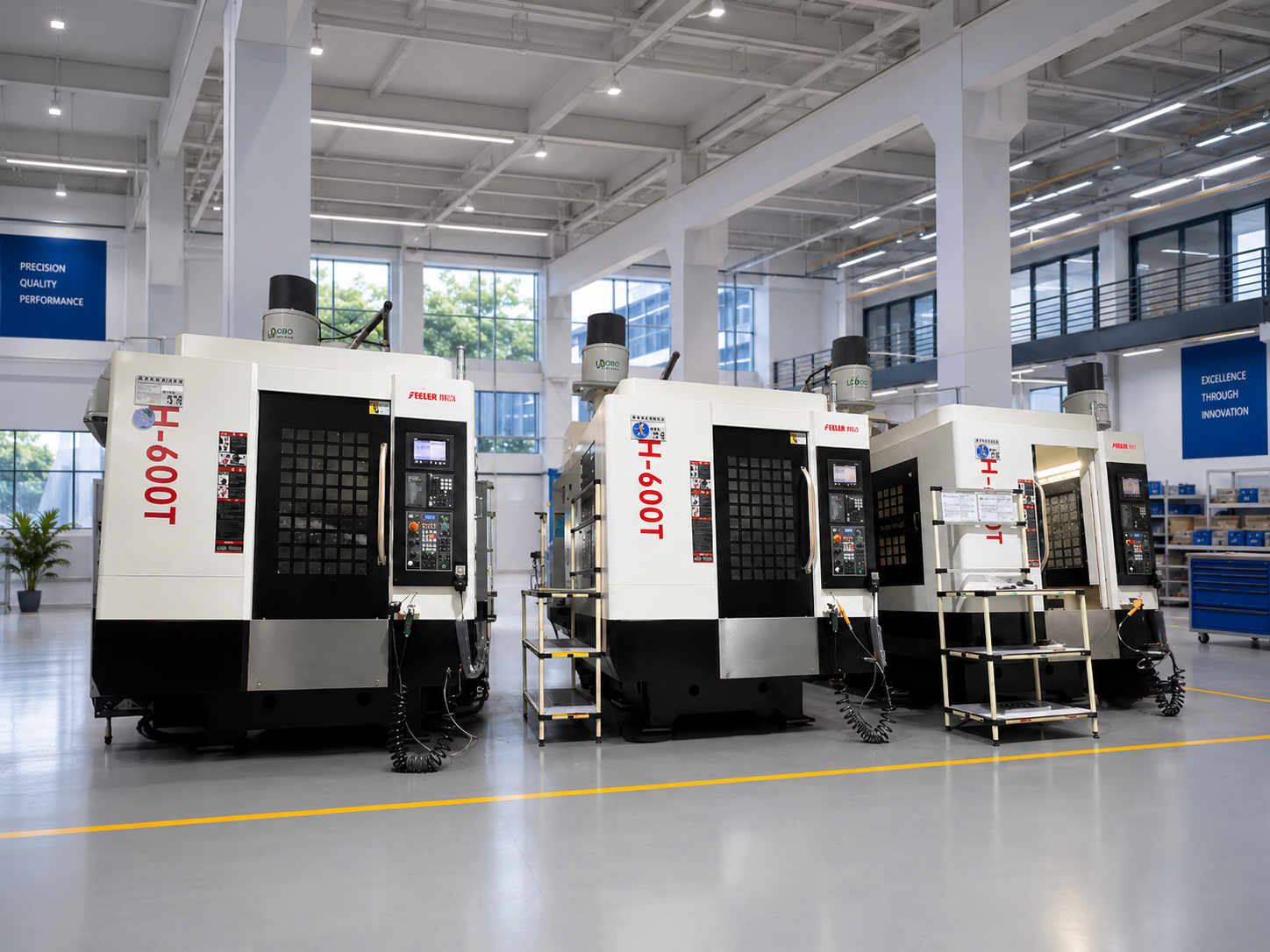
For example, long aluminum profiles may need a vertical profile machining center with extended X-axis travel. Medium-sized housings may need a rigid vertical machining center. Complex aerospace or automotive components may require a five-axis trunnion machining center. Small precision parts with many holes and threads may be better suited to a drilling and tapping center.
That is why the first question should not be “Which machine is cheapest?” It should be “Which machine can make this part repeatedly, safely, and profitably?”
Matching the Machine Type to the Part Family
Different part families create different machining demands. A good CNC machine tool supplier should help buyers compare these needs before giving a recommendation.
| Workpiece Type | Common Machining Need | Suitable Machine Direction |
|---|---|---|
| Long aluminum or steel profiles | Milling, drilling, rigid tapping along long strips | Vertical profile machining center |
| Medium-sized housings and discs | Heavy cutting, drilling, tapping, flatness control | Heavy duty vertical machining center |
| Small precision parts | High-speed drilling, tapping, light milling | Drilling and tapping center |
| Complex multi-face components | Angled surfaces, 5-side machining, contouring | 5-axis trunnion machining center |
| Mold cavities and dies | Roughing, semi-finishing, finishing accuracy | High rigidity vertical machining center or 5-axis machine |
This comparison prevents overbuying and underbuying. A factory does not need a five-axis machine for every part. At the same time, using a simple three-axis platform for a complex multi-face component may lead to too many setups, poor consistency, and unnecessary rework.
A custom CNC machine solution should make this choice clearer, not more complicated.
Process Planning Is More Important Than a Specification List
Specifications matter, of course. Travel range, spindle speed, spindle taper, rapid traverse, table load, control system, tool magazine, and axis structure all affect machine performance. But specifications alone do not explain whether the process will work.
A buyer should ask how the part will actually be produced. Will the first operation be rough milling? Will the part need drilling and tapping before finishing? Does the workpiece require side machining? Can the part be completed in one setup, or will it need multiple operations?
This is where a CNC machining center manufacturer needs practical engineering experience. A machine may have enough travel, but the fixture may block tool access. The spindle may be fast, but not suitable for the cutting load. The machine may look accurate, but the part may still deform if the clamping method is wrong.
A proper solution connects the machine with the process.
Fixture Support Can Decide the Final Result
Fixtures are often treated as a small detail. They are not.
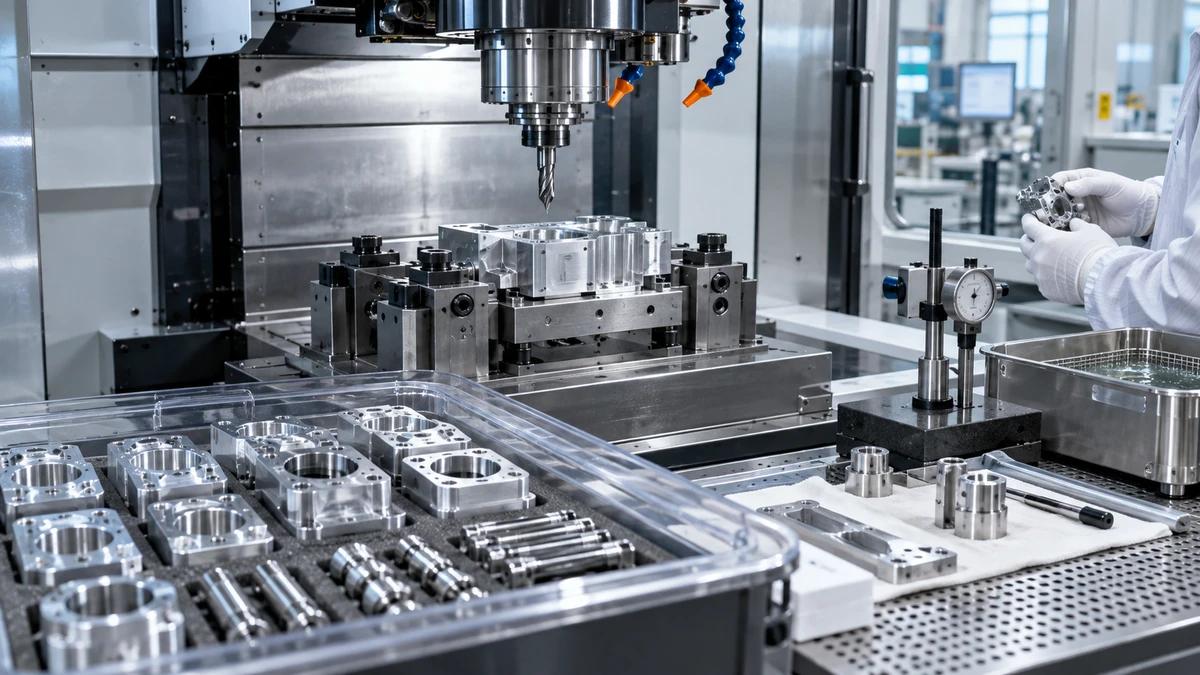
For many industrial parts, the fixture decides whether the machine’s capability can actually be used. A weak fixture can cause vibration. A poorly planned fixture can hide important surfaces. A complicated fixture can slow down loading and unloading. If the workpiece is thin or irregular, clamping force may even deform the part before machining starts.
That is why CNC fixture support is an important part of a custom CNC machining center solution. The buyer should discuss workpiece positioning, datum selection, clamping points, tool access, and loading efficiency before the machine is delivered.
For batch production, fixture planning becomes even more important. A few seconds saved in loading may not matter for one prototype. Across hundreds or thousands of parts, it becomes real money.
Control System Selection Should Match the Factory Team
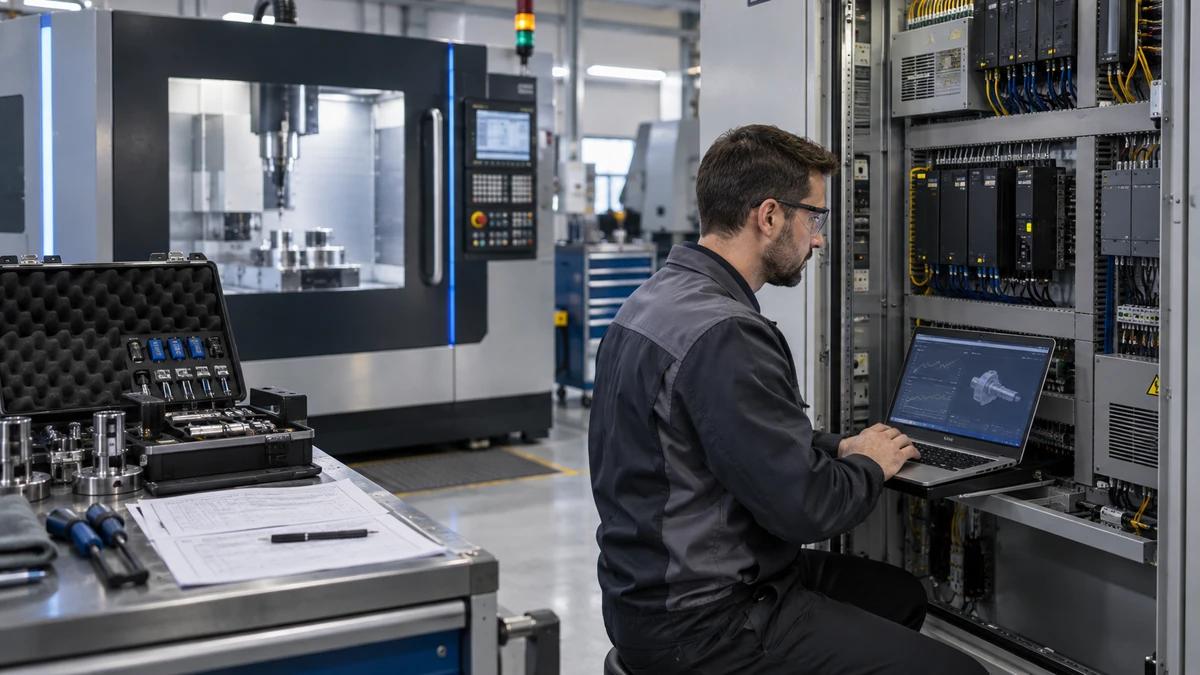
A CNC controller is not just an electronic component. It affects programming workflow, operator training, service support, and daily production habits.
Some factories prefer Mitsubishi control systems. Others may use different CNC platforms depending on their existing machines and operator experience. When selecting a custom CNC machining center, buyers should consider whether their team can quickly adapt to the control system.
A machine that is technically strong but difficult for the workshop to operate may not deliver full value. Training, documentation, and after-sales support should be included in the selection discussion.
For procurement teams, this point is easy to overlook. For production managers, it is obvious: the best machine is the one the team can run correctly every day.
Trial Cutting Gives Buyers More Confidence
Before final machine confirmation, trial cutting can be extremely useful. It gives both sides a chance to test the part, tools, fixture concept, cutting parameters, surface quality, and cycle time.
A CNC trial cutting service is especially valuable when the buyer has a difficult part family. Mold parts, automotive housings, 3C aluminum frames, aerospace structural parts, and complex precision components all benefit from real cutting verification.
Trial cutting may reveal problems early. Maybe the tool path needs adjustment. Maybe the fixture should be improved. Maybe the machine type should be changed. Discovering these issues before delivery is far better than discovering them after installation.
In serious B2B equipment purchasing, trial cutting is not a formality. It is a risk-control step.
From Machine Manufacturing to Delivery
Once the solution is confirmed, the process moves into machine manufacturing, assembly, inspection, packing, and shipment. Buyers should ask about the expected production schedule, factory acceptance process, packaging method, and delivery documentation.
For export buyers, packaging matters. A CNC machining center is a heavy precision machine. It must be protected against vibration, moisture, transport impact, and handling damage. The buyer should also confirm spare parts, manuals, installation requirements, and commissioning support.
Machine delivery is not the end of the project. It is the point where the factory begins to turn the investment into output.
Installation, Training, and After-Sales Support
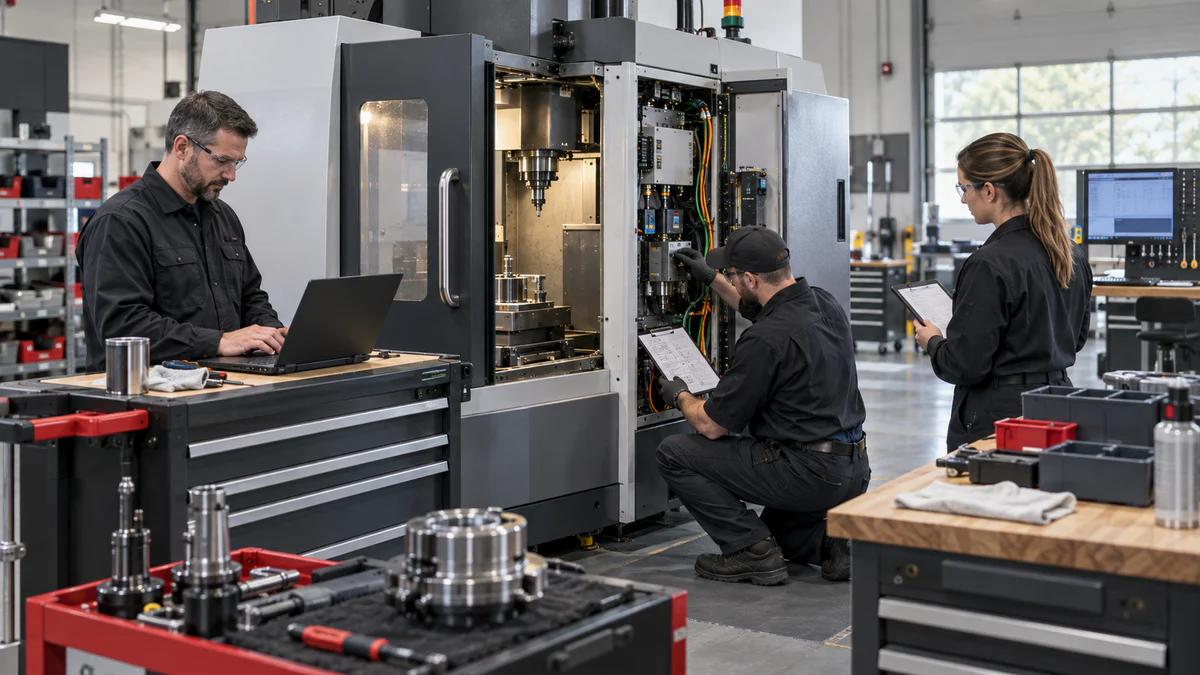
A custom CNC machining center solution should include installation and training support. Operators need to understand machine operation, daily maintenance, safety checks, lubrication, tool setup, and basic troubleshooting.
For buyers introducing a new machine type, training is even more important. A workshop that is familiar with standard vertical machining centers may need more preparation before using a five-axis trunnion machine. A team adding high-speed drilling and tapping capacity may need guidance on tool selection, tapping parameters, and chip control.
After-sales support also affects long-term confidence. Spare parts, service response, technical communication, and maintenance guidance all influence the actual cost of ownership.
Common Mistakes Buyers Should Avoid
One common mistake is asking for a price before sharing enough technical information. Without drawings, materials, tolerances, and production volume, the supplier can only give a rough recommendation.
Another mistake is buying based on maximum machine capability. A larger or more advanced machine is not always better. If most parts are simple, the buyer may pay for capacity that is rarely used.
A third mistake is ignoring fixtures and trial cutting. The machine may be correct, but the process can still fail if clamping and cutting strategy are not properly planned.
The final mistake is treating delivery as the finish line. In reality, installation, training, and early production support decide whether the machine reaches stable output.
FAQ
What is a custom CNC machining center solution?
It is a machine selection and production planning process based on the buyer’s workpiece, material, tolerance, machining operations, fixture requirements, output target, and factory conditions.
What information should buyers provide before requesting a solution?
Buyers should provide drawings, part dimensions, material, tolerance requirements, surface finish needs, batch quantity, existing production problems, and preferred control system if available.
Why is fixture planning important?
Fixture planning affects clamping stability, machining accuracy, tool access, loading efficiency, and repeatability. A good fixture helps the machine perform as expected.
Is trial cutting necessary?
For simple parts, it may not always be required. For complex, high-value, or batch production parts, trial cutting is strongly recommended because it verifies the real process before delivery.
Conclusion
A custom CNC machining center solution is not just a machine quotation. It is a complete path from workpiece analysis to machine selection, fixture planning, trial cutting, delivery, installation, and after-sales support.
For B2B buyers, this approach reduces risk. It helps avoid unsuitable machines, unstable processes, and costly corrections after installation. The best solution begins with the real part and ends with stable production on the shop floor.