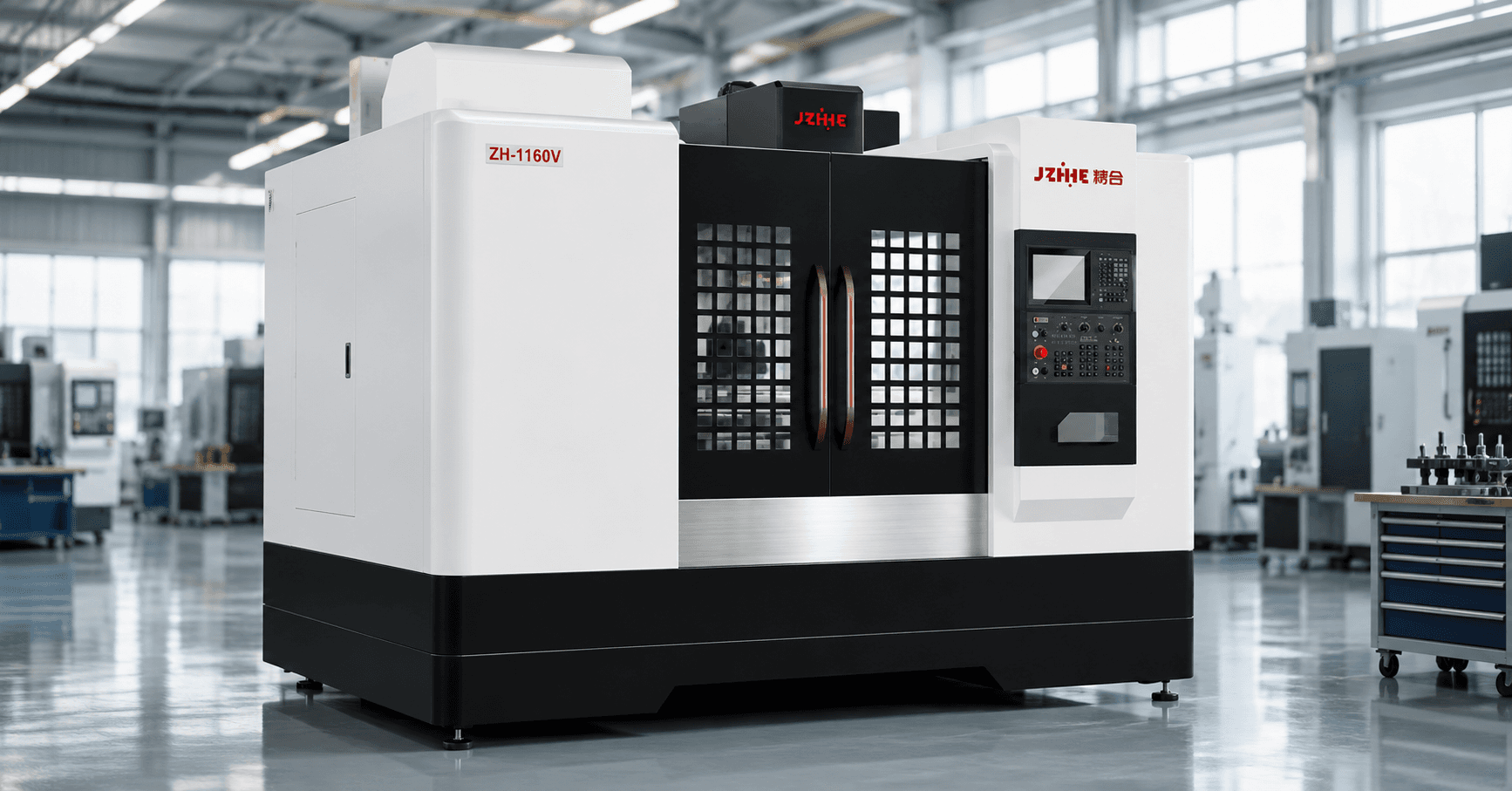
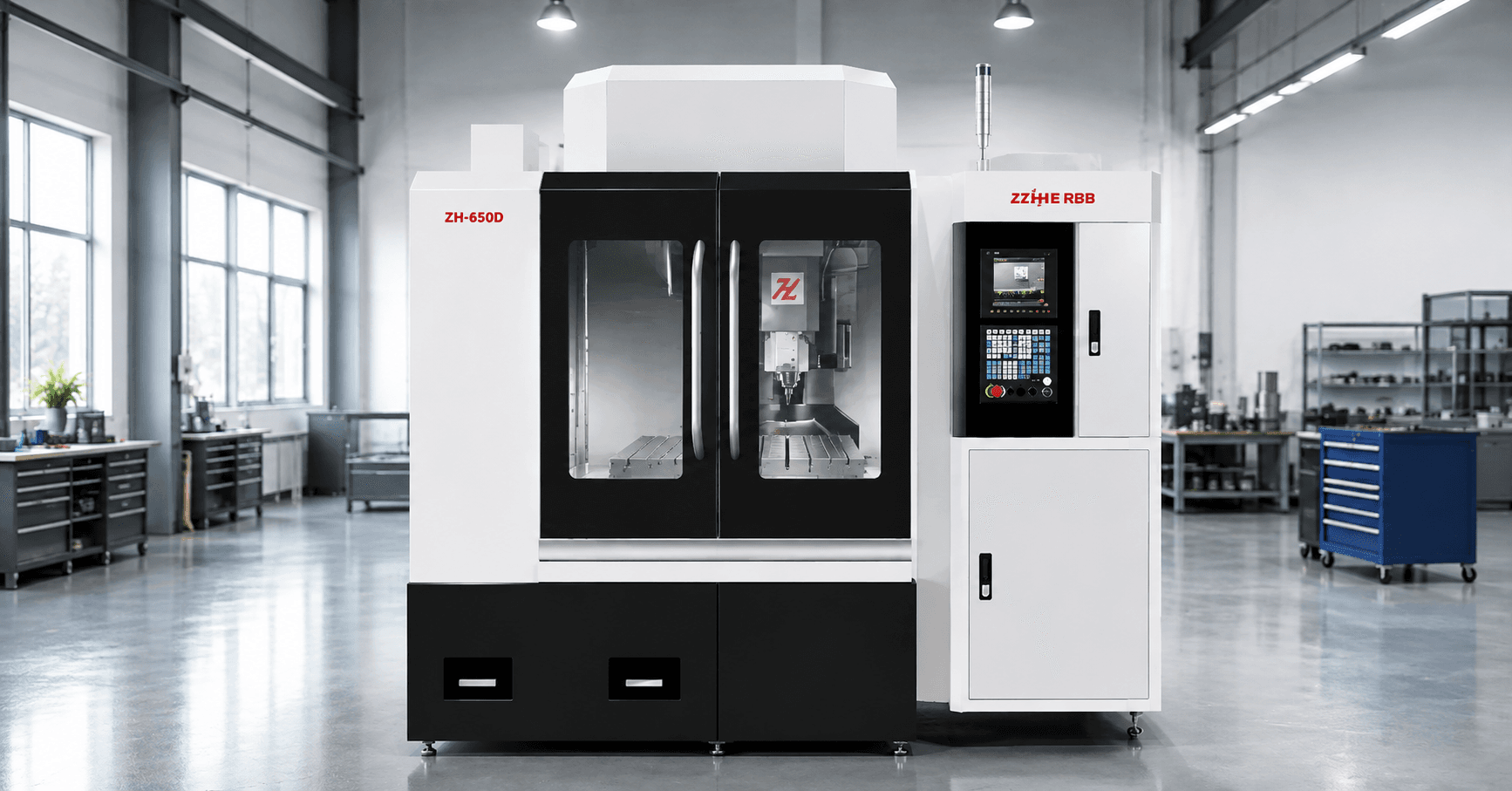
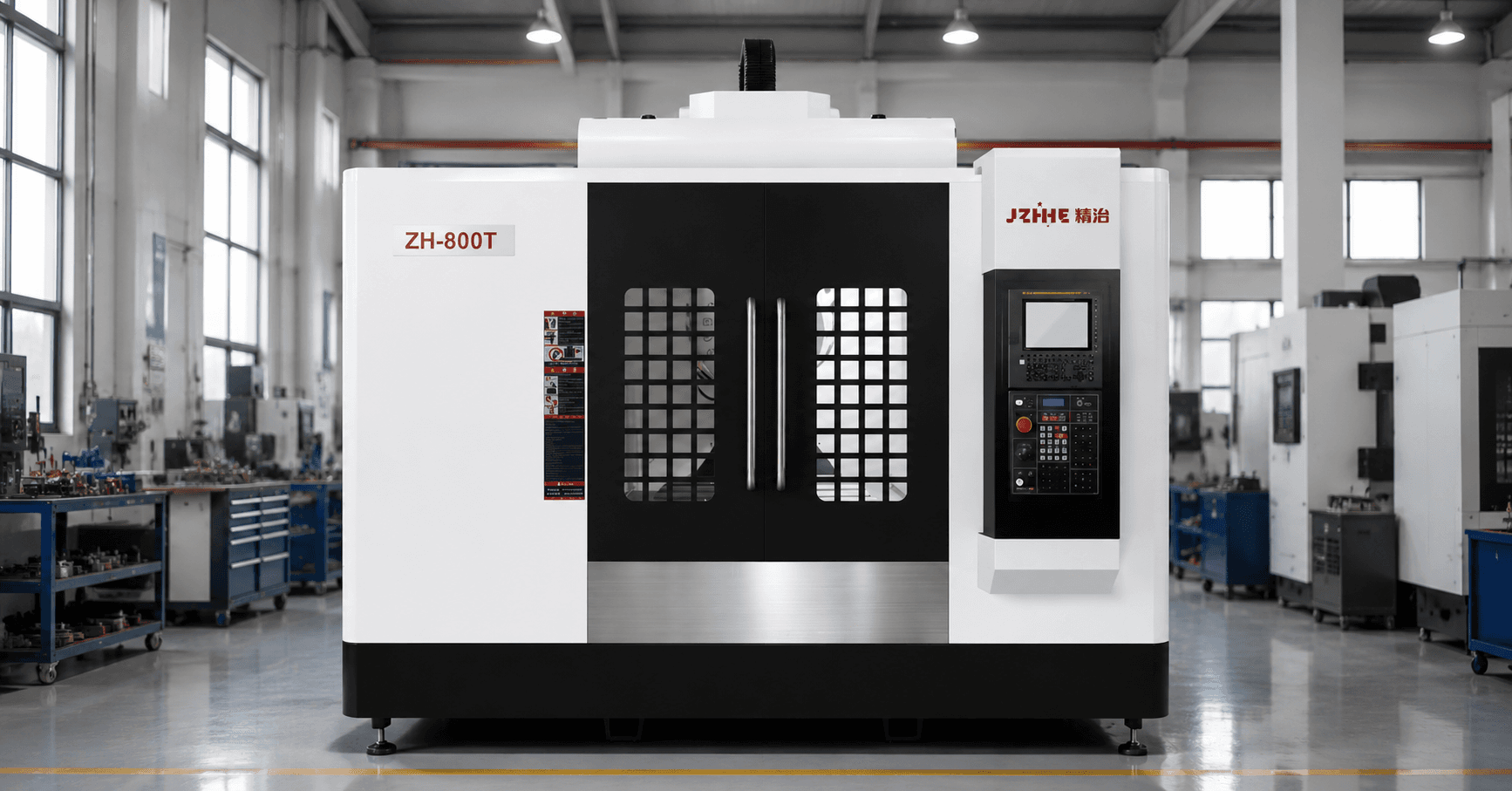
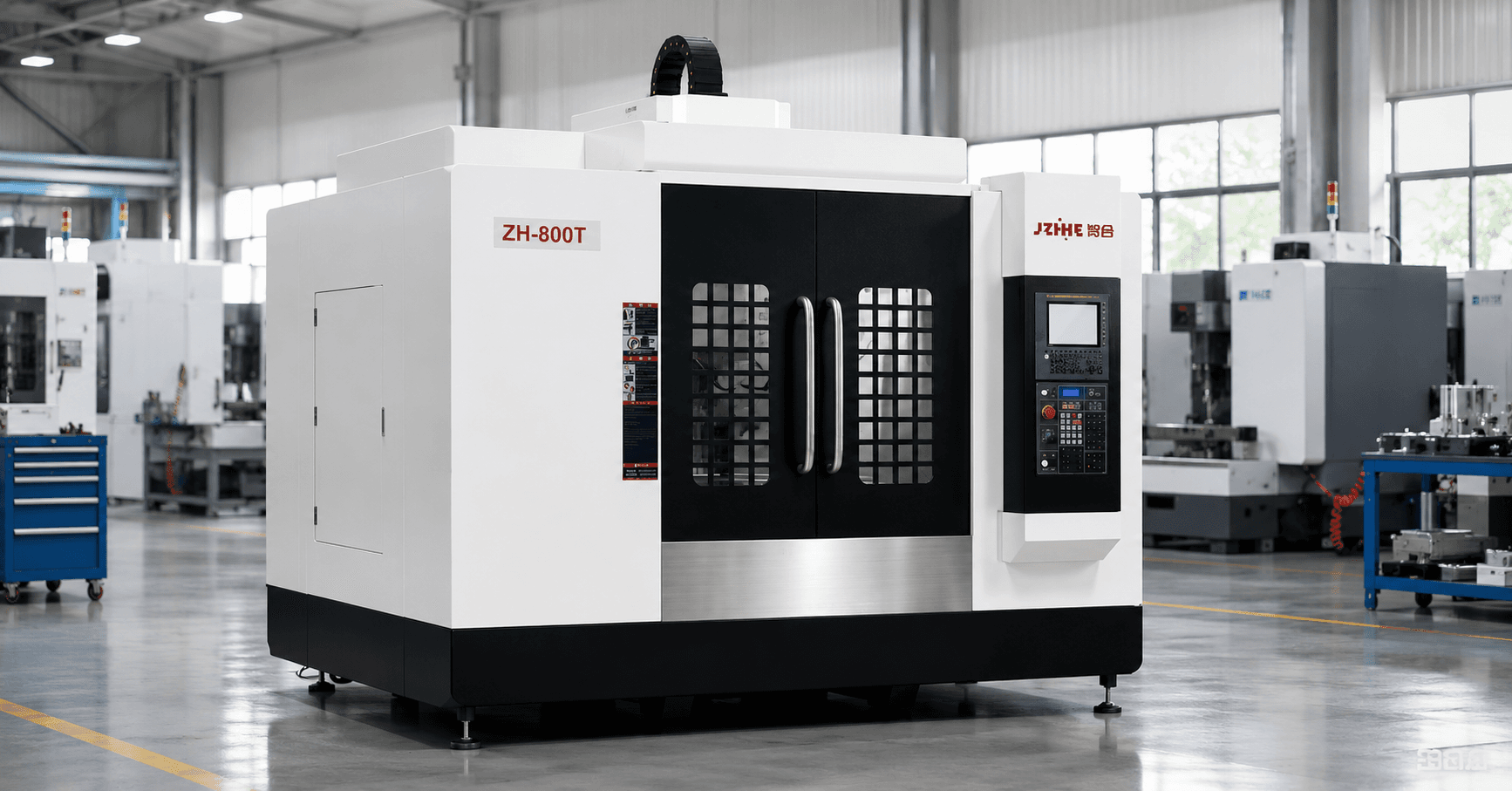
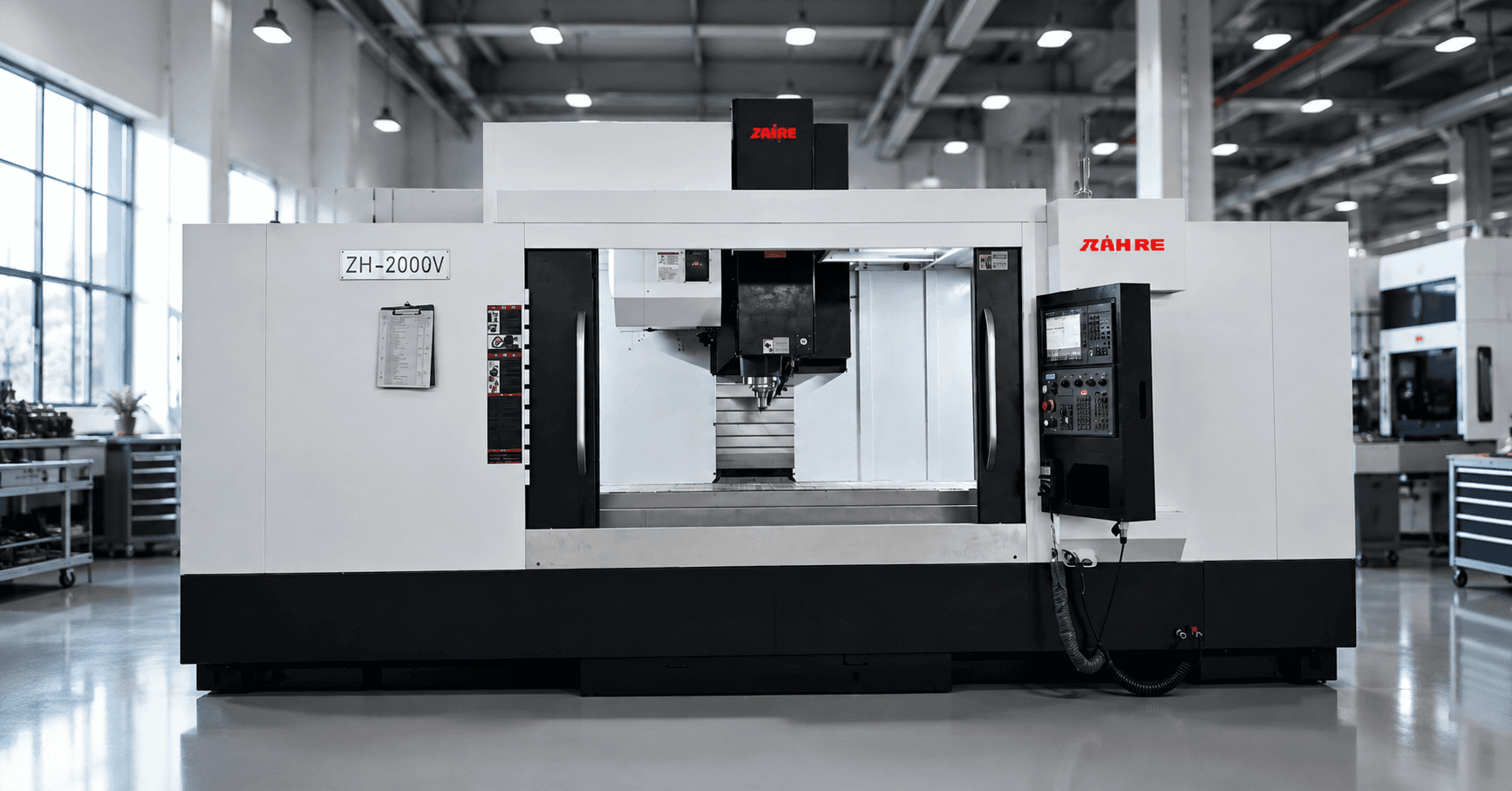
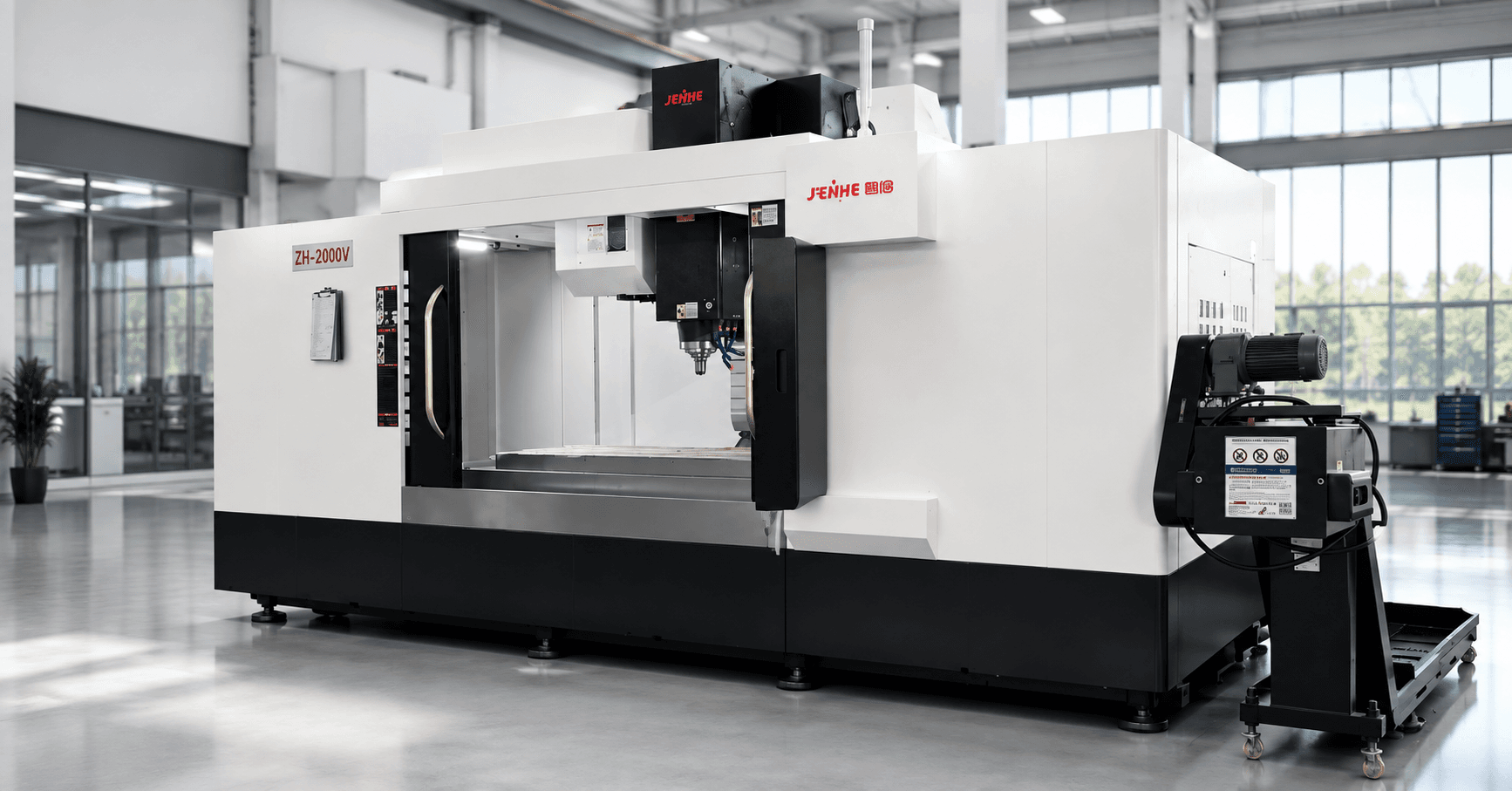
Gantry Machining Center Features: Why Fixed-Beam Structure and Hybrid Guideways Matter
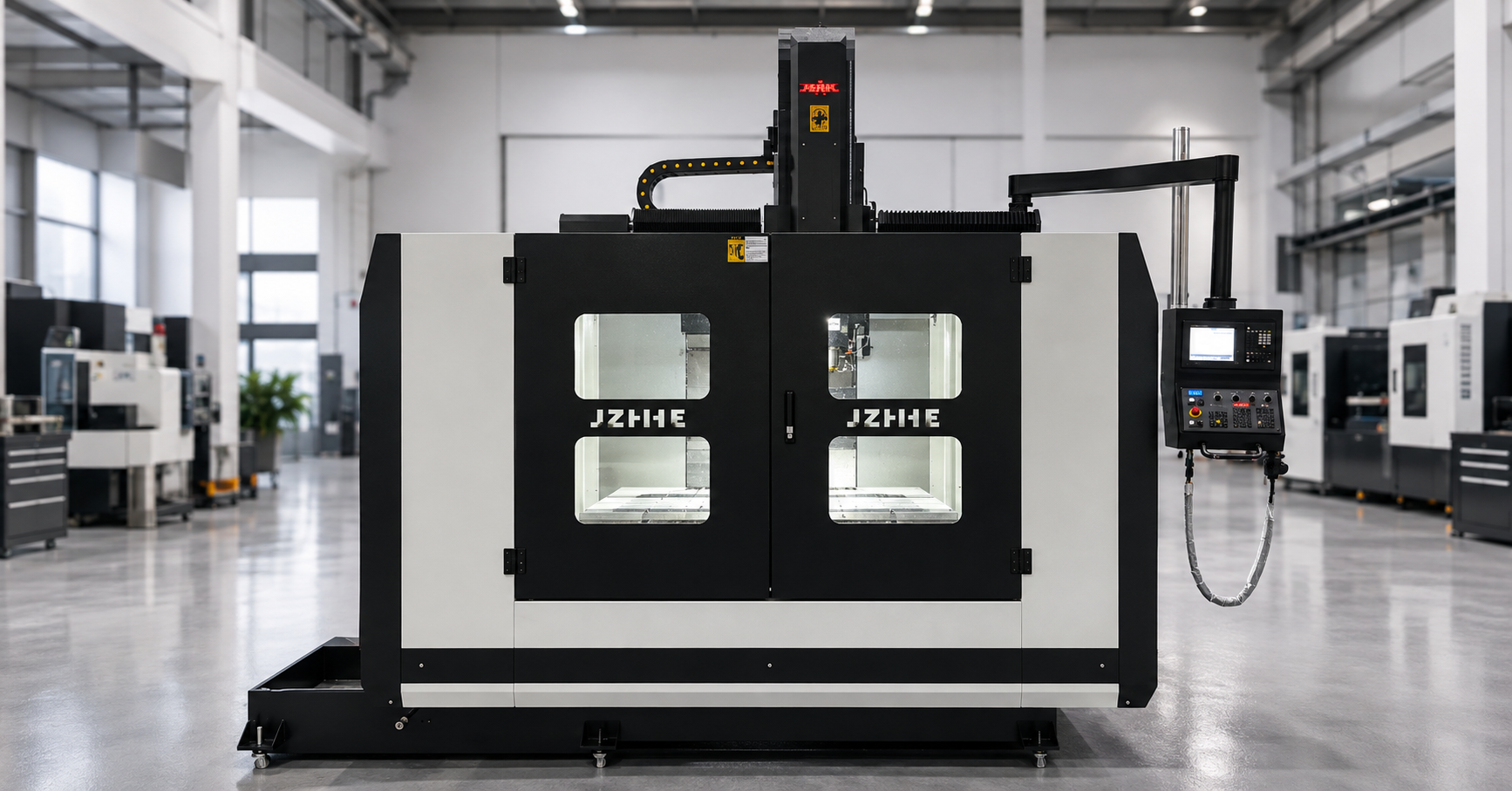
When buyers compare gantry machining centers, they often start with visible size. How large is the machine? How big is the working area? Can it handle a large mold or heavy plate?
Those questions are necessary, but they are not enough.
A high rigidity gantry machining center is not defined only by size. It is defined by how the structure behaves under load, how the axes move, how the machine manages vibration, and whether it can support both heavy roughing and precision finishing. For buyers, these details affect cycle time, surface quality, tool life, rework, and long-term ownership cost.
The Zhihe CNC gantry machining center highlights three important features: a fixed-beam gantry structure, an advanced guideway configuration, and a design aimed at long-term precision retention in heavy-duty industrial machining. These are the features buyers should understand before comparing it with ordinary CNC machines.
Product Feature 1: Fixed-Beam Gantry Structure
The product page states that this gantry machining center adopts a fixed-beam structure where both columns and crossbeam remain stationary while the worktable moves along the X-axis. This architecture is designed to minimize thermal deformation and provide a stable foundation for high-precision and high-efficiency machining.
From a buyer’s perspective, this matters for three reasons.
The first is rigidity. Large workpieces create large cutting forces. A fixed-beam frame can provide stronger structural support than lighter open designs.
The second is stability. When machining long or heavy parts, any deformation in the machine structure may show up as poor flatness, misaligned features, or surface quality issues.
The third is long-cycle accuracy. Heavy-duty parts are often not finished in a few minutes. Some large molds, bases, and structural components may require long machining cycles. A machine that loses stability after warming up can create problems late in the process, when the part is already expensive.
In other words, fixed-beam structure is not only a machine design choice. It is a production-risk control feature.
Product Feature 2: Heavy-Duty Roller Linear Guides on X/Y Axes
The X and Y axes use high-rigidity heavy-duty roller linear guides. According to the page, these guides provide strong load-bearing capability and dynamic responsiveness.
This matters because a gantry machine must often move large workpieces or perform long axis movements. Smooth motion helps efficiency. Load-bearing capability helps stability.
For buyers, roller linear guides can be especially useful when the machine needs both productivity and precision. A slow, rigid machine may remove material but reduce efficiency. A fast but weak machine may move quickly but suffer under cutting load. The goal is balance.
The Zhihe CNC design aims to support high-speed feed performance while still maintaining heavy-duty cutting capability. That balance is important for factories that need rough milling and finishing on the same platform.
Product Feature 3: Four-Sided Rectangular Hard Rail on Z-Axis
The Z-axis uses a four-sided embracing rectangular hard rail structure. The product page states that this delivers torsional rigidity and resistance to offset loads during aggressive cutting operations.
This is a feature buyers should not overlook.
The Z-axis often carries the spindle head and cutting force directly. During deep cavity machining, heavy milling, or interrupted cutting, the tool may experience side loads and vibration. A weak Z-axis can create chatter, poor surface finish, and unstable tool life.
A hard rail structure can improve support under heavy cutting conditions. The four-sided embracing design suggests that the Z-axis is supported from multiple directions, improving resistance to twisting and offset force.
For buyers machining deep cavities, large molds, heavy structural parts, or interrupted surfaces, this feature can matter more than headline feed speed.
Product Feature 4: “Two Linear Guides + One Hard Rail” Hybrid Configuration
The product page describes an innovative “two linear guides + one hard rail” hybrid configuration. It is intended to balance high-speed feed, heavy-duty cutting, stable rough machining, and precision finishing.
This is one of the biggest differences between this product and ordinary light-duty machining centers.
A normal machine may lean toward speed or rigidity. A hybrid guideway structure tries to support both. This is useful for buyers who do not want one machine for roughing and another for finishing. If the machine can rough aggressively and then finish accurately, it can simplify the production route.
However, buyers should still confirm the machine’s performance against real parts. Hybrid guideways are valuable only when they match the workpiece and cutting process.
Product Feature 5: Designed for Multiple Heavy-Duty Processes
The Zhihe CNC page says the machine can handle rough milling, deep cavity machining, interrupted cutting, complex structural part processing, and precision surface finishing.
These process claims are important because they show the product is not limited to one narrow job.
| Process | Buyer Benefit |
|---|---|
| Rough milling | Removes material efficiently on large parts |
| Deep cavity machining | Supports mold cavities and complex structures |
| Interrupted cutting | Helps with castings, welded parts, and uneven surfaces |
| Complex structural part processing | Fits large industrial components |
| Precision surface finishing | Supports final accuracy and surface quality |
For buyers, this means the machine can serve multiple stages of production, but only if the tooling, fixture, coolant, and programming are also planned correctly.
A machine with strong capability can still underperform if the process is weak.
Product Feature 6: Application Fit for Large Industrial Parts
The page lists application industries including automotive engine blocks, transmission housings, wind power components, hydraulic equipment parts, heavy machinery structural components, automation equipment bases, large precision molds, industrial metal fabrication, and energy equipment manufacturing.
These applications have one thing in common: large-part stability matters.
Automotive engine blocks and transmission housings require dimensional consistency. Wind power components and energy equipment parts may involve heavy loads and large structures. Hydraulic parts need functional surfaces. Large precision molds require roughing strength and finishing quality. Automation bases require flatness and mounting accuracy.
The machine’s structure and guideway configuration are designed around these demands.
What Buyers Should Compare Against Ordinary CNC Machines
Compared with ordinary CNC machining centers, a gantry machining center offers several advantages when the workpiece is large or heavy.
| Comparison Point | Ordinary CNC Machine | Gantry Machining Center Advantage |
|---|---|---|
| Workpiece size | Better for small to medium parts | Better for large molds, plates, and structures |
| Structural support | May be limited under heavy load | Gantry frame supports large-part machining |
| Cutting load | Suitable for moderate cutting | Designed for heavy-duty cutting |
| Deep cavity work | May suffer from vibration | Stronger Z-axis support helps stability |
| Long-cycle precision | Depends on structure and thermal control | Low deformation design supports long runs |
| Process flexibility | Often general-purpose | Supports roughing, cavity, interrupted cutting, and finishing |
| Industrial applications | Broad but size-limited | Better for heavy machinery, energy, molds, large components |
This does not mean ordinary machines are bad. They are often more economical for smaller parts. But for large, heavy, or complex workpieces, a gantry platform can reduce compromise.
What Buyers Still Need to Confirm
The product page provides useful structural and application information, but buyers should still confirm project-specific details before ordering. Public page content does not list every technical parameter, so buyers should request the full specification sheet.
Important confirmations include:
- X/Y/Z travel
- Worktable size
- Maximum workpiece load
- Spindle power and speed
- Tool magazine capacity
- Controller options
- Accuracy inspection method
- Foundation requirement
- Machine footprint
- Coolant and chip removal configuration
- Delivery and installation terms
- Warranty and spare parts support
A serious procurement process should never depend only on the product page. The product page is a starting point; the technical agreement is the real purchasing document.
FAQ
What are the main features of this gantry machining center?
The main features include fixed-beam gantry structure, low thermal deformation design, heavy-duty roller linear guides on X/Y axes, four-sided rectangular hard rail on Z-axis, high torsional rigidity, heavy cutting capability, precision finishing capability, and suitability for large complex workpieces.
Why is the hybrid guideway design useful?
It helps balance high-speed feed performance, heavy-duty cutting capability, stable rough machining, and precision finishing.
Is this machine better than an ordinary CNC machining center?
For large, heavy, complex, or high-rigidity workpieces, yes. For small simple parts, an ordinary vertical machining center may still be more economical.
What industries can use this machine?
The page lists automotive engine blocks, transmission housings, wind power components, hydraulic equipment parts, heavy machinery structural components, automation equipment bases, large precision molds, industrial metal fabrication, and energy equipment manufacturing.
Conclusion
The biggest strength of this gantry machining center is not only its size. Its value comes from the fixed-beam gantry structure, heavy-duty X/Y roller linear guides, four-sided Z-axis hard rail, hybrid guideway design, low thermal deformation structure, and suitability for heavy-duty industrial machining.
Compared with ordinary CNC machines, it offers stronger support for large workpieces, heavy cutting, deep cavity machining, interrupted cutting, and long-cycle precision finishing. For buyers machining large molds, automation bases, wind power parts, hydraulic components, transmission housings, or heavy machinery structures, these advantages can directly affect production stability.
The right buying process is simple: study the part first, then match the machine. Once the workpiece size, material, tolerance, and machining process are clear, the value of a gantry machining center becomes much easier to judge