A heavy duty horizontal machining center creates value when the complete load case - workpiece, pallet, fixture, tool, cutting force, chip flow, inspection, and recovery - is proven as one production system. Zhihe CNC uses four representative load cases to help buyers compare architecture by accepted output rather than machine mass or spindle claims alone.
The cases below are engineering patterns, not performance promises. Buyers should replace every assumed weight, force, cycle, and quality condition with their own drawings, fixtures, tools, programs, material, and measurement plan.
Define the Load Envelope Before the Part Envelope
Record blank and finished dimensions, mass, center of gravity, lifting points, pallet, tombstone or fixture, clamps, supports, rotary position, tool reach, coolant, chip volume, and maintenance access. The total installed load and its distribution matter more than finished-part mass.
Zhihe CNC recommends reviewing every orientation, not only the loading position. Rotation can move the center of gravity and bring clamps, long tools, doors, probes, or chip equipment into the clearance envelope.
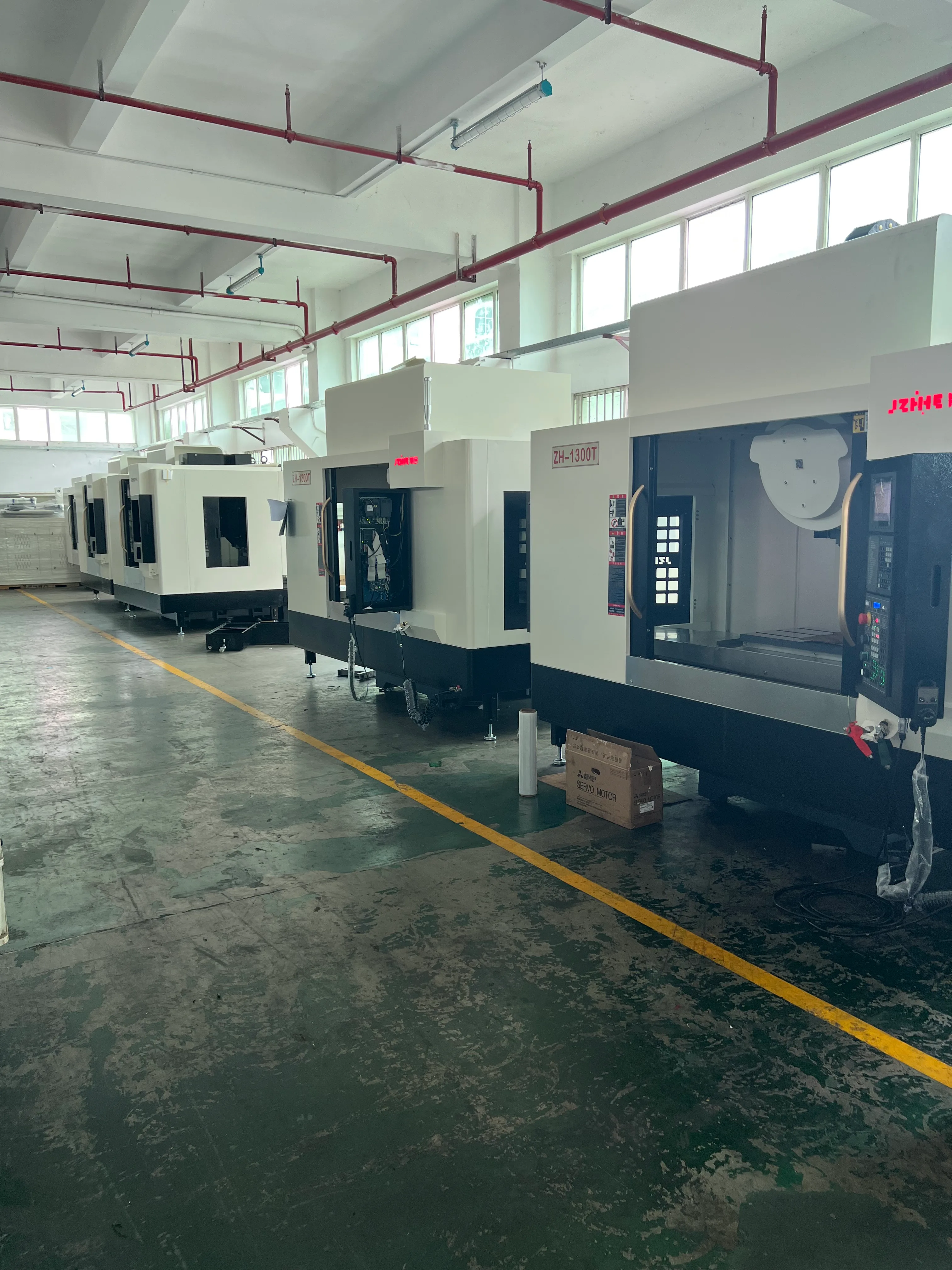
Load Case A: The Deep Box Casting
A deep casting may need several faces machined while chips collect in pockets, ribs, and internal passages. Map entry angle, tool projection, coolant direction, evacuation pauses, inspection access, and how the casting is cleaned before a new orientation.
A heavy duty horizontal machining center can reduce reclamping for box parts, but only if the fixture exposes the required faces without weak supports or inaccessible chip traps. Trial the most difficult cavity with production tools and a realistic chip load.
Load Case B: The Offset Steel Manifold
Offset holes, ports, sealing faces, and interrupted cuts can place torque and bending demand far from fixture supports. Draw the force route from cutting edge through tool, spindle, part, clamps, locators, fixture, pallet, and machine structure.
Zhihe CNC should receive material, hardness, hole sizes, depths, threads, face stock, tool assemblies, engagement, and duty. The buyer should define burr, intersection, cleanliness, sealing, pressure-test, and positional acceptance.
Load Case C: The Multi-Part Tombstone
A tombstone may increase spindle utilization by presenting several parts, but it also multiplies loading, clamp, tool, inspection, and error opportunities. Record part mix, orientation, common datums, operator reach, mistake-proofing, work order identity, and pallet release.
Balance the fixture around realistic part counts and stock. A full theoretical layout may exceed safe loading time, table load, tool capacity, chip clearance, or quality sampling resources.
Load Case D: The Long-Cycle Heavy Housing
Long cycles expose thermal behavior, tool life, sister-tool logic, chip accumulation, coolant condition, alarm recovery, unattended decisions, and measurement delay. The trial should include at least one planned tool event and one controlled interruption.
A heavy duty horizontal machining center should be evaluated by the number of accepted housings released per staffed period, not only uninterrupted spindle time. Include setup allocation, pallet waiting, inspection queue, corrections, maintenance, and rework.
Draw the Fixture Load Path
| Element | Question | Failure signal |
|---|---|---|
| Part contact | Is support under the cutting zone? | Deflection or chatter |
| Locator | Is position repeatable? | Shift after reload |
| Clamp | Is force stable and accessible? | Distortion or looseness |
| Fixture body | Is the force route short? | Twist or local flex |
| Pallet interface | Is seating clean and controlled? | Face-to-face variation |
Review clamp sequence and force with the part in each orientation. Include the effect of stock variation, casting pads, scale, cleaning, wear, and operator access. Preserve a fixture revision and maintenance record.
Match Spindle Duty to the Operation Portfolio
Separate rough boring, face milling, drilling, tapping, interpolation, finishing, and interrupted cutting. Record cutter diameter, engagement, material, speed, feed, torque demand, duty duration, holder, projection, coolant, and chip condition.
Peak torque or speed cannot define continuous production. Use the quoted spindle curve and configuration, then trial the operations that dominate thermal load, tool wear, surface, or cycle risk.
Size the Magazine for Recovery, Not One Program
Count production tools, probes, redundant tools, sister tools, long-tool restrictions, large-diameter adjacency, spare positions, and tools shared across the pallet queue. Link every tool to preset data, life rule, replacement owner, and recovery action.
Zhihe CNC can review magazine and tool-management options, while the plant confirms toolroom capacity, holder standard, storage, presetting, identification, and replacement logistics.
Engineer Chip Flow by Cavity and Orientation
Map where chips are created, where gravity carries them, where coolant reaches, where they compact, and how they leave the enclosure. Include stringy, hot, abrasive, fine, and heavy chip forms from the actual material and tools.
A horizontal architecture often helps chip evacuation, but deep cavities, tombstones, guards, and pallet interfaces can still trap material. Define cleaning pauses, confirmation methods, conveyor capacity, filtration, and safe maintenance access.
Control the Pallet Queue as Production Inventory
For every pallet state, define identity, part revision, material lot, fixture, clamp status, tools, program, offsets, inspection status, next action, priority, and responsible person. A pallet waiting for quality or information is work-in-process, not available capacity.
A heavy duty horizontal machining center benefits from off-machine preparation only when the ready queue is disciplined. Measure ready, blocked, running, inspection, repair, and released time separately.
Synchronize Inspection With Multi-Face Output
Define first-piece, face-specific, in-process, patrol, final, cleanliness, and functional checks. Decide which measurements occur on the machine, at a gauge station, or on a CMM. Include part cooling, cleaning, fixturing, queue, data review, and disposition.
Do not allow a fast pallet cycle to create a hidden inspection backlog. Use accepted throughput and last-known-good traceability as release measures.
Verify Test Conditions and Safe Operation
The ISO 10791 series offers context for machining-centre test conditions. Buyers still need a project-specific protocol for geometry, positioning, rotary or pallet behavior, trial parts, thermal state, instruments, limits, and exceptions.
The OSHA machine guarding resource provides general guarding context for workplaces under its jurisdiction. The delivered machine, local law, risk assessment, interlocks, chip access, loading method, lifting, and maintenance procedures must be reviewed by responsible parties.
Use the Heavy Duty Horizontal Machining Center Decision Matrix
| Question | Horizontal strength | Boundary to prove |
|---|---|---|
| Many faces? | Fewer reclamps | Fixture exposure |
| Heavy stock? | Robust pallet process | Total load distribution |
| Long cycle? | Queue and sister tools | Recovery discipline |
| Deep cavities? | Gravity-assisted chips | Actual trap zones |
| High mix? | Prepared pallets | Program and tool complexity |
Identify the Single-Point Cell Stops
List failures that stop every pallet: spindle, pallet changer, probe, common fixture, key tool, conveyor, coolant, air, power, network, program server, CMM, crane, operator certification, or release authority. Set spare, workaround, escalation, and evidence needs.
Zhihe CNC support can respond more effectively when alarm history, state, program step, tool, pallet, photos, video, parameters, recent changes, and containment are supplied together.
Benchmark the Heavy Duty Horizontal Machining Center by Shift
Build a shift record that separates ready pallets, blocked pallets, cutting, tool events, chip cleaning, inspection, correction, maintenance, alarm recovery, material waiting, and operator waiting. Compare planned and accepted output, then investigate the largest repeated loss. A heavy duty horizontal machining center should show its value through stable released parts, not a single utilization percentage that hides queues and rework.
Review the Zhihe CNC manufacturing profile for supplier context and require model-specific evidence for the proposed spindle, pallet, magazine, fixture, and acceptance plan.
Respect What Load Cases Cannot Guarantee
Representative cases cannot guarantee results for different parts, materials, fixtures, tools, programs, environments, maintenance, or staffing. They expose dominant risks and define trials. Final capability belongs to the approved production boundary.
FAQ
Does a heavier machine always cut better?
No. Structure, guides, spindle, fixture, tool, control, thermal behavior, installation, and process conditions determine the result.
How is total pallet load calculated?
Include pallet, tombstone, fixture, clamps, blank parts, accessories, probes, and load distribution in every orientation.
Why analyze the center of gravity?
Rotation and offset mass can change bearing, fixture, clearance, loading, and stability conditions.
When does a tombstone reduce productivity?
It can hurt when loading, errors, tool capacity, chip traps, inspection, or mixed-part control exceed the spindle-time benefit.
Can chip conveyors solve every evacuation problem?
No. Chips must first leave the cut and cavity; coolant direction, orientation, toolpath, cleaning, and local traps still matter.
What makes a sister-tool plan reliable?
Define preset data, life triggers, change logic, available positions, replacement ownership, verification, and response to abnormal wear.
How should pallet readiness be measured?
Track whether material, fixture, program, tools, offsets, inspection status, documents, and operators are ready before queue entry.
Which operation should dominate the trial?
Choose operations with the greatest load, reach, chip, thermal, tool-life, tolerance, surface, or recovery risk.
Can on-machine probing release the whole part?
Only if the agreed method, uncertainty, independence, feature coverage, and quality system permit that decision.
What information should be sent for an HMC review?
Send drawings, mass, material, faces, stock, fixture concept, tools, cycle, volume, inspection, pallets, utilities, and recovery goals.
Map the Load Portfolio With Zhihe CNC
To evaluate a heavy duty horizontal machining center, send Zhihe CNC the part family, CAD, blank mass, center of gravity, face map, fixture concept, material, tools, cutting duty, chip type, pallet strategy, inspection, volume, and shift plan. Review the horizontal platform page, the product range, and the project requirements before requesting a proposal.