How a Heavy Duty Vertical Machining Center Improves Medium-Sized Parts Machining
Choosing a heavy duty vertical machining center is not only about buying a stronger machine. For many factories, the real issue is more direct: medium-sized parts are becoming harder to machine with ordinary equipment. Boxes, housings, discs, molds, and automotive components often need stable cutting, clean surface finish, and reliable dimensional accuracy across repeated batches.
A light-duty machine may work well for simple aluminum plates or small components. But once the workpiece becomes heavier, thicker, or more difficult to clamp, the machining process changes. Vibration appears. Tool marks become harder to control. Accuracy may drift after rough cutting. Operators spend more time correcting problems that should have been handled by the machine structure from the beginning.
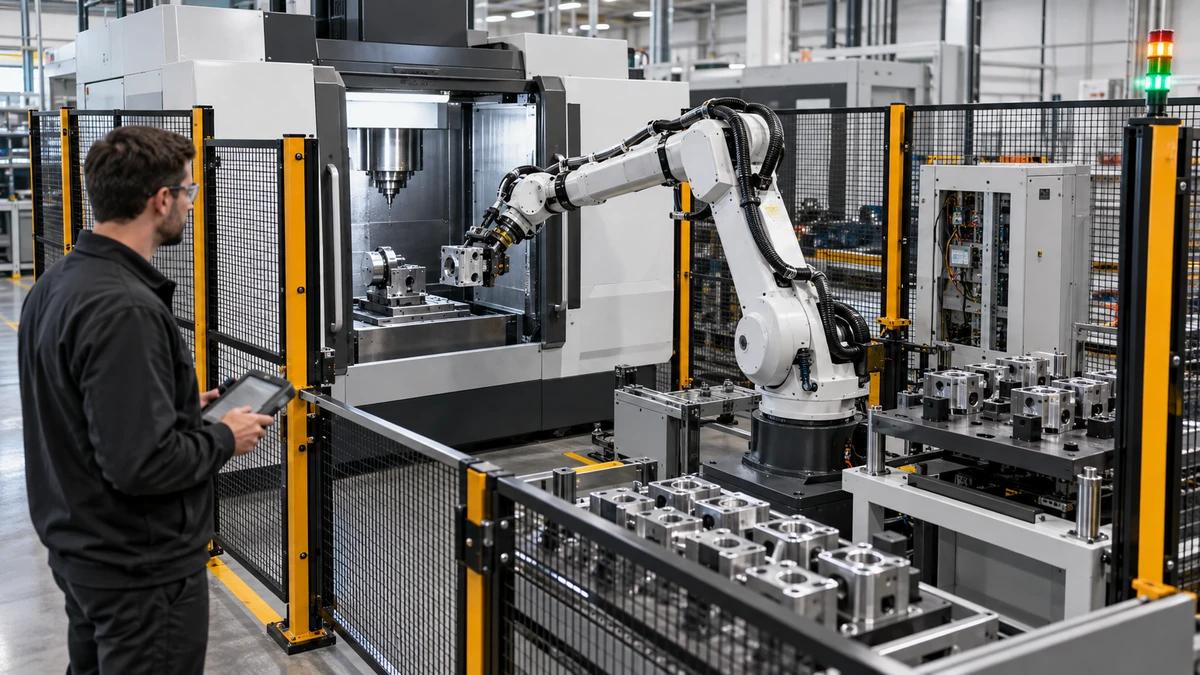
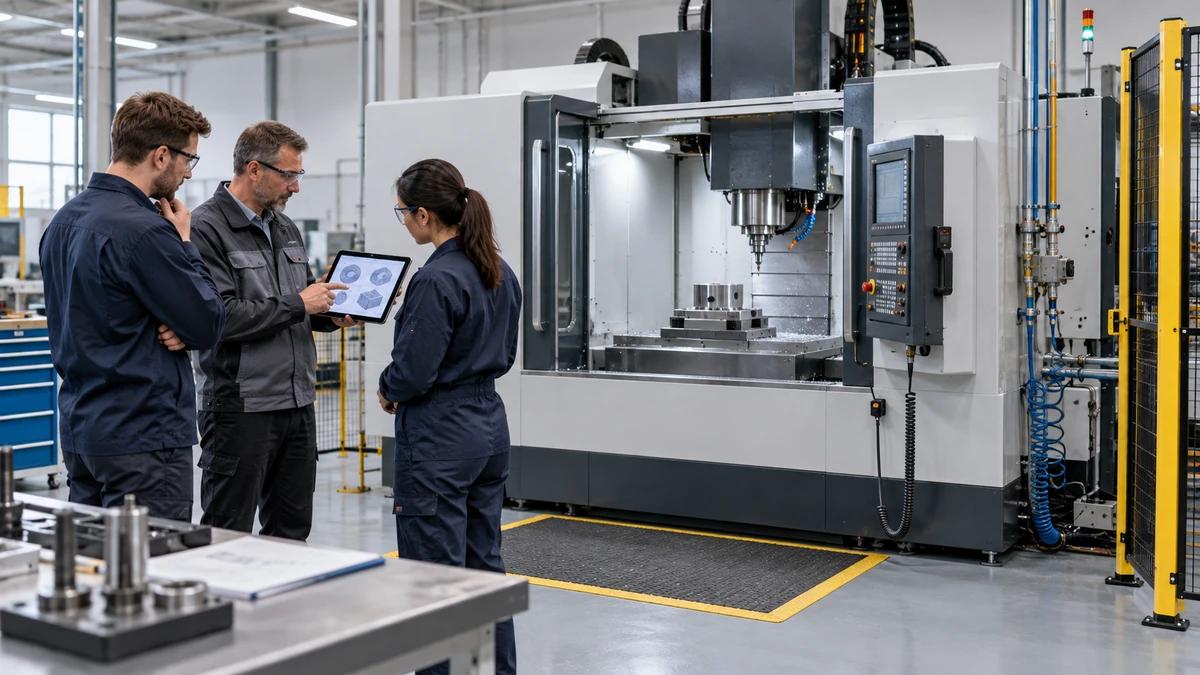
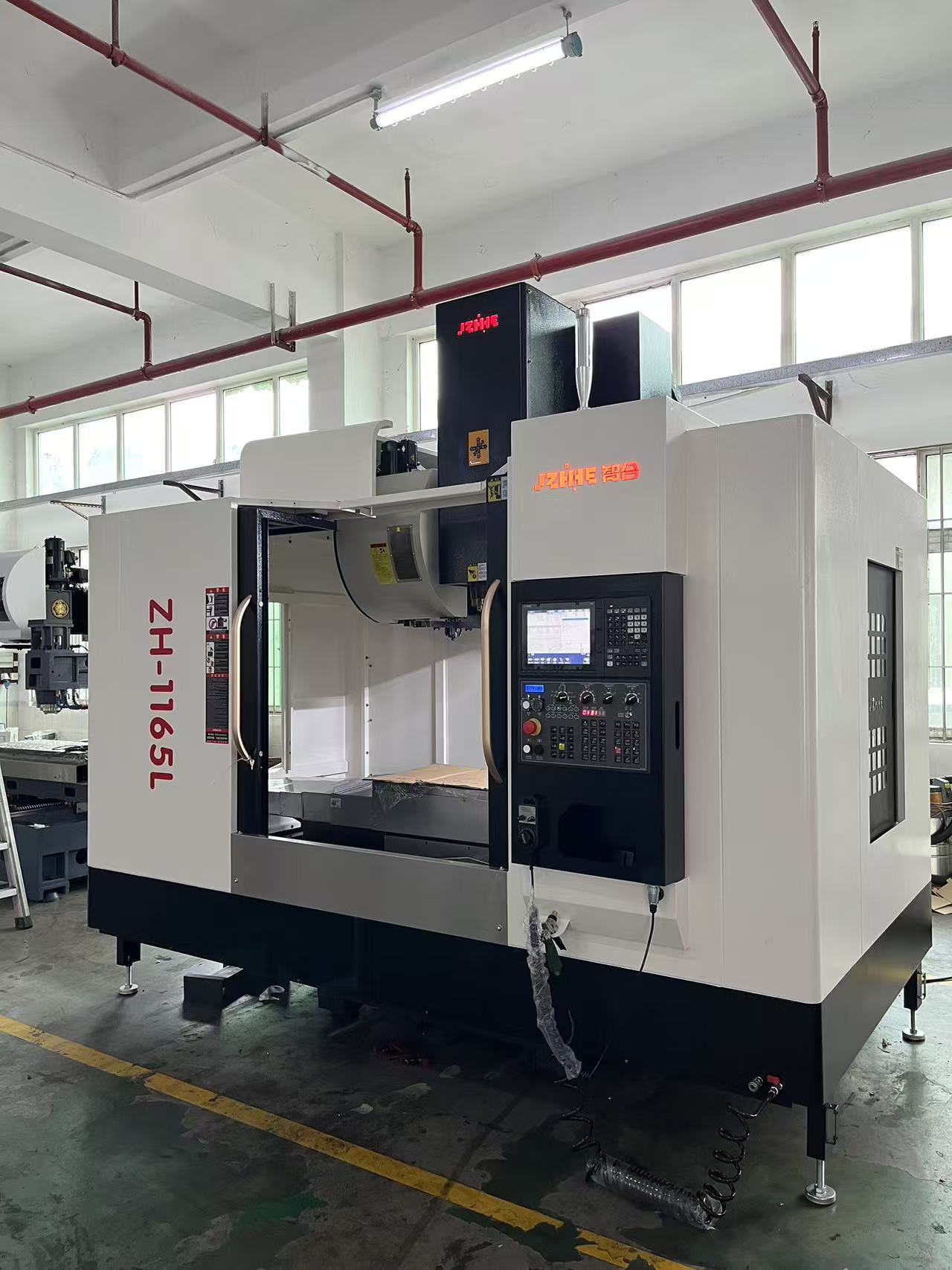
This is where the ZH-1165L Vertical Machining Center from Zhihe CNC becomes relevant. As part of the L Series Vertical Machining Center, it is designed for heavy cutting and high-precision machining of medium-sized boxes, housings, discs, and molds. With 1100 / 650 / 600 mm X/Y/Z travel, a 10,000 rpm belt-drive BT40 spindle, 20 / 20 / 12 m/min rapid traverse, and a MITSUBISHI M80VB CNC controller, the ZH-1165L is built for manufacturers that need both machining strength and controlled production efficiency.
Why Medium-Sized Parts Are Difficult to Machine
Medium-sized parts often sit in an awkward middle ground. They are not small enough for compact high-speed machines, but not large enough to justify a gantry machining center. That makes machine selection more sensitive.
Take a housing, for example. It may have several mounting faces, internal cavities, bolt holes, sealing surfaces, and side features. A mold base may need heavy roughing first, then fine finishing later. A disc-shaped part may look simple, yet still require stable flatness and clean hole positioning. These are not parts where the machine can rely on spindle speed alone.
The main challenge is balance. The machine must remove material efficiently, but it also has to absorb cutting force. It must be fast enough for production, but rigid enough to avoid chatter. It must handle rough cutting without losing the accuracy needed for finishing.
That is why buyers often look for a vertical machining center for heavy cutting when ordinary milling machines begin to create scrap, rework, or unstable results.
 What Makes a Heavy Duty Vertical Machining Center Different
A heavy duty vertical machining center is usually selected for three reasons: rigidity, vibration control, and cutting stability.
Rigidity decides how well the machine resists deformation during cutting. When a tool enters harder material or removes a larger amount of stock, the machine structure must remain stable. If the structure flexes too much, the final part may show dimensional error, poor surface finish, or tool wear problems.
Vibration control is just as important. Chatter does not only make the part look rough. It can damage tools, shorten spindle life, and force operators to slow down cutting parameters. In production, that means higher cost per part.
The ZH-1165L is designed to combine the high speed of linear guide machines with the high rigidity and vibration absorption of hard rail machines. This combination is especially useful for factories that process medium-sized parts in general machinery, automotive parts, and mold manufacturing.
In simple terms, the machine is not built only to move quickly. It is built to keep cutting stable when the part becomes more demanding.
How ZH-1165L Supports Medium-Sized Boxes and Housings
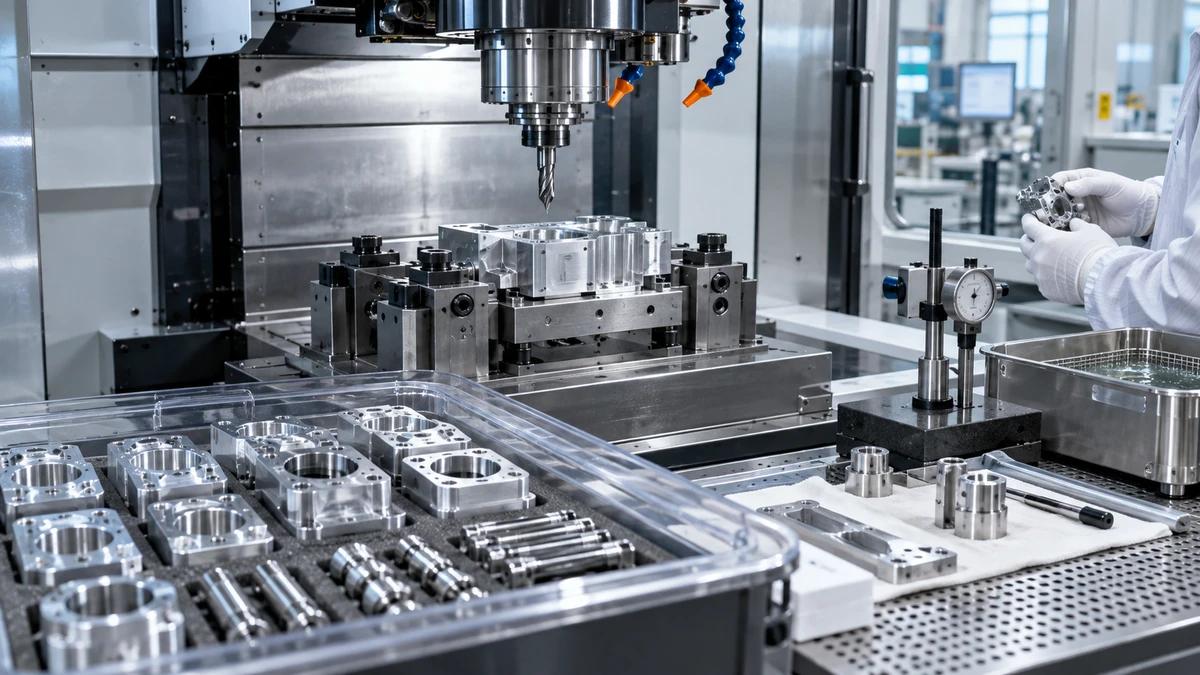
Boxes and housings are common in machinery, automotive, hydraulic, pneumatic, and automation equipment. These parts usually need flat surfaces, accurate hole positions, pocket milling, and sometimes internal cavity machining.
A CNC machining center for medium-sized housings must provide enough travel for the workpiece and fixture. The ZH-1165L offers 1100 mm X-axis travel, 650 mm Y-axis travel, and 600 mm Z-axis travel, making it suitable for many medium-sized industrial components.
This travel range gives manufacturers more flexibility during fixture planning. Operators can place a larger workpiece, leave space for clamping, and still maintain enough movement for tool access. That matters because the real usable space is not only the part size. It also includes fixtures, tool length, safe clearance, and chip movement.
For housing parts, stable positioning is also important. If different faces are machined in different operations, the machine must repeat movement accurately and maintain consistency between roughing and finishing. A rigid vertical machining center helps reduce small errors that can appear after heavy cutting.
Why Rigidity Improves Mold and Die Machining
Mold manufacturing places different pressure on a machine. Rough machining may require heavy material removal, while finishing requires fine surface control. A machine that performs well in only one stage may not be enough.
A vertical machining center for mold manufacturing needs to handle both load and detail. During roughing, the structure must absorb cutting force. During finishing, the spindle and motion system must support smooth tool paths. If vibration appears during either stage, the mold surface may need additional polishing or rework.
The ZH-1165L is suitable for mold manufacturing because it is designed for heavy cutting and high-precision machining. Its BT40 belt-drive spindle provides a practical configuration for many steel, cast iron, and alloy workpieces. The 10,000 rpm spindle speed gives enough flexibility for general milling, drilling, boring, and finishing operations.
For mold shops, the value is not only cycle time. It is process confidence. When a machine cuts steadily, operators can trust the finishing allowance, reduce unexpected tool marks, and keep delivery schedules under better control.
Linear Guide Speed and Hard Rail Rigidity: Why the Combination Matters
Many buyers compare linear guide machines and hard rail machines as if one is always better than the other. In real machining, the answer depends on the workpiece.
Linear guide machines are often valued for movement speed and response. Hard rail machines are usually associated with stronger rigidity and better vibration absorption under heavy cutting. The ZH-1165L is positioned to combine these two advantages: the speed characteristics of linear guide machines and the heavy-duty stability of hard rail machines.
This matters for medium-sized parts because production rarely stays in one cutting condition. A single part may require fast positioning, rough milling, semi-finishing, drilling, tapping, and final finishing. The machine must move efficiently, then become solid when cutting force increases.
That is a practical advantage for B2B buyers. They do not need a machine that looks good only in one operation. They need a machine that performs across the full machining cycle.
Application Areas for the ZH-1165L Vertical Machining Center
The ZH-1165L is suitable for several industrial fields where medium-sized parts are common.
| Application Field | Typical Workpieces | Why ZH-1165L Fits |
|---|---|---|
| General machinery | Boxes, plates, brackets, discs | Stable milling, drilling, and tapping for medium-sized parts |
| Automotive parts | Housings, covers, fixture plates, structural components | Good rigidity for batch machining and dimensional consistency |
| Mold manufacturing | Mold bases, cavities, inserts, die components | Heavy cutting ability with finishing flexibility |
| Automation equipment | Mounting plates, machine frames, precision blocks | Balanced travel, rigidity, and controlled machining |
| Industrial components | Steel, cast iron, and alloy parts | Suitable for stronger cutting conditions and stable output |
The key point is not that one machine can do everything. No machine should be sold that way. The real value is that the ZH-1165L covers a useful production range: not too small, not oversized, and strong enough for medium-duty to heavy-duty machining tasks.
What Buyers Should Check Before Ordering
Before buying a heavy duty vertical machining center, buyers should review their actual part family. The machine should match the parts that appear most often, not only the most difficult part in the catalog.
Start with workpiece size. Does the part fit within the machine travel after fixtures are added? Is there enough Z-axis space for tools, holders, and safe movement?
Then check material. Aluminum, carbon steel, cast iron, stainless steel, and mold steel all behave differently. A machine used mainly for heavy steel cutting should be evaluated differently from one used for aluminum parts.
Cutting load is another key point. If the factory needs deep cuts, larger tools, or long roughing cycles, rigidity becomes more important than headline speed.
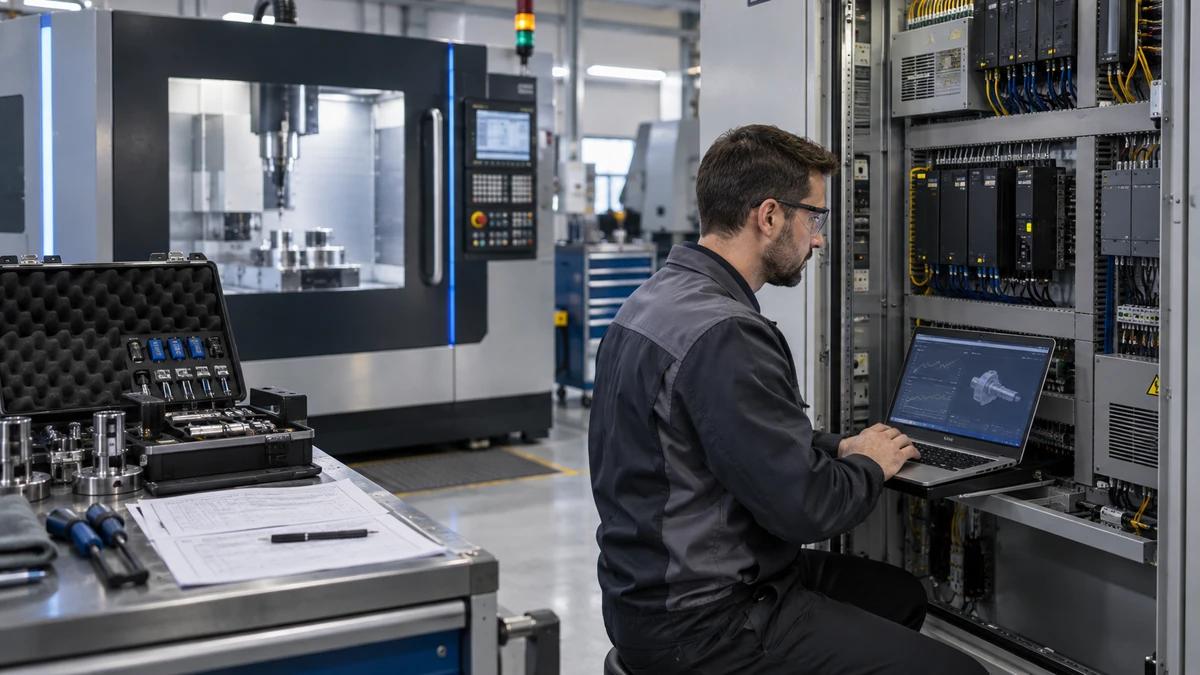
The control system also matters. The ZH-1165L uses a MITSUBISHI M80VB CNC controller, which is widely used in industrial machining environments. For buyers, this can help with operator familiarity, programming workflow, and service support.
Common Mistakes When Choosing a Vertical Machining Center
One common mistake is choosing a machine only by travel size. Travel matters, but size alone does not guarantee cutting stability. A larger but weaker machine may still struggle with heavy workpieces.
Another mistake is focusing only on spindle speed. A BT40 vertical machining center with 10,000 rpm can be very practical for medium-sized industrial parts, but buyers still need to check torque, tool requirements, material, and cutting strategy.
Some buyers also ignore fixture planning. Medium-sized housings and molds often require reliable clamping. Poor fixturing can waste the benefit of a rigid machine. If the part moves, vibrates, or deforms during machining, even a good machine cannot fully solve the problem.
A quieter mistake is underestimating chip removal and daily maintenance. Heavy cutting creates chips, heat, and coolant management issues. A production machine must be easy enough to clean, inspect, and maintain, otherwise downtime will slowly eat into the expected productivity.
How a Heavy Duty Vertical Machining Center Improves Production Results
A well-matched heavy duty vertical machining center improves production in several ways.
It can reduce vibration during rough machining, which helps protect tools and improve surface stability. It can support heavier workpieces, making it easier to process boxes, housings, discs, and molds. It can also improve consistency between roughing and finishing because the machine structure stays more stable under load.
For production managers, this means fewer surprises. The part is less likely to require repeated adjustment. Operators can use more predictable cutting parameters. Inspection becomes more stable from batch to batch.
For procurement teams, the value appears in a different form: lower rework risk, better machine utilization, and longer service relevance. A machine like the ZH-1165L is not only purchased for one part. It is often selected to support a wider range of medium-sized industrial parts over several years.
FAQ
What is a heavy duty vertical machining center used for?
A heavy duty vertical machining center is used for milling, drilling, tapping, boring, and finishing parts that require stronger machine rigidity. Typical workpieces include housings, boxes, discs, molds, automotive parts, and general machinery components.
Is the ZH-1165L suitable for mold manufacturing?
Yes. The ZH-1165L is designed for heavy cutting and high-precision machining, making it suitable for mold bases, mold cavities, inserts, and die components.
Why does machine rigidity matter for medium-sized parts?
Rigidity helps reduce vibration, deformation, tool chatter, and dimensional drift during cutting. This is especially important when machining steel parts, housings, molds, and other workpieces that require stable accuracy.
Is BT40 enough for medium-sized parts machining?
For many medium-sized industrial parts, a BT40 spindle is a practical and widely used choice. Buyers should still confirm tool size, cutting load, material type, and machining allowance before selection.
What information should buyers provide before requesting a recommendation?
Buyers should provide part drawings, material, dimensions, tolerance requirements, machining operations, batch quantity, current process problems, and fixture needs. This helps the supplier recommend a suitable machine configuration.
Conclusion
A heavy duty vertical machining center improves medium-sized parts machining by solving problems that ordinary machines often struggle with: vibration, unstable cutting, limited rigidity, and poor consistency across batches.
For manufacturers working with boxes, housings, discs, molds, automotive parts, and general machinery components, the ZH-1165L offers a practical balance of travel, rigidity, speed, and control. Its 1100 / 650 / 600 mm travel, 10,000 rpm BT40 belt-drive spindle, 20 / 20 / 12 m/min rapid traverse, and MITSUBISHI M80VB controller make it a strong option for factories that need reliable heavy cutting without moving into oversized equipment.
The best buying decision starts with the workpiece. Match the machine to the part size, material, cutting load, fixture method, and accuracy target. Once those details are clear, choosing the right vertical machining center becomes less about guesswork—and much more about production fit.