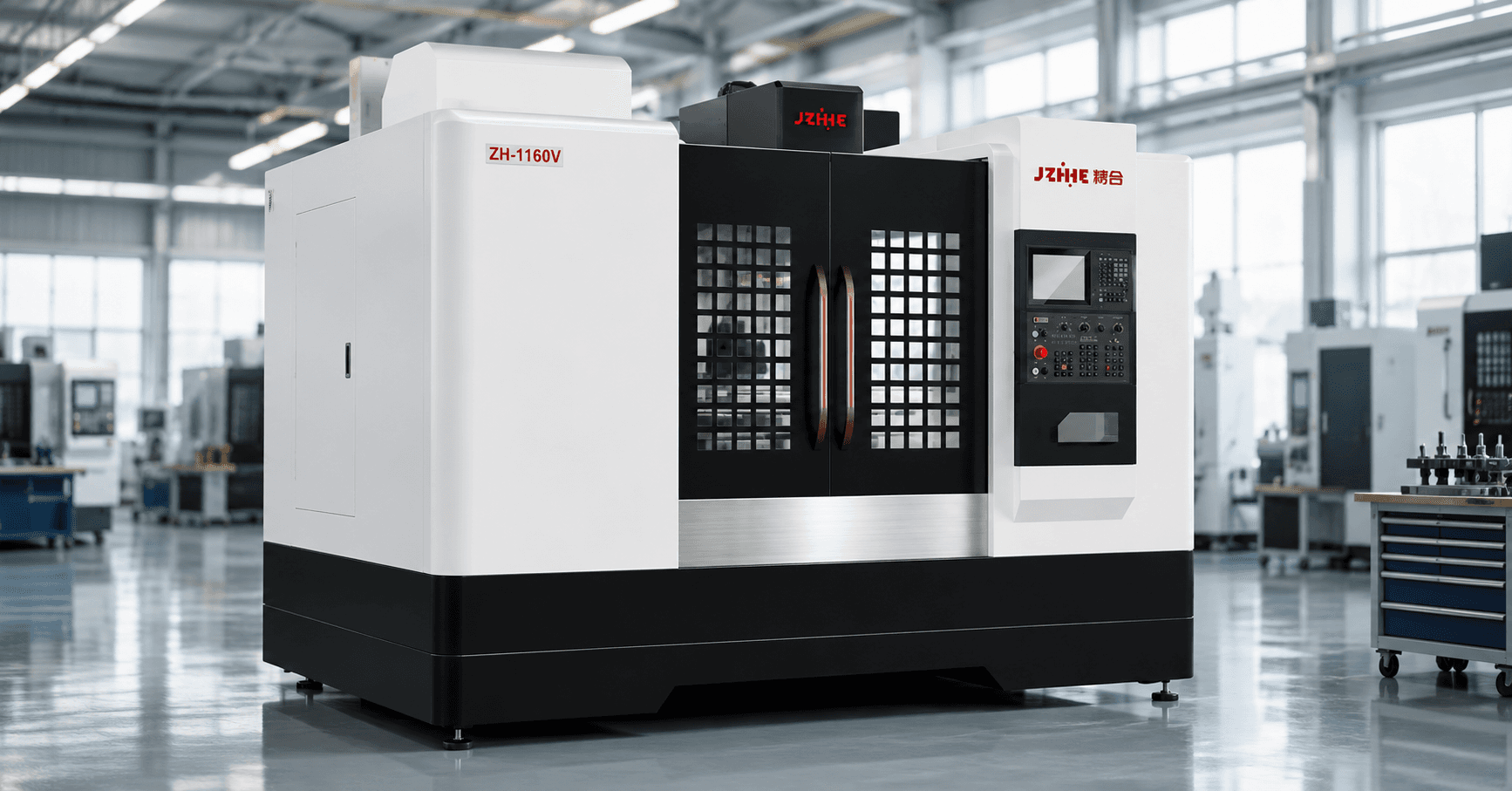
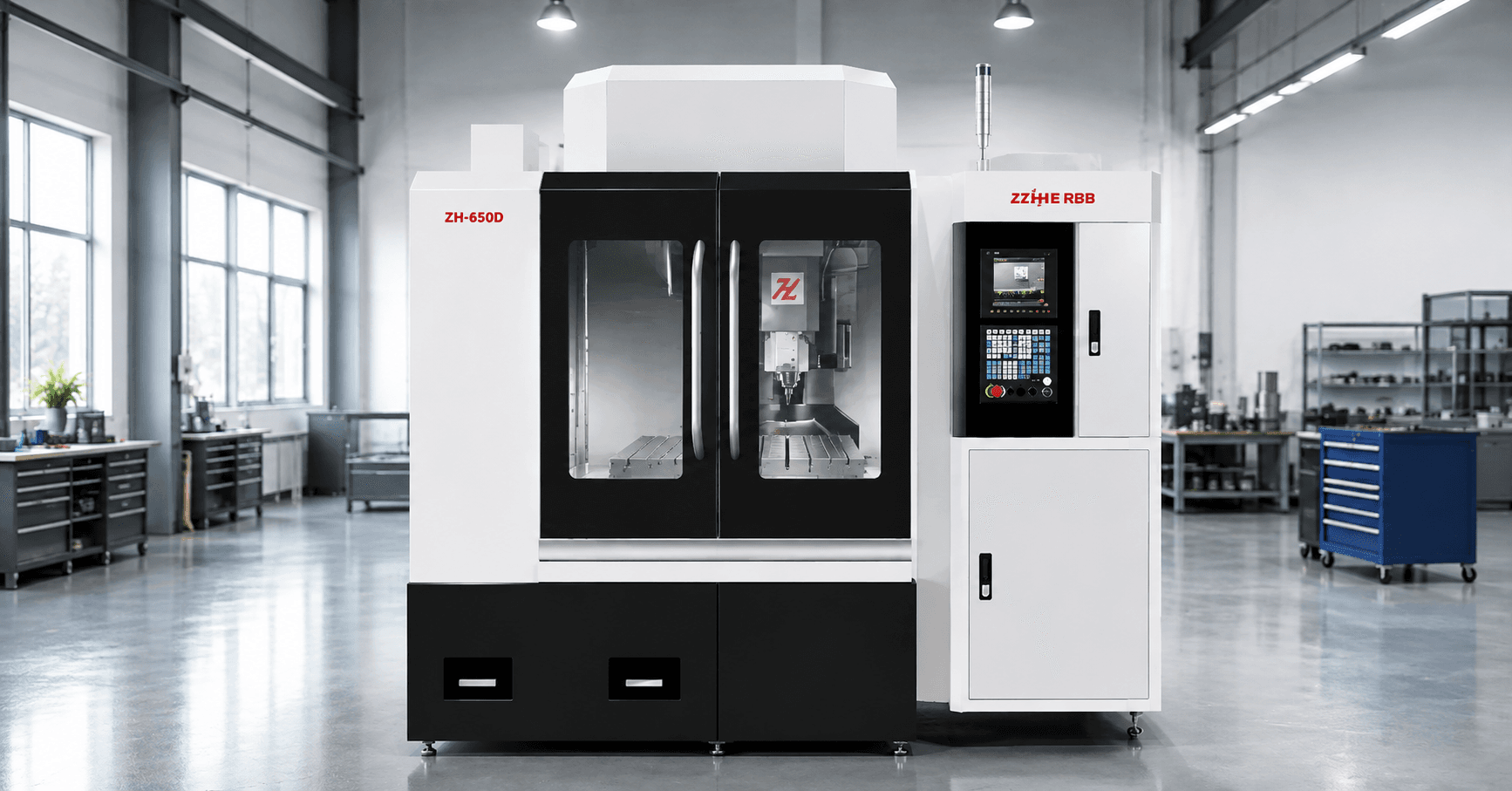
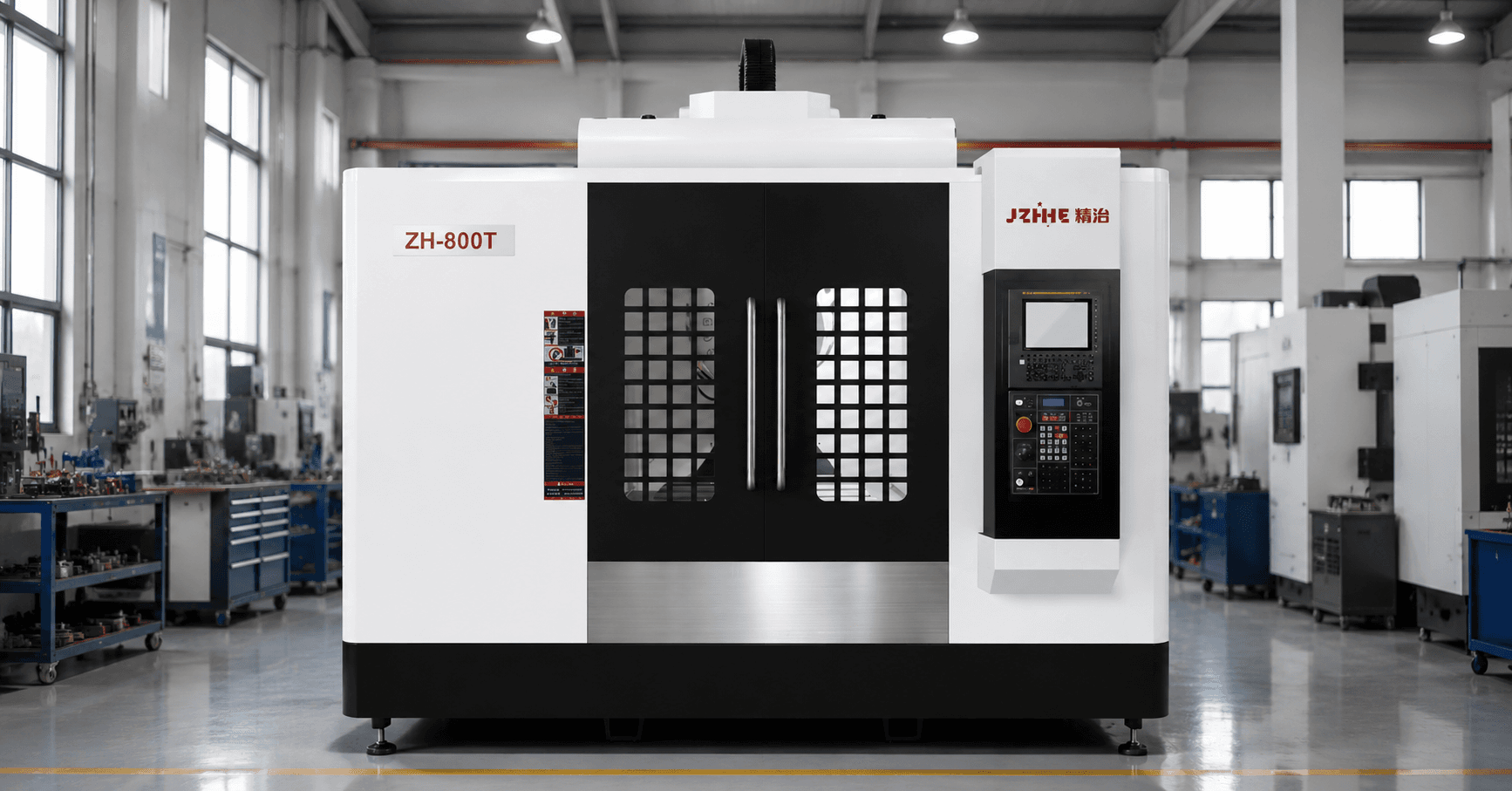
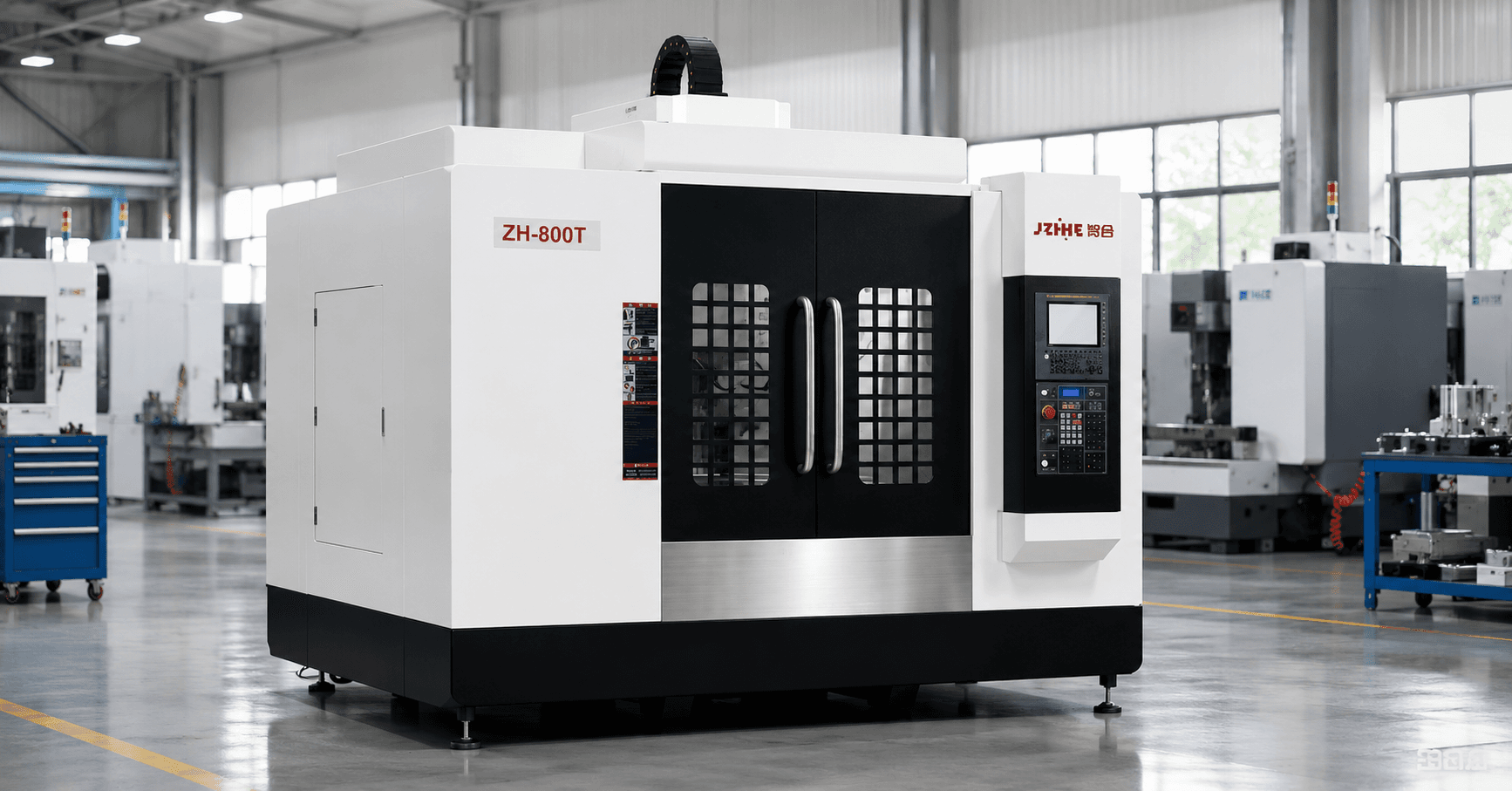
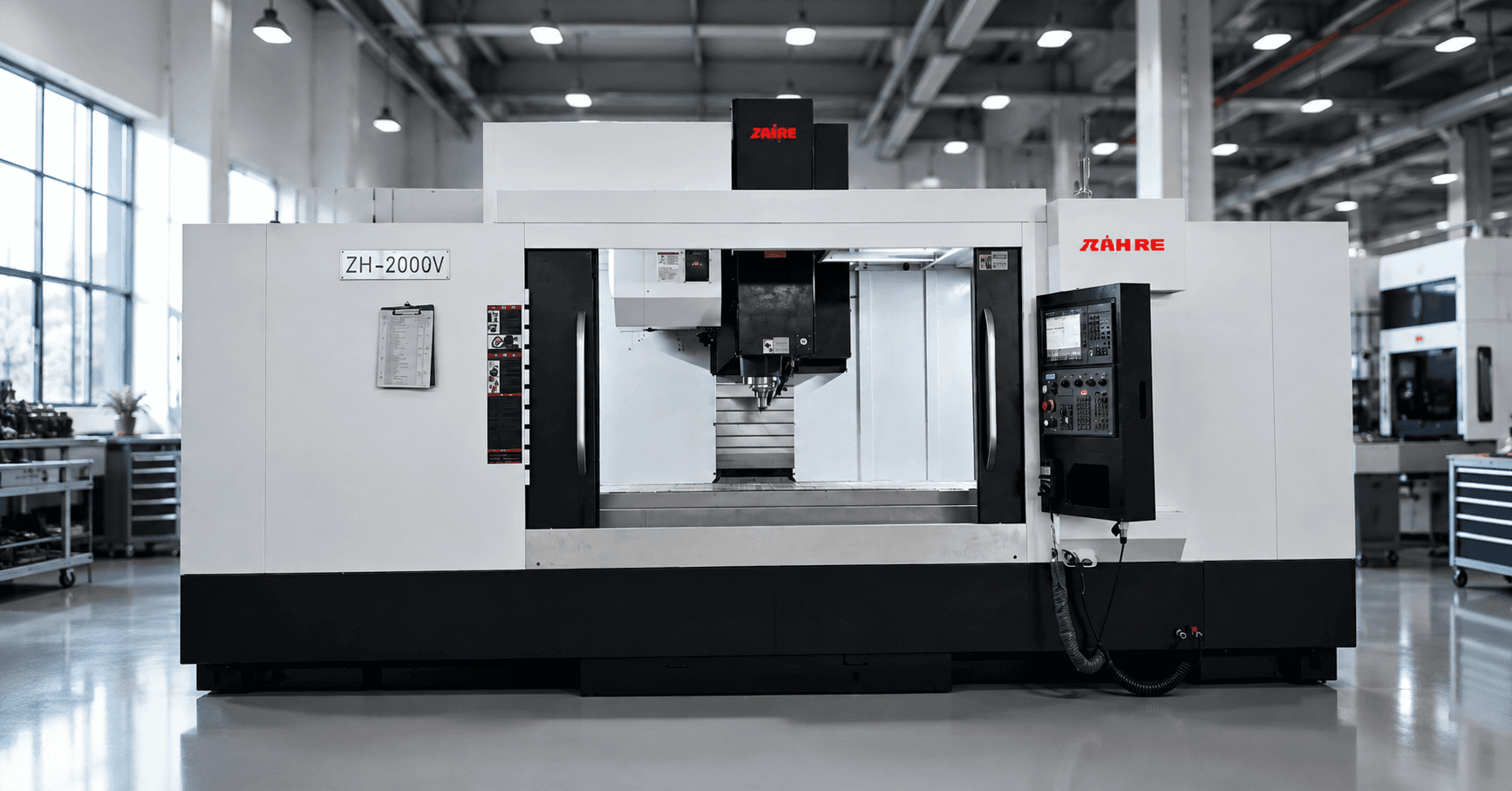
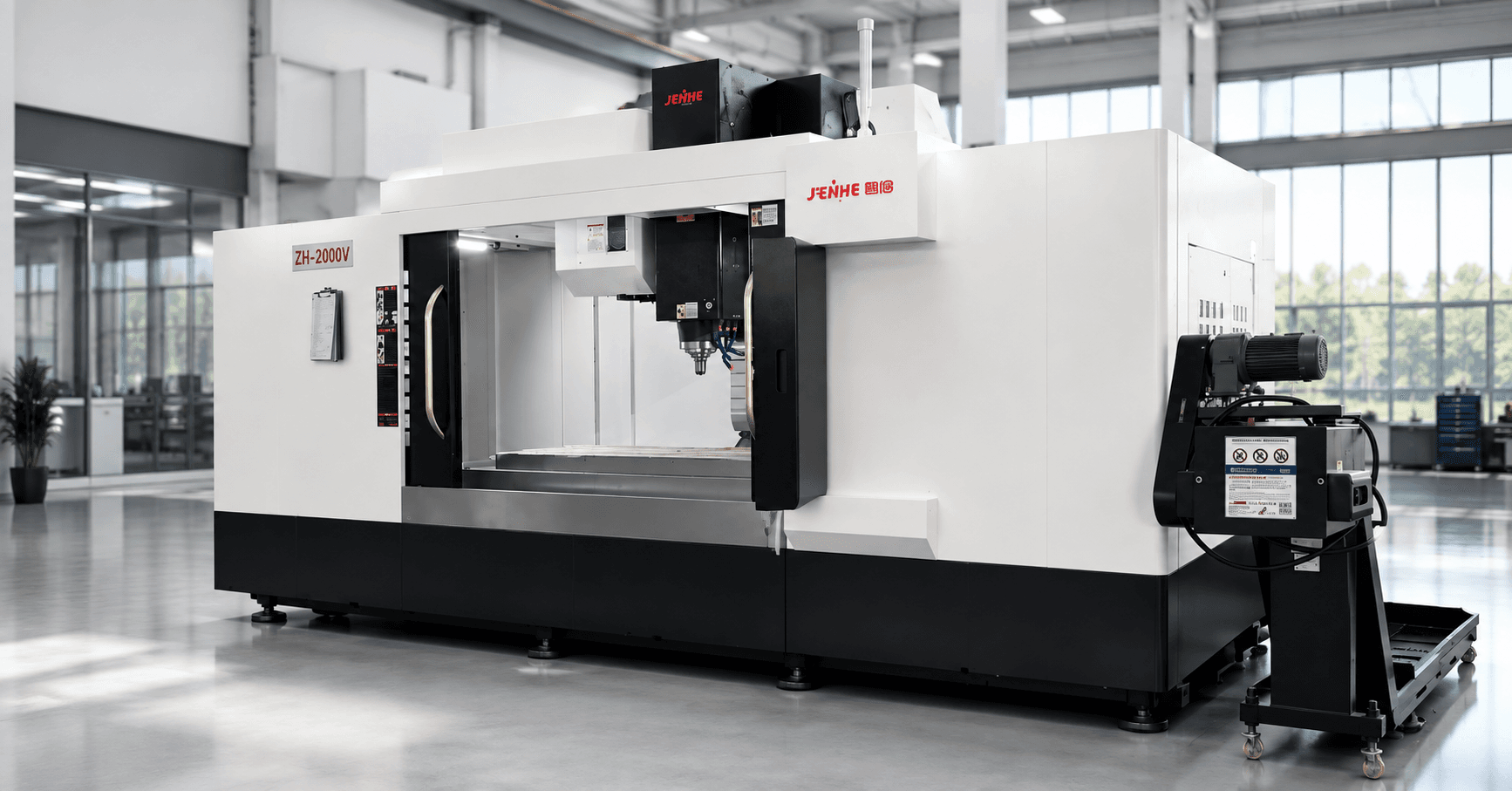
An HMC 1000 machining center is a strong fit when a buyer needs repeatable multi-face machining, substantial fixture capacity, stable chip evacuation, and fewer datum transfers on medium-to-large box parts. It is not automatically the right choice for every large workpiece. The model name is not a universal specification standard, so travel, pallet or table size, load, spindle duty, rotary accuracy, and clearances must be confirmed against the actual machine configuration.
This guide gives buyers a fit/no-fit gate before quotation. It converts drawings into an application worksheet, identifies where a horizontal platform creates measurable value, and defines the trial evidence needed before the machine is approved.
Gate 1: Does the Complete Setup Fit?
Check the workpiece after it is mounted, not only the raw part dimensions. Add fixture base, clamps, tombstone or rotary table, tool approach, probe access, chip clearance, and safe loading space. Confirm the swing envelope through every indexed position and verify that the spindle nose and toolholder can reach critical features without interference.
| Envelope item | Buyer input | Required evidence |
|---|---|---|
| Finished part and blank | Maximum X/Y/Z dimensions and mass | Machine travel and load review |
| Fixture assembly | Base, clamps, tombstone, hydraulic hardware | Mounted CAD envelope |
| Tool access | Longest and largest tool assemblies | Interference simulation |
| Rotation | All indexed faces and clamp positions | Full swing-clearance check |
| Loading | Crane, robot, cart, or manual method | Safe load/unload sequence |
Gate 2: Will Setup Consolidation Pay Back?
A horizontal layout creates value when several critical faces can be machined from one controlled datum. List every current setup, the dimensions transferred between setups, alignment time, inspection after each transfer, and scrap or rework caused by datum recovery. Then design the proposed process around the minimum number of controlled orientations.
Use an HMC 1000 machining center where multi-face consolidation reduces uncertainty, not just operator touches. A part that still requires several removals because of inaccessible features, heat treatment, or separate grinding may gain less than expected. Compare the complete routing rather than one machine cycle.
Gate 3: Match the Spindle to the Cutting Duty
Define material, cutter diameter, depth and width of cut, drilling sizes, boring tools, tool reach, roughing duration, finishing duty, and expected spindle load. Heavy cast iron or steel work can require torque and sustained rigidity; aluminum or mixed work may favor speed, acceleration, and chip volume. Do not select from maximum speed alone.
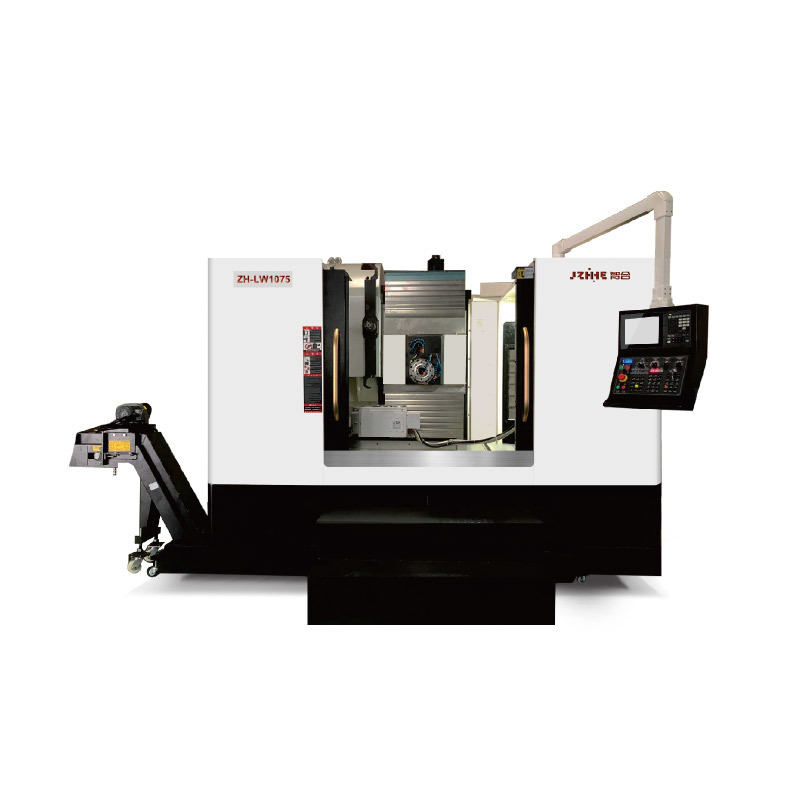
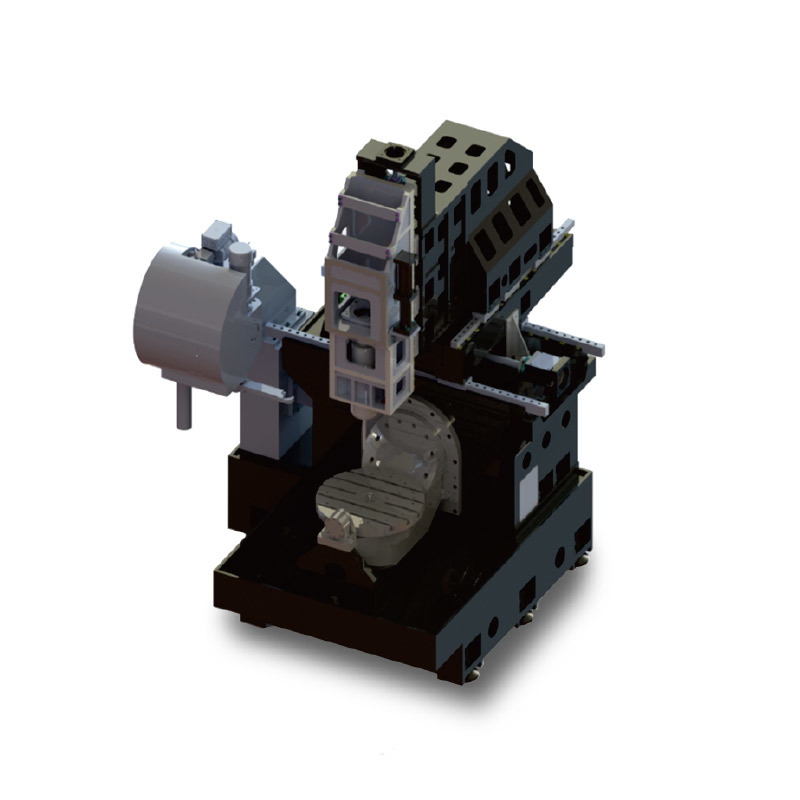
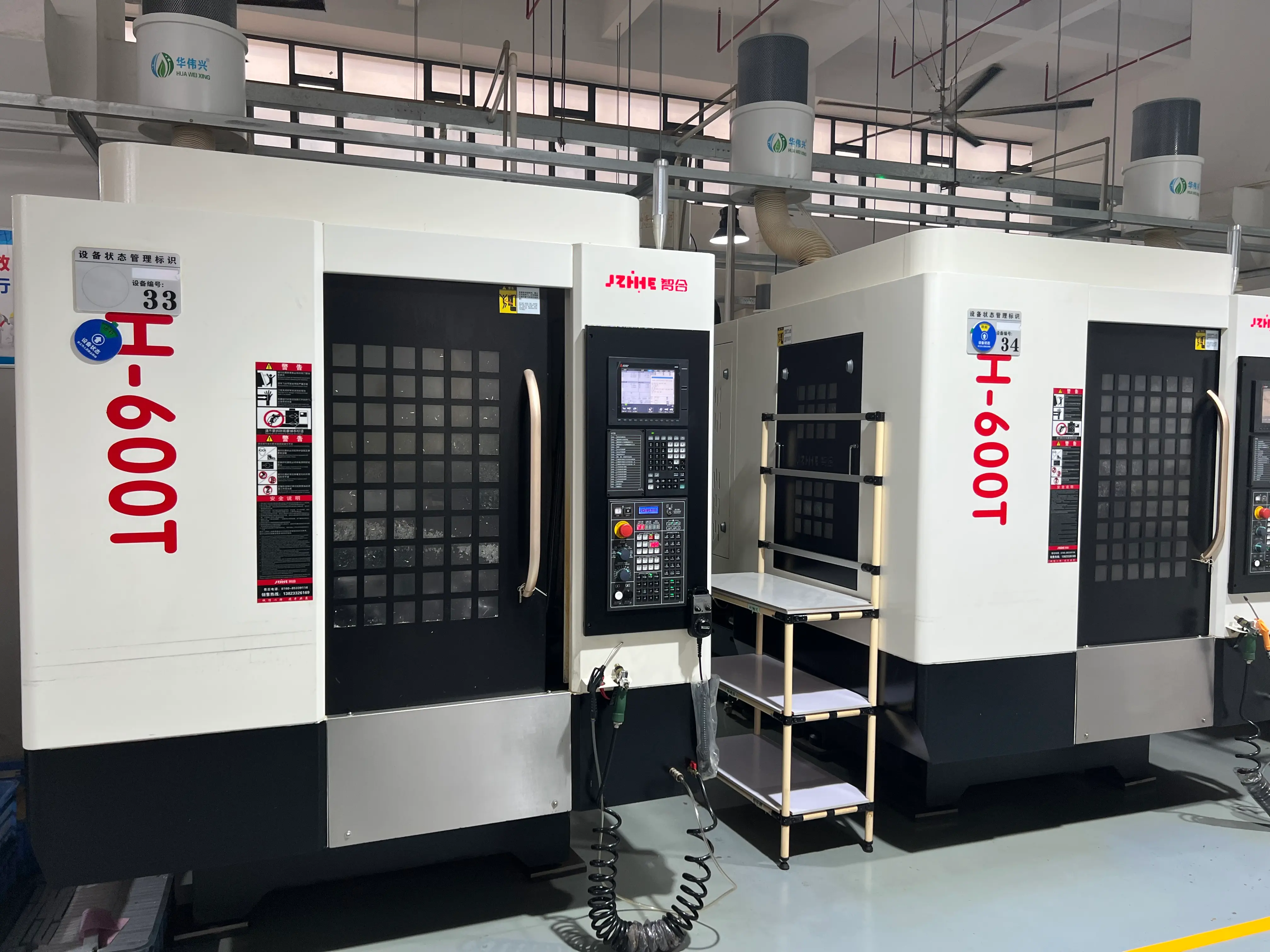
Zhihe CNC describes its horizontal machining-center platform as a high-rigidity machine with a CNC rotary table, thermal stability, and multi-face capability for automotive, mold, and industrial manufacturing. Those are relevant screening signals, but the buyer should request a configuration-specific review through the horizontal machining center range.
Gate 4: Prove Chip and Coolant Control
Horizontal machining can let gravity move chips away from the cut, but deep cavities, internal passages, fixtures, and tombstones can still trap them. Review coolant delivery, enclosure wash, chip conveyor, filtration, tank access, fixture drainage, and cleaning intervals. Include the expected material mix and chip form.
Gate 5: Define Thermal and Geometric Evidence
Identify dimensions that span several faces, bearing bores, perpendicular relationships, true positions, and features sensitive to warm-up. Define the measurement method, machine condition, ambient assumptions, coolant state, and time sequence. A first-off part can pass while later parts drift, so the trial should include a realistic warm production window.
Ask for machine geometry records where applicable, rotary-axis verification, probing strategy, and a representative trial part. Record offsets and interventions. The purpose is to separate machine capability from temporary operator correction.
When This Machine Class Is Not the Best Fit
- The part needs only one or two accessible faces and gains little from rotation.
- The complete fixture envelope exceeds the machine even though the bare workpiece fits.
- Part weight, cutting duty, or tool length sits outside the configuration's stable range.
- Batch size is too small to justify fixture, programming, and process-development cost.
- A vertical, gantry, or five-axis process completes the routing with lower total risk.
Use a Representative Acceptance Sequence
- Approve the mounted part and fixture envelope in CAD.
- Confirm the tool list, longest tool, spindle duty, and chip-control plan.
- Run the actual face sequence with production-like indexing and probing.
- Measure cross-face geometry after warm-up and after unclamping where relevant.
- Record cycle elements, operator work, tool condition, cleaning, and interventions.
- Close every assumption before commercial and technical acceptance.
FAQ
Does HMC 1000 always mean the same travel and pallet size?
No. Model naming varies by manufacturer. Confirm the current specification sheet, options, fixture envelope, and configuration in the quotation.
Which parts gain most from a horizontal layout?
Box parts, housings, manifolds, engine or transmission components, molds, and industrial structures often benefit when several critical faces share one datum.
Should the trial use the buyer's fixture?
Use the intended fixture or a representative design whenever fixture stiffness, clearance, chip flow, or datum repeatability affects the decision.
What should be compared with a vertical machine?
Compare setups, datum transfers, cycle, loading, fixture cost, tool access, chip cleaning, inspection, utilization, and total accepted parts—not purchase price alone.
Request a Model-Fit Review
To evaluate an HMC 1000 machining center, send the drawing, blank, material, fixture concept, tool reach, critical cross-face dimensions, cycle target, annual volume, and loading method. Use the contact page to request a configuration and trial plan, and review the existing box-parts application guide for related process questions.