A horizontal machining center manufacturer should be audited through four connected production rooms: application engineering, controlled assembly, verification and acceptance, and lifecycle service. The important question is not whether each room exists, but whether requirements and evidence move between them without being lost.
The model distinguishes repeatable manufacturing from showroom claims by tracing one proposed machine from configuration through field feedback.
Room 1 Starts With the Customer Workload
Ask the application team to classify parts by material, blank, mass, envelope, orientations, features, tolerances, surface requirements, annual volume, batch size, loading, and inspection. Identify the representative and worst-case parts.
Review how the team chooses pallet size, travels, rotary capacity, spindle duty, tool magazine, coolant, chip handling, probing, automation, and fixture interfaces. Recommendations should reference the workload rather than repeat a standard model description.
Room 1A Freezes Assumptions and Exceptions
Inspect the proposal, technical agreement, option list, drawings, cycle assumptions, buyer-supplied items, exclusions, and acceptance plan. Every unresolved issue should have an owner and due date before production release.
Configuration control begins before assembly. If the application team and factory build from different revisions, later inspection cannot repair the contract gap.
The Doorway Handoff Creates a Build Packet
The handoff into production should include released bills of material, drawings, component specifications, controller and software, electrical requirements, options, labels, manuals, test plan, customer changes, and serial identity.
Check how substitutions, shortages, engineering changes, and deviations are reviewed. A named change process is more useful than a promise that components never change.
Room 2 Controls Structure and Assembly
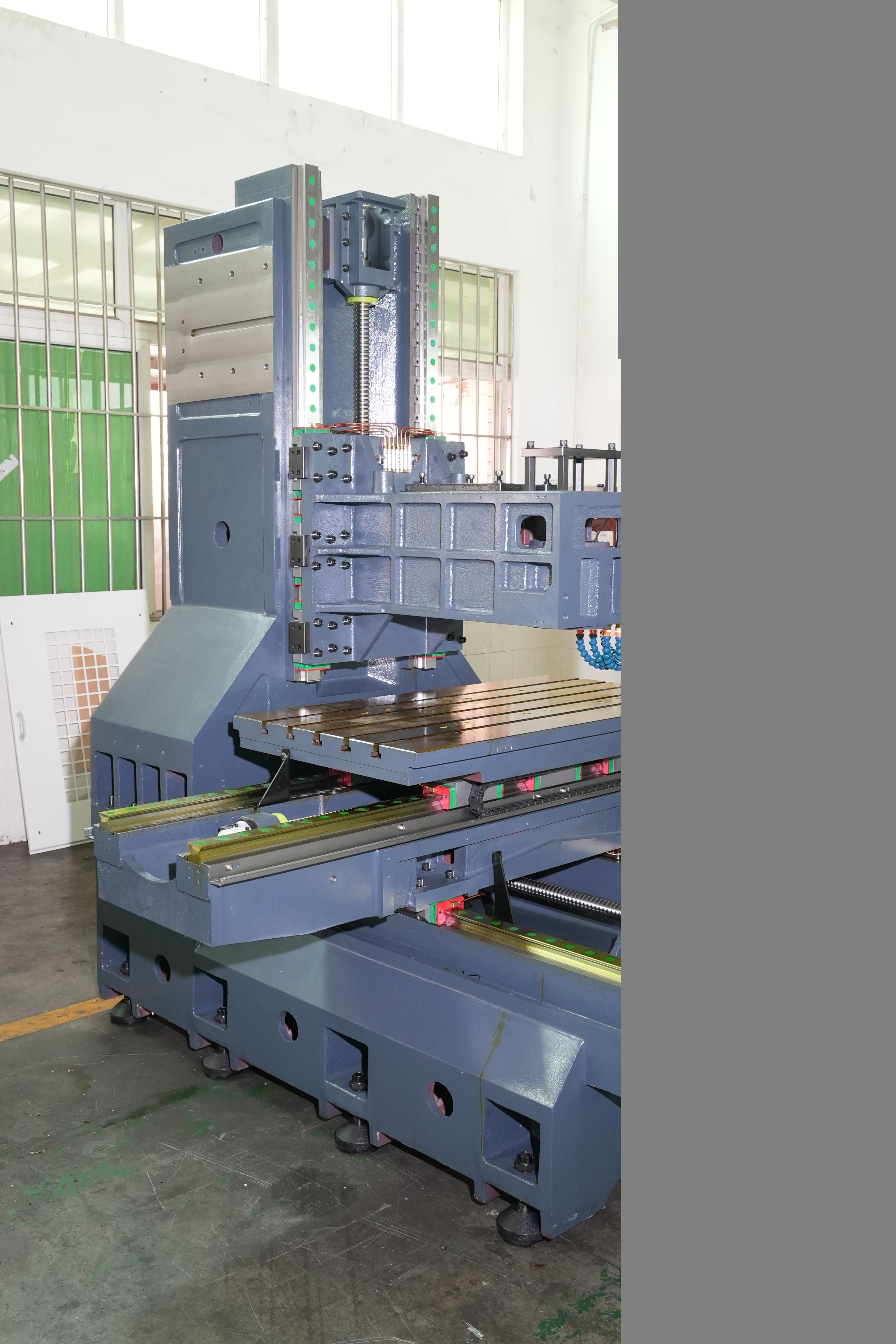
Observe incoming inspection, casting preparation, guideway and ballscrew assembly, alignment, spindle installation, pallet and rotary build, tool changer, hydraulic and pneumatic systems, coolant, enclosure, wiring, lubrication, and safety devices.
Ask which dimensions and conditions are recorded, which tools are calibrated, and how nonconformities are closed.
Room 2A Traces Critical Components
Select a few critical items such as spindle, bearings, motors, scales, controller, pallet system, rotary components, pumps, sensors, and safety devices. Trace supplier, model, serial or batch where applicable, inspection, installation, and configuration record.
A horizontal machining center manufacturer should be able to connect critical components to the serial machine and later service requirements. Traceability supports diagnosis, compatible spares, upgrades, and field actions.
| Audit room | Primary evidence | Failure signal |
|---|---|---|
| Application | Part-family and configuration record | Generic recommendation |
| Assembly | Released build and inspection packet | Uncontrolled substitutions |
| Verification | Conditioned test and acceptance data | Claims without methods |
| Lifecycle | Installed-base and feedback closure | Service disconnected from engineering |
Room 2B Verifies Pallet and Rotary Interfaces
Review pallet location, clamping, exchange, rotary indexing, hydraulic or pneumatic condition, fixture interface, chip exclusion, cable or utility connections, and repeated operation. Use realistic load and center-of-gravity conditions.
Pallet reliability governs the value of an HMC production loop. A mechanism that works unloaded may behave differently with fixtures, chips, coolant, and repeated shifts.
Room 3 Separates Test Types
Classify geometry, positioning, repeatability, rotary, pallet, spindle, tool change, probing, safety, coolant, chips, endurance, and trial-cut tests. For each test, record method, condition, equipment, calibration status, limit, result, and reviewer.
Do not combine all evidence under factory inspection. Different tests answer different risks, and some must be repeated after transport or installation.
Room 3A Links Trial Cutting to the Proposal
Use a material, setup, tool reach, spindle duty, feature set, and cycle segment connected to the intended application. Record programs, tools, offsets, coolant, thermal state, inspection, and deviations.
A demonstration part can support confidence but does not automatically prove full production. State which risks the trial addresses and which remain for site process development.
Room 3B Defines Factory and Site Acceptance
Separate tests completed before shipment from installation checks, utility verification, geometry confirmation, commissioning, training, trial production, and final handover. Define open-item handling and evidence transfer.
Review the horizontal machining center range for platform context, then confirm that acceptance matches the exact quoted configuration and destination.
Room 4 Audits Service Before a Failure
Inspect commissioning procedures, training materials, manuals, parameter backup, software records, diagnostic access, remote support, local coverage, escalation, warranty approval, travel boundaries, and spare identification.
Ask the service team to walk through a spindle alarm, pallet fault, tool-change interruption, probe issue, and controller recovery. The quality of the route matters more than a general promise of fast support.
Room 4A Checks the Spare Compatibility System
Choose representative sensors, pumps, valves, motors, drives, bearings, filters, seals, and controller items. Verify how the manufacturer identifies the correct part by serial number and configuration revision.
Spare lists should distinguish commissioning spares, wear items, critical downtime items, long-lead components, and locally sourced consumables. Uncontrolled substitution can create new faults.
Room 4B Returns Field Evidence to Engineering
Review how warranty events, repeated alarms, component failures, software corrections, service time, customer process findings, and spare issues are categorized and returned to design, purchasing, assembly, testing, or documentation.
The audit is complete only when field evidence closes the loop. A service organization that fixes symptoms but does not improve the build system leaves recurring risk in future machines.
Conduct the Four-Room Walkthrough
- Select one proposed model and one representative customer workload.
- Trace the application decision and released configuration.
- Follow critical components and assembly records into the serial machine.
- Review conditioned test, trial, and acceptance evidence.
- Trace documents, spares, training, and service readiness.
- Choose one past field issue and verify its corrective-action closure.
When a Factory Visit Is Not Enough
A clean workshop is not automatically proof of manufacturing control. Likewise, a remote audit can be useful when records, live walkthroughs, interviews, serial traceability, and customer-specific evidence are available. Use risk to decide the audit depth.
For new configurations, demanding applications, or distant service regions, add trial evidence, references, third-party checks, or phased acceptance rather than relying on one visit.
FAQ
What should be audited first?
Start with the customer workload and configuration handoff because later manufacturing evidence cannot correct an undefined application.
Are branded components enough to prove quality?
No. Correct selection, traceability, installation, settings, protection, testing, and service compatibility also matter.
Should buyers require every factory record?
No. Agree on the records needed to verify critical requirements while respecting practical confidentiality and document control.
How can overseas service capability be checked?
Review response routes, remote tools, local partners or technicians, spare logistics, language, escalation, warranty boundaries, and examples of closed field issues.
Request a Four-Room Manufacturer Audit
To assess a horizontal machining center manufacturer, send the part family, materials, mounted envelope, fixtures, pallet and rotary needs, spindle duty, tools, output target, acceptance plan, destination, training needs, and service region. Use the contact page to request a factory and application review, and read the company and manufacturing overview before defining the audit scope.