Horizontal Machining Center vs Vertical and Gantry Machining Centers: How B2B Buyers Should Choose
Many buyers compare CNC machines by size, price, spindle speed, and brand. Those factors matter, but they do not answer the most practical question: which machine architecture fits the workpiece? A horizontal machining center, vertical machining center, and gantry machining center may all cut metal, but they are built around different production problems.
Zhihe CNC manufactures vertical, horizontal, gantry, drilling and tapping, and five-axis machining centers for automotive, 3C electronics, lithium battery, photovoltaic, robotics, and precision metal parts manufacturers. On its homepage, the company positions horizontal machining centers as best for box-type parts, automotive components, and multi-face machining, with the key capability of stable multi-side processing and continuous production efficiency.
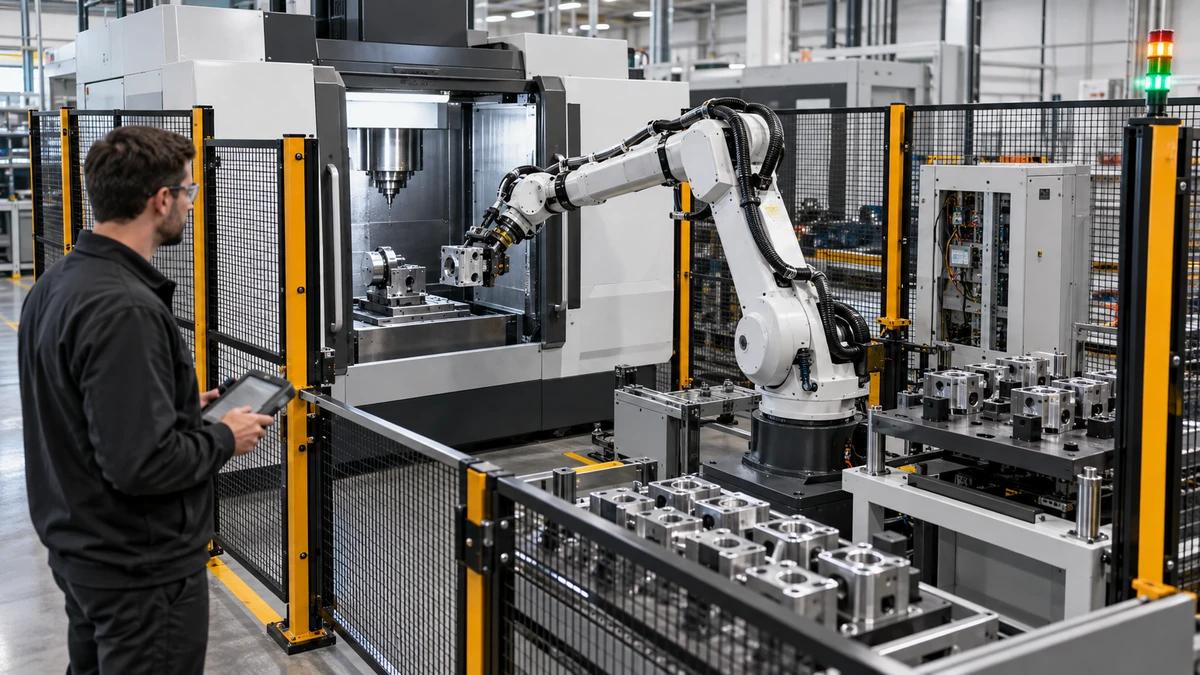
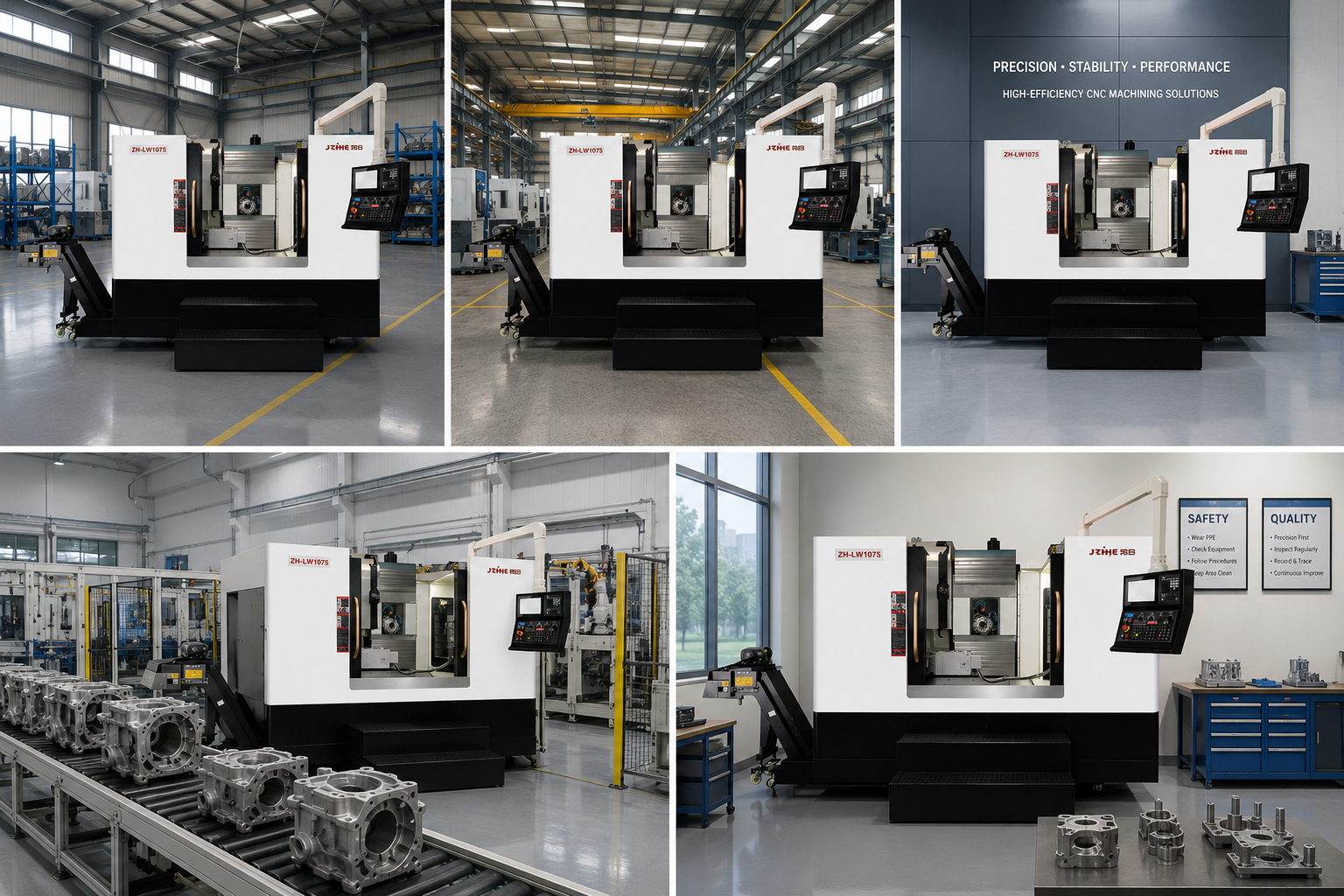
The horizontal machining center product page further describes a fixed-column integral structure, cross-slide table layout, extra-large monolithic base, wide-span “A”-shaped column, enclosed protection, precision CNC rotary table, arbitrary angle positioning, optional five-axis linkage expansion, and single-setup multi-face composite machining capability.
For B2B buyers, this article explains when a horizontal machining center makes more sense than a vertical or gantry machine.
Start with Workpiece Shape
The workpiece shape usually decides the machine direction. A flat plate or small mold may fit a vertical machining center. A large mold or heavy plate may point toward a gantry machining center. A box-type housing, valve body, powertrain component, or industrial enclosure may be better suited to a horizontal machining center.
Zhihe’s homepage gives a practical selection map: vertical machining centers are best for molds, plates, precision metal parts, and small-to-medium components; horizontal machining centers are best for box-type parts, automotive components, and multi-face machining; gantry machining centers are best for large molds, heavy plates, oversized parts, and structural components; drilling and tapping centers are best for high-volume drilling and tapping; and five-axis machines are best for complex curved surfaces and high-value components.
This is a useful starting point because it prevents buyers from overgeneralizing. A horizontal machining center is not “better” in every situation. It is better when multi-face access, reduced setups, and continuous production efficiency matter.
Horizontal Machining Center vs Vertical Machining Center
A vertical machining center is often easier to understand. The spindle moves vertically, the workpiece is usually clamped on a table, and the machine handles many milling, drilling, and tapping jobs well. It is flexible, commonly used, and suitable for many small-to-medium parts.
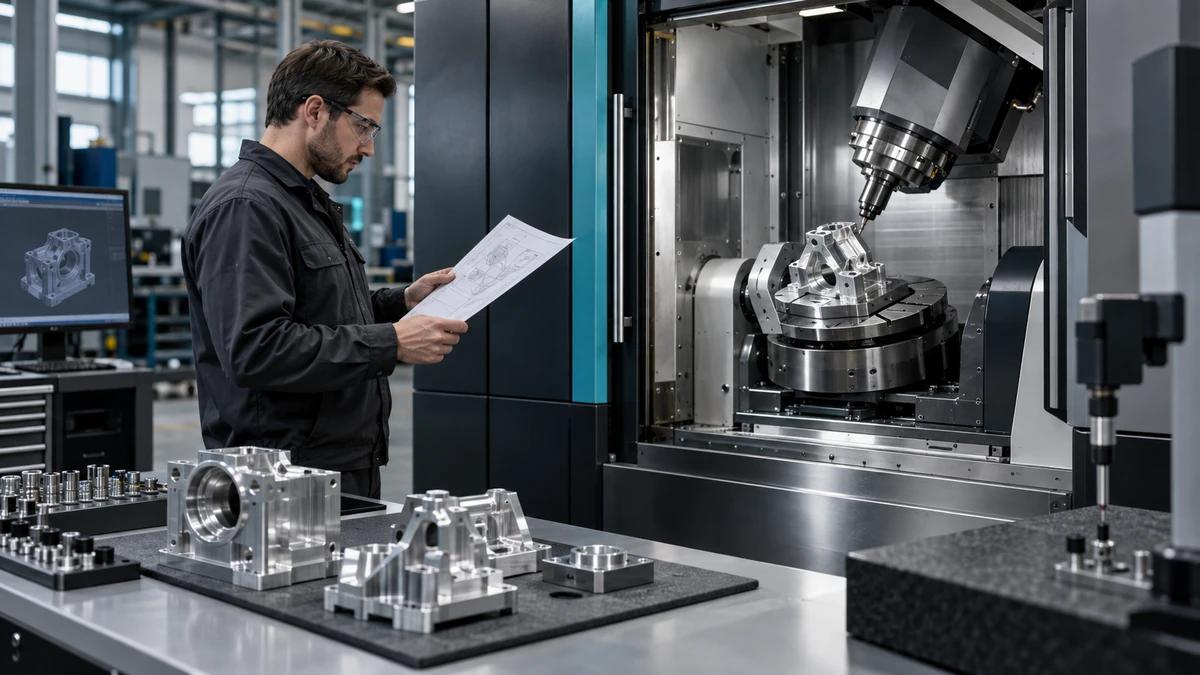
A horizontal machining center is stronger when the workpiece needs several sides machined with better datum consistency. Because the spindle is horizontal and the rotary table can reposition the part, the machine can often process multiple faces in one setup. Zhihe’s product page states that its CNC rotary table enables multi-face and multi-process machining in a single setup, reducing repositioning errors and improving productivity.
The difference becomes clear in box-type parts. Imagine an enclosure, housing, or valve body. If each face must be machined separately on a vertical machine, the operator may need repeated clamping. Every reclamping step adds time and risk. On a horizontal machine, several faces may be processed by rotating the table, keeping the part in one fixture.
That does not mean vertical machines are weaker. They may be more economical, easier to load, and better suited for plates, smaller molds, and general parts. The buyer should choose based on the part family.
Horizontal Machining Center vs Gantry Machining Center
A gantry machining center solves a different problem. It is commonly chosen for large molds, heavy plates, oversized workpieces, and structural components. Zhihe’s homepage positions gantry machines as best for large molds, heavy plates, oversized parts, and structural components, with heavy-duty gantry structure, strong cutting rigidity, and large workpiece stability.
A horizontal machining center, on the other hand, is usually chosen for box-type parts and multi-face machining. The rotary table plays a central role. If the part needs multiple sides processed around a central fixture, horizontal machining may be more efficient. If the part is extremely large, broad, heavy, or plate-like, gantry machining may be more logical.
A mold base may fit better on a gantry table. A transmission housing may fit better on a horizontal rotary table. A large structural plate may need gantry support. A valve body with several ports may benefit from horizontal multi-face access.
The correct comparison is not machine size. It is workpiece support and machining sequence.
Machine Type Comparison Table
| Machine Type | Best-Fit Workpieces | Main Strength | Typical Limitation |
|---|---|---|---|
| Horizontal Machining Center | Box-type parts, housings, valve bodies, automotive components, enclosures | Multi-face machining, reduced setups, rotary table access | May be unnecessary for simple flat plates |
| Vertical Machining Center | Plates, small-to-medium molds, precision parts, brackets | Flexible, compact, common, economical | Repeated setups may be needed for multi-face box parts |
| Gantry Machining Center | Large molds, heavy plates, oversized parts, structural components | Large workpiece support and heavy cutting rigidity | May be too large or costly for smaller parts |
| Drilling & Tapping Center | 3C parts, aluminum components, small brackets | Fast drilling/tapping and light machining | Not suitable for heavy box-type parts |
| Five-Axis Machining Center | Complex curved surfaces, high-value components | Complex tool angles and contour machining | May be unnecessary for simple indexed faces |
This comparison helps buyers avoid choosing by appearance. Each machine architecture exists because different workpieces create different problems.
Why Horizontal Machines Are Often Used for Box-Type Parts
Box-type parts create several machining challenges. They may have features on multiple sides. They may require perpendicular relationships between faces. They may need holes, bores, ports, sealing surfaces, mounting faces, and threaded features. Repeated setup can be slow and risky.
A CNC machining center for box-type parts helps reduce this issue by using a rotary table and horizontal spindle arrangement. The workpiece can be positioned for different sides while remaining clamped. This can improve datum control and shorten setup time.
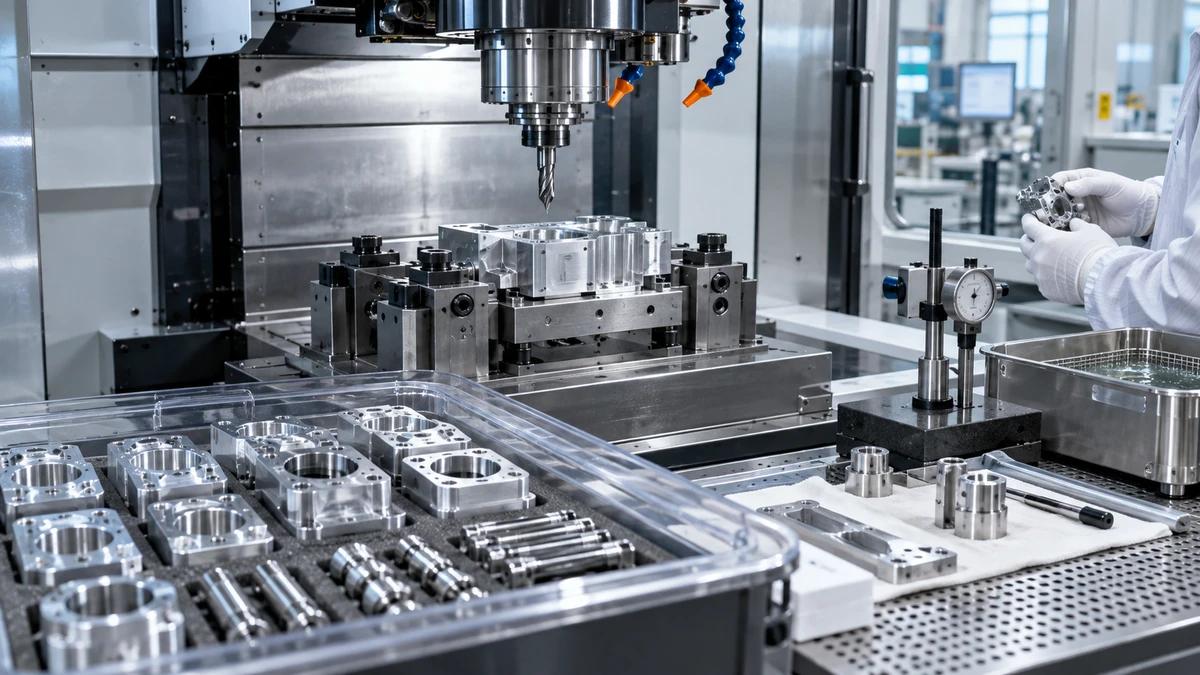
Zhihe’s product page lists medium and large-sized housings, valve components, industrial enclosures, automotive powertrain parts, construction machinery components, high-end molds, energy equipment parts, and general industrial machinery as applications. That application list clearly points to parts where one-setup or fewer-setup machining can provide practical value.
Heavy-Duty Precision Manufacturing Needs More Than Indexing
The rotary table is important, but it is not the only requirement. Heavy-duty manufacturing also depends on rigidity, thermal stability, spindle capability, and machine base design.
Zhihe describes the machine as using a fixed-column integral structure with a cross-slide table layout. The product page also highlights an extra-large monolithic base for vibration resistance and load-bearing capacity, plus a wide-span “A”-shaped column for rigidity and thermal stability.
These features matter when the machine must handle heavy cutting over long cycles. A horizontal machine may need to rough a casting, bore accurately, finish a sealing face, drill several features, and tap holes before the workpiece leaves the setup. If the structure is unstable, multi-face access alone will not guarantee quality.
This is why a heavy duty CNC machining center should be judged as a complete system. Buyers should review structure, spindle, table, control, enclosure, inspection method, and service support.
When Buyers Should Choose a Horizontal Machining Center
A factory should consider a horizontal machining center when:
The part has multiple faces that need machining.
Repeated clamping is causing accuracy loss or long setup time.
Box-type housings or valve bodies are common.
The factory needs better datum consistency.
The part is heavy enough that repeated handling is inconvenient.
Batch production requires stable repeatability.
Chip evacuation and coolant containment are important.
The factory wants more continuous production efficiency.
Zhihe’s homepage includes a case study where a horizontal machining center was configured for large structural parts made from cast iron and carbon steel, including box-type housings, mounting bases, and multi-face structural components. The listed improvement was reduced setup frequency and about 35% improved multi-face machining efficiency for key box-type parts.
This case supports the main selection logic: horizontal machining centers are valuable when repeated alignment and multi-face operations create bottlenecks.
When a Vertical Machining Center May Be Better
A vertical machining center may be the better choice when parts are smaller, simpler, or mostly machined from one or two sides. It may also be more suitable when factory floor space is limited or when the buyer needs a more general-purpose machine.
If the part is a plate, bracket, small mold insert, or simple aluminum component, a horizontal machine may add cost and complexity without improving the process. A good industrial CNC machine manufacturer should be willing to explain this. Overbuying equipment can be just as damaging as underbuying.
The best supplier does not always recommend the largest machine. It recommends the machine that fits the workpiece, production volume, and accuracy target.
When a Gantry Machining Center May Be Better
A gantry machining center may be better when the workpiece is too large, too heavy, or too broad for a horizontal machining center. Large molds, oversized plates, heavy frames, flanges, and structural components may require a large table and gantry support.
If the workpiece is mainly broad and flat, and the challenge is work envelope or heavy support rather than multi-face rotation, the gantry route may be stronger. Zhihe’s homepage positions gantry machining centers for large molds, heavy plates, oversized parts, and structural components.
The buyer should ask: is our main bottleneck multi-face setup, or is it part size and support? If the problem is repeated multi-face machining, choose horizontal. If the problem is large-format support, consider gantry.
Buying Decision Table
| Buyer Situation | Recommended Machine Direction | Reason |
|---|---|---|
| Box-type housing with several machined faces | Horizontal machining center | Reduces repeated clamping and improves multi-face workflow |
| Flat plates and small-to-medium molds | Vertical machining center | More compact and economical for simpler setups |
| Large molds or heavy plates | Gantry machining center | Better support for oversized and heavy workpieces |
| Aluminum brackets with many drilled/tapped holes | Drilling & tapping center | Faster for high-volume light-part processing |
| Complex curved surfaces | Five-axis machining center | Better for tool-angle control and contour machining |
| Heavy cast housing with bores and multiple reference faces | Horizontal machining center | Supports datum control and multi-process machining |
Accuracy Testing Should Match the Machine Type
Different machine architectures need different acceptance priorities. For a horizontal machining center, buyers should pay attention to linear axis accuracy, rotary table positioning, perpendicularity, boring stability, and trial cutting results.
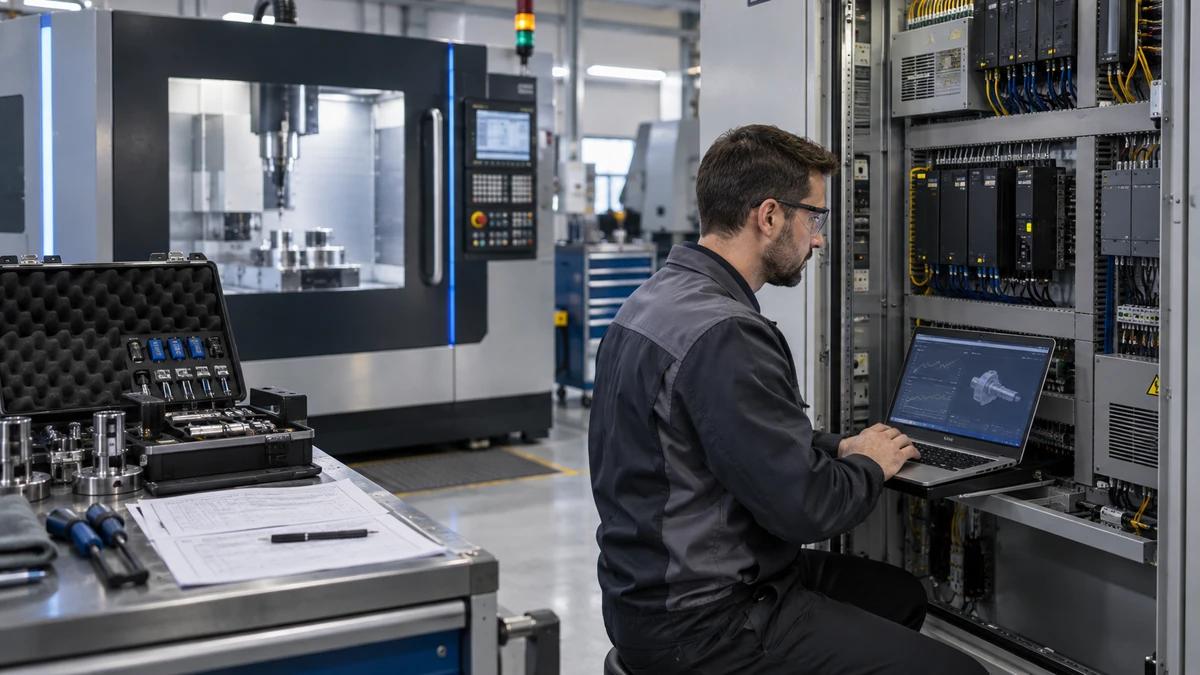
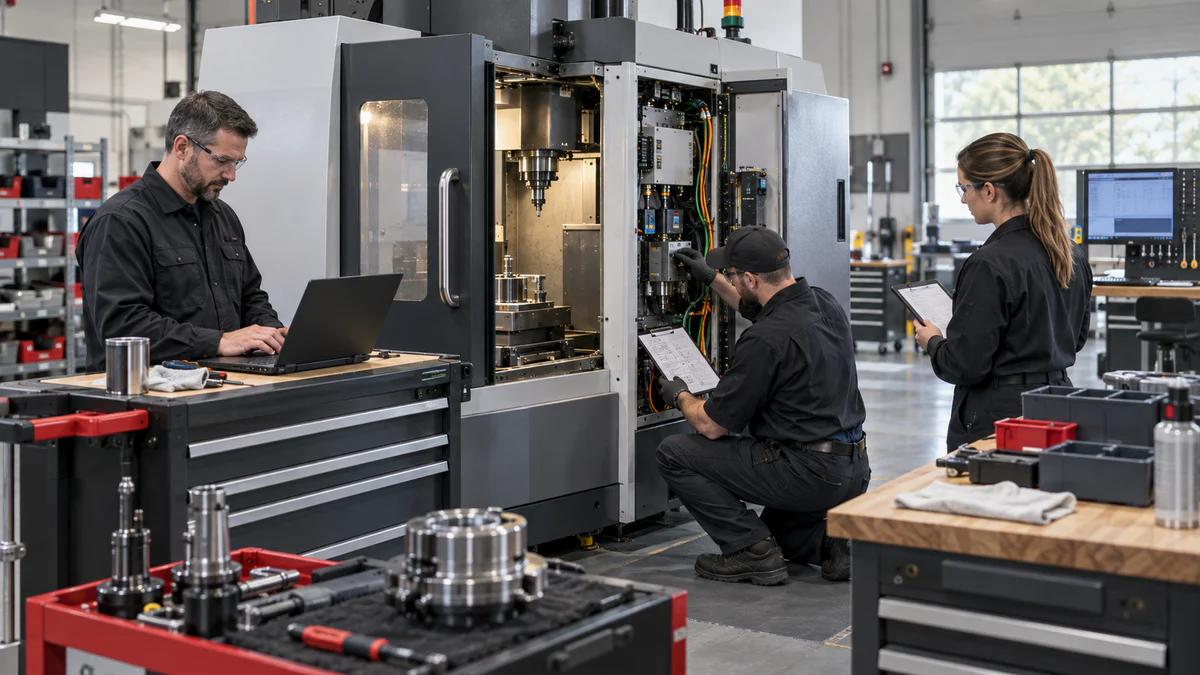
Zhihe states on its homepage that machines may be inspected through laser interferometer calibration, ballbar testing, and trial cutting before delivery, depending on model and configuration. ISO 230-2 provides methods for testing and evaluating positioning accuracy and repeatability of CNC machine tool axes, including linear and rotary axes.
Before buying, ask the supplier to define:
Which tests are included?
Will rotary table accuracy be checked?
Is trial cutting available?
What test piece will be used?
What tolerance is realistic after installation?
Who handles post-installation geometry checking?
This makes the purchase more objective.
Common Mistakes in Machine Selection
The first mistake is assuming that one CNC architecture can solve every problem. Horizontal, vertical, gantry, drilling and tapping, and five-axis machines each serve different production needs.
The second mistake is choosing by visible machine size. Bigger is not always better.
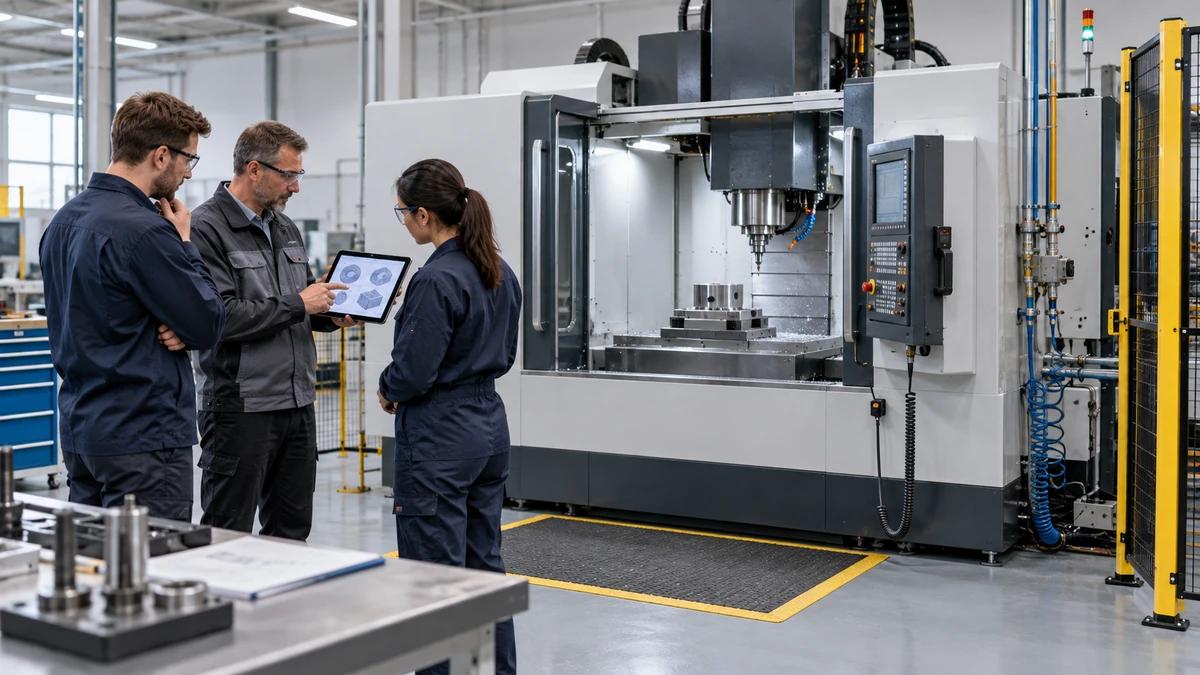
The third mistake is ignoring fixture design. A horizontal machine needs strong fixture planning to unlock its multi-face advantage.
The fourth mistake is treating optional five-axis expansion as automatically necessary. It should be selected only when part geometry requires it.
The fifth mistake is comparing only purchase price. Setup time, scrap, rework, operator dependency, and service support can matter more over the life of the machine.
FAQ
When should a factory choose a horizontal machining center?
Choose a horizontal machining center when the workpiece has multiple faces, repeated setups create errors, or box-type parts and housings need stable multi-process machining.
Is a horizontal machining center better than a vertical machining center?
Only for the right parts. Horizontal machines are better for multi-face box-type parts. Vertical machines can be better for plates, small molds, and general precision components.
Is a gantry machining center better for heavy-duty machining?
A gantry machining center is better when the part is large, heavy, broad, or requires large-format support. A horizontal machining center is better when the main problem is multi-face machining around a clamped workpiece.
What does Zhihe list as horizontal machining center applications?
Zhihe lists medium and large-sized housings, valve components, industrial enclosures, disk and sleeve components, automotive powertrain parts, construction machinery components, high-end molds, energy equipment parts, and general industrial machinery.
What should buyers ask before ordering?
Buyers should ask about workpiece fit, rotary table capability, spindle configuration, fixture design, accuracy testing, enclosure design, installation support, and after-sales service.
Conclusion
A horizontal machining center is not simply another CNC milling machine. It is a practical solution for factories that need stable multi-face machining, reduced setup frequency, and better datum control for box-type parts, housings, valve bodies, automotive components, industrial enclosures, molds, and energy equipment parts.
Compared with a vertical machining center, it is stronger when repeated clamping creates risk. Compared with a gantry machining center, it is more relevant when the part needs rotary table access and multi-face processing rather than large-format support. Compared with a drilling and tapping center, it is built for heavier, more complex parts rather than high-speed light-part drilling.
Zhihe’s horizontal machining center product page emphasizes a fixed-column integral structure, cross-slide table, monolithic base, “A”-shaped column, high thermal stability, fully enclosed protection, CNC rotary table, arbitrary angle positioning, optional five-axis expansion, and single-setup multi-face machining.
For B2B buyers, the right choice starts with the workpiece. Define the part family, material, faces, tolerance, setup method, fixture plan, and production volume first. Then choose the machine architecture that fits the real process. A good horizontal machining center supplier should help with that decision, not just send a quotation.