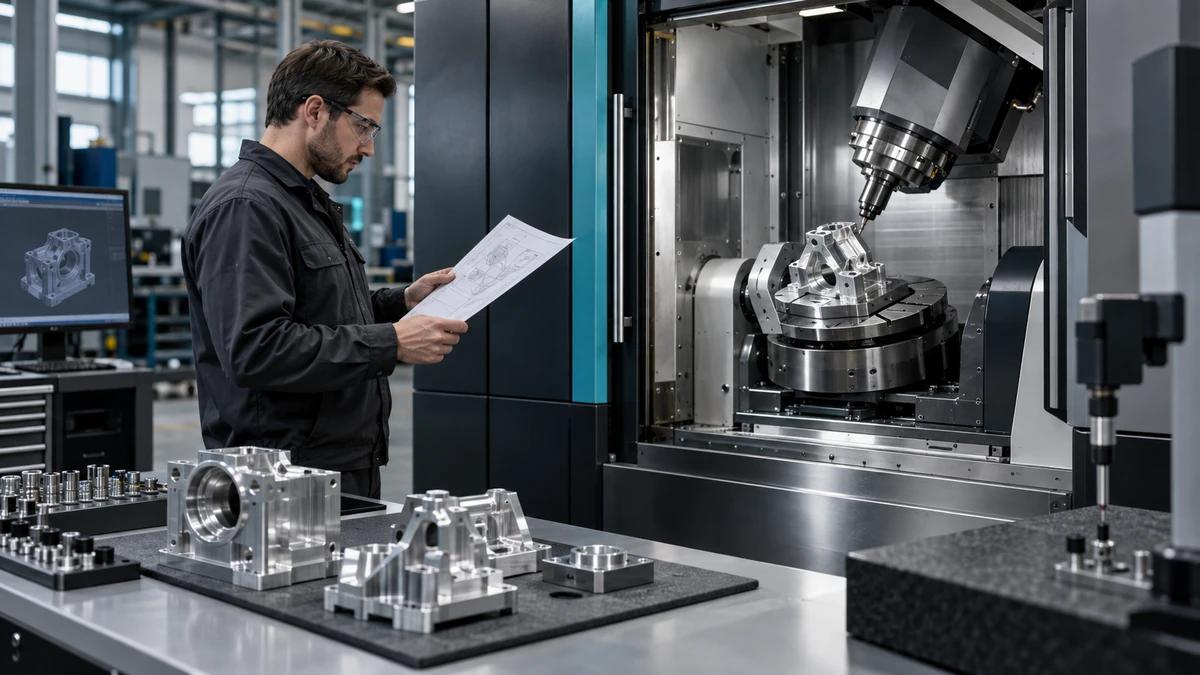
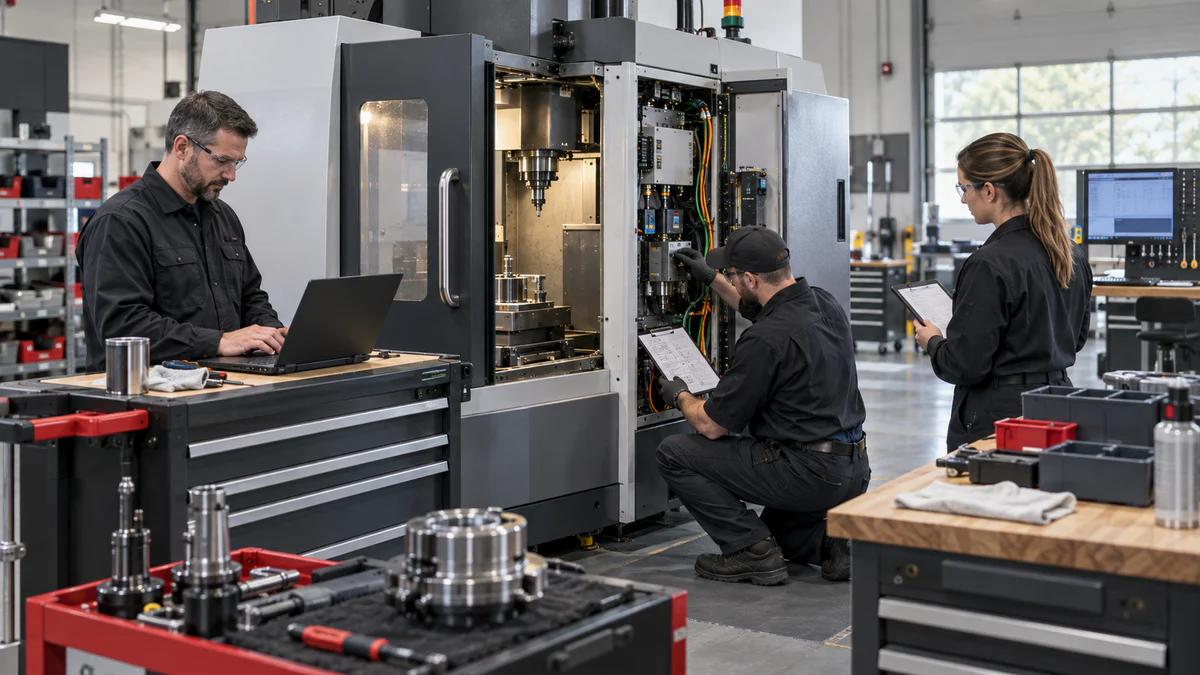
Why Aluminum Profile Machining Deserves a Dedicated Machine Choice
Buying a vertical machining center for aluminum profiles may sound simple at first. Aluminum cuts more easily than many steels, the parts often look clean, and many workshops already have experience with milling, drilling, and tapping aluminum components.
Then production starts asking harder questions.
Is the profile nearly two meters long? Does it need repeated holes across the full length? Will the workpiece vibrate during long-overhang cutting? Can the part be completed in one clamping, or does it need segmented machining? Will the same machine also handle 3C frames, lithium battery aluminum structures, PV aluminum profiles, robot guide rails, and automation equipment beams?
Those questions matter because aluminum profiles are forgiving in one way and unforgiving in another. They are generally easier to cut than hard steel, but they quickly show chatter marks, burrs, hole-position deviation, surface scratches, and clamping errors. A machine that works well for compact brackets may feel awkward when the workpiece becomes long, thin, and sensitive to vibration.
That is why aluminum profile machining deserves a dedicated machine choice. The buyer is not only choosing a spindle and a table. The buyer is choosing a production route.
Why Aluminum Profiles Create Different Machining Problems
Aluminum profiles are often long, relatively slim, and full of repeated features. A part may need milling along its length, drilling at several locations, rigid tapping, end-face work, side features, or light pocketing. Each operation may look simple on its own. Combined across a long workpiece, the process becomes more demanding.
The first challenge is travel. If the machine does not have enough X-axis range, the workshop may need segmented clamping. That means the profile is machined in one section, moved, re-clamped, and machined again. This can create cumulative positioning errors.
The second challenge is rigidity. Long aluminum profiles can vibrate, especially when tool overhang increases or the part is not supported well. Aluminum may be softer than steel, but vibration still damages surface quality and hole consistency.
The third challenge is repeatability. Many aluminum profile parts are produced in batches. One good sample does not prove the process. Buyers need stable output over dozens, hundreds, or thousands of pieces.
This is where a purpose-matched aluminum profile machining center becomes valuable.
What the ZH-2000V Adds to Aluminum Profile Production
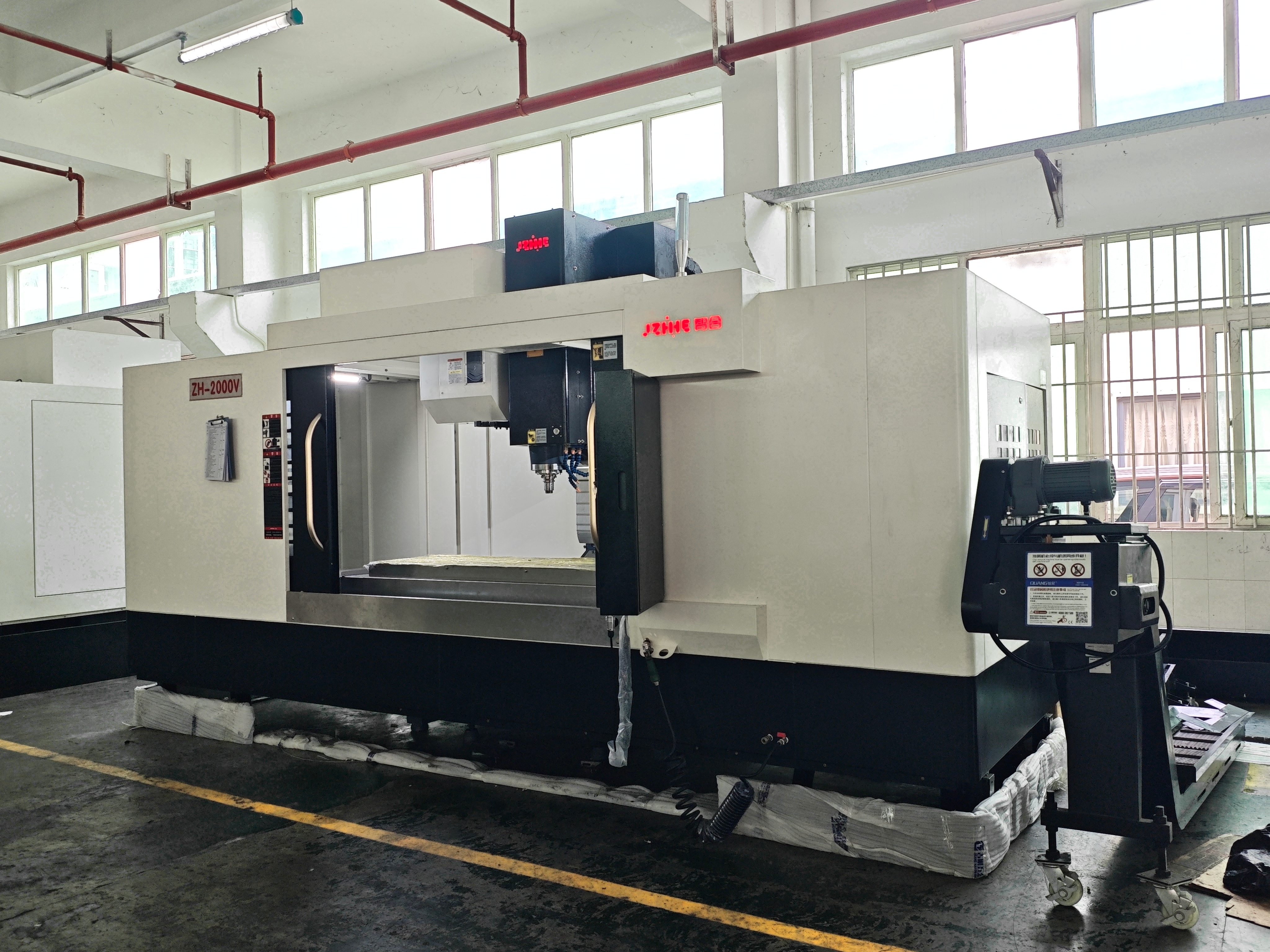
The ZH-2000V Vertical Machining Center is designed for high-precision milling, drilling, and rigid tapping of long-strip aluminum or steel profiles and medium-sized parts. Its product page lists a 2000 / 500 / 500 mm X/Y/Z travel, 10,000 rpm belt-drive BT40 spindle, and MITSUBISHI M80VB CNC controller. The same page positions it for 3C electronic frames, lithium battery/PV aluminum structures, robot guide rails, automotive parts, and automation equipment.
For buyers, the most important number is often the 2000 mm X-axis travel. This gives the machine a stronger fit for long aluminum profiles than a standard compact vertical machining center. If a part can be machined in one clamping instead of being divided into several sections, the workshop can reduce handling time and lower the risk of accumulated alignment error.
The product page also lists a 2000 × 500 mm worktable, 500 kg maximum table load, BT40 spindle taper, 7.5 kW spindle motor power, and 24-tool arm-type magazine as part of the detailed specification. These details are not just catalog numbers. They influence fixture space, tooling flexibility, and whether the machine can support repeated production of long-profile and medium-sized workpieces.
Why Long Travel Matters More Than It First Appears
A long travel vertical machining center is not simply a larger version of a standard machine. In aluminum profile work, long travel changes the process.
When a profile can be placed and machined across its full length, the operator can avoid segmented clamping. That matters because each re-clamping step introduces a new chance for datum shift. It may only be a small shift, but over a long part, a small error can become visible during assembly.
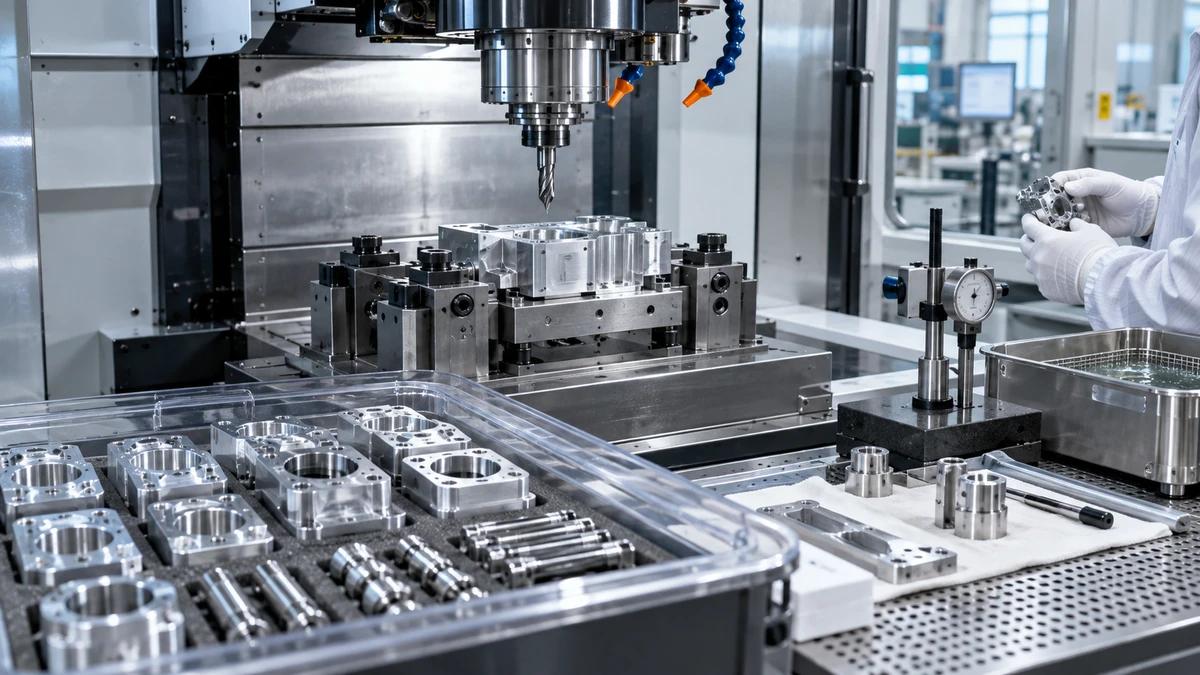
The ZH-2000V product page includes a new energy battery tray aluminum profile case. The workpiece was 6061 aluminum alloy, sized 1800 × 300 × 80 mm. The customer’s original problem included insufficient travel, segmented clamping, cumulative positioning error, vibration during long-overhang cutting, and a cycle time of about 45 minutes per piece. The ZH-2000V solution used its 2000 mm X-axis travel for one-time clamping, with the page reporting cycle time reduced to 28 minutes, efficiency increased by 38%, yield improved from 85% to 97%, and daily output rising from 12 to 20 pieces.
That case explains the value clearly. The machine is not only longer for the sake of being longer. The extra travel helps change the way the part is processed.
Vertical or Horizontal: What Buyers Are Really Comparing
Many buyers begin with the phrase CNC vertical machining center because vertical machines are familiar. They are generally easier to load from the front or top, easier for operators to observe, and practical for many drilling, tapping, and milling operations.
For aluminum profiles, that convenience matters. Long profiles often need clear fixture access, simple loading, and fast inspection. A vertical machining center can be a sensible choice when the part is mainly machined from one primary side, or when fixture planning allows enough access for drilling, tapping, and milling.
Horizontal machining centers may be useful when the part needs stronger side access, better chip fall, or multi-face production in fewer setups. But they are not automatically the better answer for aluminum profiles. The correct choice depends on the part geometry, production rhythm, and fixture strategy.
For ZH-2000V-type work, the product direction is clear: long aluminum and steel profiles, medium-sized parts, and high-precision batch production. The machine is not trying to be a universal answer for every CNC job. It is positioned for long-profile machining where X-axis travel, repeatability, and process stability matter.
Key Features Buyers Should Check
A vertical machining center for aluminum profiles should be evaluated by the way it supports daily production, not only by its largest specification.
| Buyer Check Point | Why It Matters for Aluminum Profiles |
|---|---|
| X-axis travel | Determines whether long profiles can be machined in one clamping |
| Worktable size | Affects fixture layout, stops, clamps, and support points |
| Spindle taper and power | Influences tool selection, rigidity, and cutting stability |
| Tool magazine | Reduces interruptions when one part needs drilling, tapping, milling, and chamfering |
| Controller | Affects rigid tapping, compensation, programming workflow, and operator familiarity |
| Accuracy verification | Helps buyers judge whether long-travel machining is stable |
| Chip management | Aluminum chips build quickly and can affect cleaning, safety, and uptime |
| Supplier support | Fixture guidance, trial cutting, installation, and training reduce project risk |
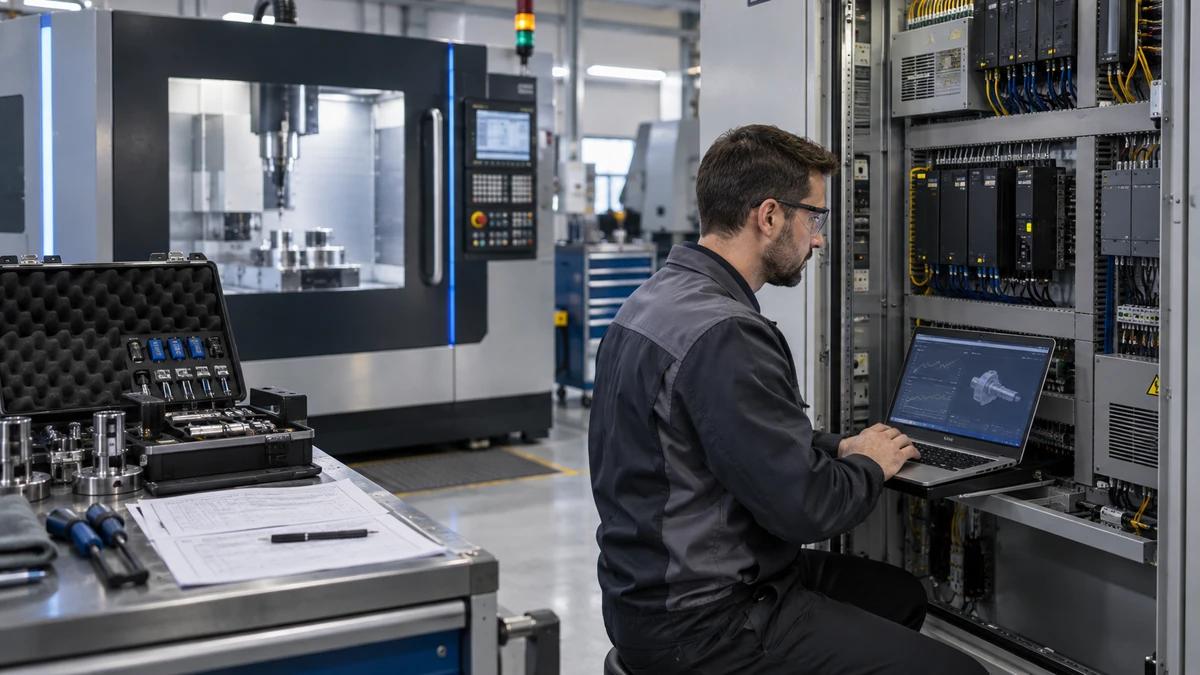
The ZH-2000V page lists ±0.010 mm positioning accuracy and ±0.005 mm repeatability, with laser interferometer and ballbar inspection equipment used for verification. For professional acceptance discussions, buyers can also refer to ISO 230-2, which specifies methods for testing and evaluating positioning accuracy and repeatability of numerically controlled machine tool axes by direct measurement.
One practical note: the ZH-2000V page shows a summary rapid traverse value of 30 / 30 / 30 m/min, while the detailed technical table lists 48 / 48 / 48 m/min. Buyers should confirm the final configuration with the supplier before purchase.
Why Fixtures Cannot Be Treated as an Afterthought
Aluminum profiles often need careful support. A long profile may sag slightly, vibrate under cutting force, or shift if the clamping method is too weak. Over-clamping can also create distortion, especially on thinner sections.
That is why fixture planning is part of machine selection. Buyers should ask whether the machine allows enough room for profile stops, side clamps, support blocks, and quick-change fixtures. A machine may have enough travel on paper but still feel inefficient if the fixture blocks tool access or slows down loading.
For repeated aluminum profile production, a good fixture should help operators load the part quickly, locate the datum consistently, and avoid vibration during long cutting passes. It should also leave access for drilling, tapping, and milling without forcing unnecessary re-clamping.
A strong machine plus a weak fixture is not a stable process.
What the Automation Beam Case Shows
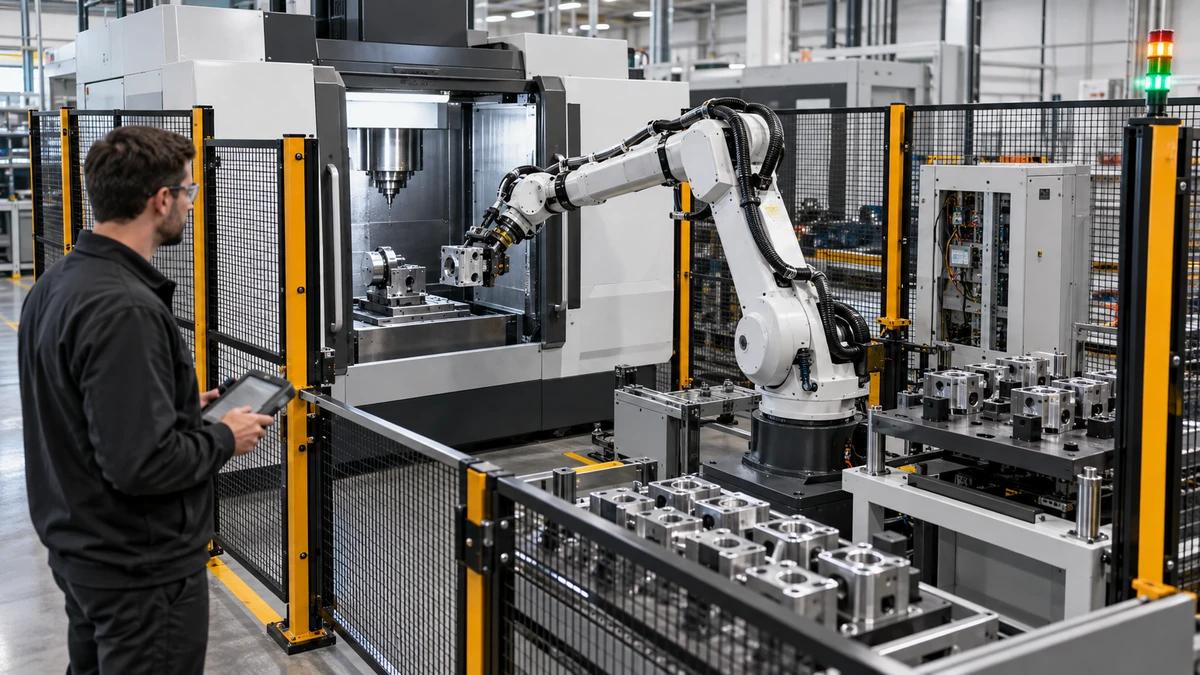
The ZH-2000V product page also includes an automation equipment linear guide mounting beam case. The workpiece was 45# carbon steel, sized 1950 × 180 × 120 mm. The listed customer problems included insufficient rigidity for a near-two-meter part, flatness deviation of 0.05 mm/m, too much non-cutting time from frequent tool changes, and batch precision fluctuation causing assembly hole misalignment.
The solution used the ZH-2000V’s cross-slide structure, X/Y precision linear guides, C3-grade ball screws, 24-tool BT40 arm-type magazine, and MITSUBISHI M80VB system. The page reports flatness controlled within 0.02 mm/m, auxiliary time reduced by 65%, cycle time reduced from 52 minutes to 35 minutes per piece, precision fluctuation within ±0.008 mm after 100 consecutive pieces, and assembly pass rate improved to 99.2%.
Although this case uses carbon steel rather than aluminum, it is still useful for buyers. It shows that long-part machining is not only about aluminum cutting speed. Long travel stability, tool handling, and batch consistency also matter.
Common Mistakes Buyers Make
One common mistake is choosing by spindle speed alone. A 10,000 rpm spindle may be enough for many aluminum profile jobs, but speed cannot solve poor clamping, limited travel, weak support, or unstable cutting.
Another mistake is assuming any general vertical machining center can behave like a profile machining solution. It may complete the part, but the cycle time, setup difficulty, and consistency may not be acceptable.
A third mistake is ignoring part length. A machine can look large enough from the outside and still be inconvenient when the profile, fixture, tool length, and access path are considered together.
Some buyers also wait too long to discuss trial cutting. For a long aluminum profile, trial cutting can reveal vibration, burr formation, hole-position consistency, surface quality, and real cycle time before final acceptance.
What Buyers Should Ask Before Requesting a Quote
Before requesting a quote for a vertical machining center for aluminum profiles, buyers should prepare more than a product name.
Send the supplier:
- Part drawings and profile length
- Material grade, such as 6061, 6063, or steel profile material
- Required tolerances and surface finish
- Hole quantity, tapping requirements, and side milling needs
- Expected batch quantity and daily output target
- Current machining method and current bottleneck
- Fixture preference or existing clamping method
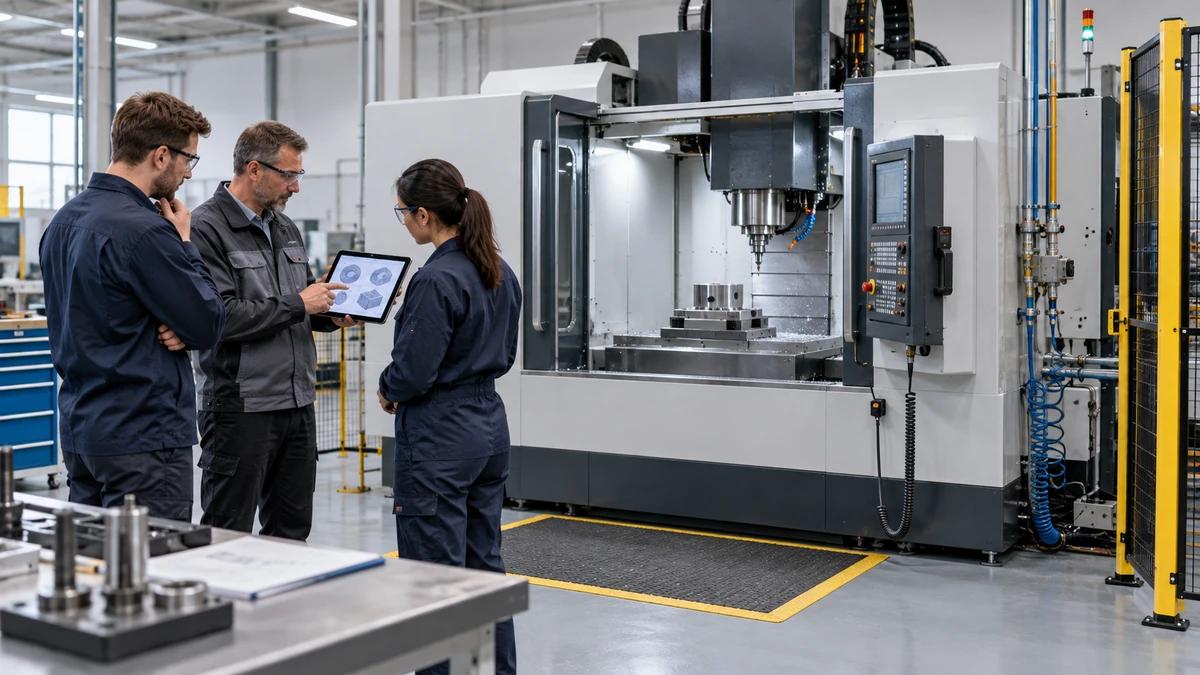
The ZH-2000V page states that pre-acceptance trial cutting may be performed at the supplier’s facility after assembly and commissioning, with final acceptance trial cutting after delivery, installation, and commissioning at the buyer’s facility. It also lists approximately 45–60 working days delivery time after down payment and signed contract, export wooden case packaging with moisture-proof, shock-proof, and rust-proof treatment, on-site installation and commissioning, 2–3 days free on-site training, and a 12-month warranty starting from final acceptance.
For overseas buyers, these terms are worth checking early. Machine capability matters, but delivery, packaging, training, and spare parts support also affect the final purchasing decision.
FAQ
Is a vertical machining center always better for aluminum profiles?
Not always. It depends on part length, machining faces, fixture access, chip flow, and production volume. For many long aluminum and steel profiles, a machine like the ZH-2000V is practical because of its 2000 mm X-axis travel and profile-oriented machining range.
Why is long X-axis travel important?
Long X-axis travel can help machine full-length profiles in one clamping. This reduces segmented clamping, lowers cumulative positioning error, and can improve cycle time.
Should buyers prioritize speed or rigidity?
Both matter, but rigidity and repeatability often protect more value over time. A fast spindle cannot compensate for vibration, weak clamping, or unstable long-travel movement.
Can ZH-2000V handle more than aluminum profiles?
Yes. The product page lists applicable materials including aluminum alloys, copper alloys, carbon steel, and low-carbon alloy steel, with target industries including 3C electronic frames, Li-ion/PV aluminum structures, robot guide rails, automotive, and automation equipment.
What is the best first step before buying?
Start with the part drawing. Confirm part length, material, tolerance, machining operations, fixture method, and output target before comparing machine models.
Conclusion
Choosing a vertical machining center for aluminum profiles is not just about finding a machine that can cut aluminum. The real decision is whether the machine can handle long workpieces, reduce re-clamping, control vibration, support batch accuracy, and keep the production process stable.
The ZH-2000V Vertical Machining Center fits buyers who need high-precision milling, drilling, and rigid tapping for long aluminum or steel profiles and medium-sized parts. Its 2000 mm X-axis travel, BT40 spindle, Mitsubishi controller, 2000 × 500 mm worktable, tool magazine configuration, accuracy verification, and real application cases make it a strong reference for profile machining projects.
A better machine decision starts with the part, not the brochure. Once buyers understand the real workpiece length, fixture requirements, material behavior, and output target, the right CNC machining center becomes much easier to choose.