What buyers really mean when they search for a vertical machining center manufacturer
When a sourcing team starts comparing a vertical machining center manufacturer, the question is usually not just “who sells machines?” It is more practical than that: who can supply a CNC vertical machining center that fits the part, hold up on the shop floor, and stay supportable after the truck leaves. For engineers and production buyers, the machine itself is only half the purchase. The other half is whether the supplier can help with selection, setup, trial cutting, training, and the unglamorous parts of ownership that show up months later.
That matters because a vertical machining center is often the backbone of a metalworking cell. If it is undersized, poorly matched to the workpiece, or difficult to service, the cost is not limited to the purchase order. It shows up in scrap, idle time, tool wear, and operator frustration. If the machine is enclosed properly and configured for repeatable milling, drilling, tapping, and multi-face work, it can be a steady production asset for years.
What the machines are typically used for
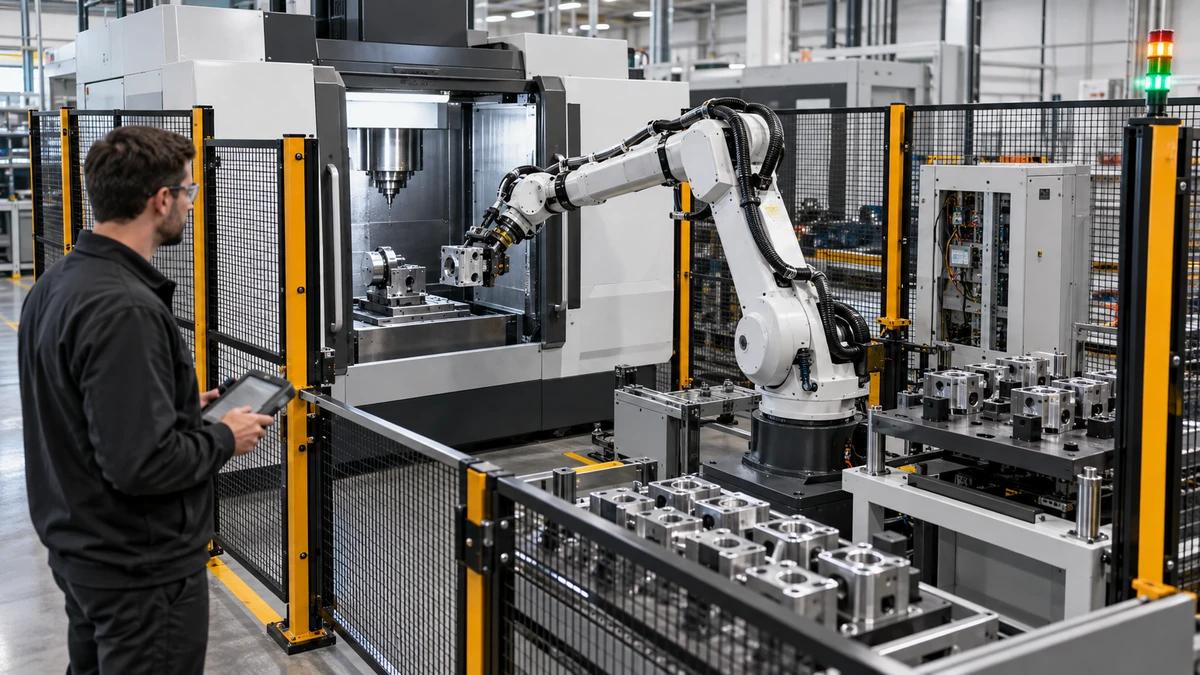
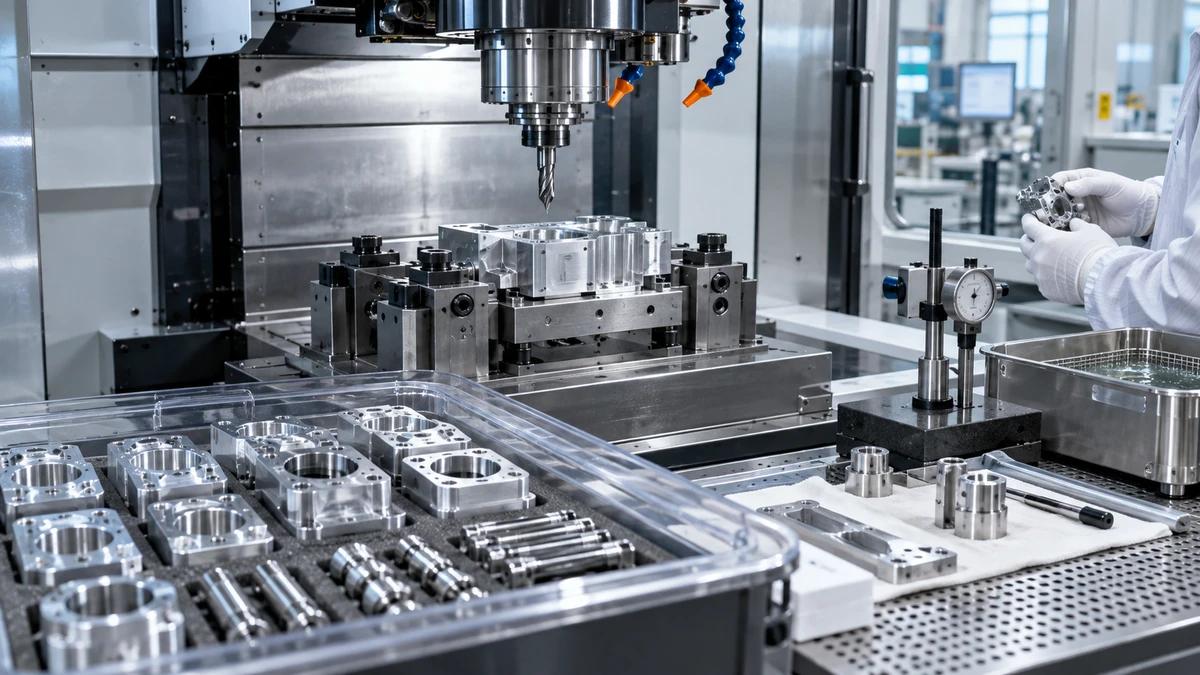
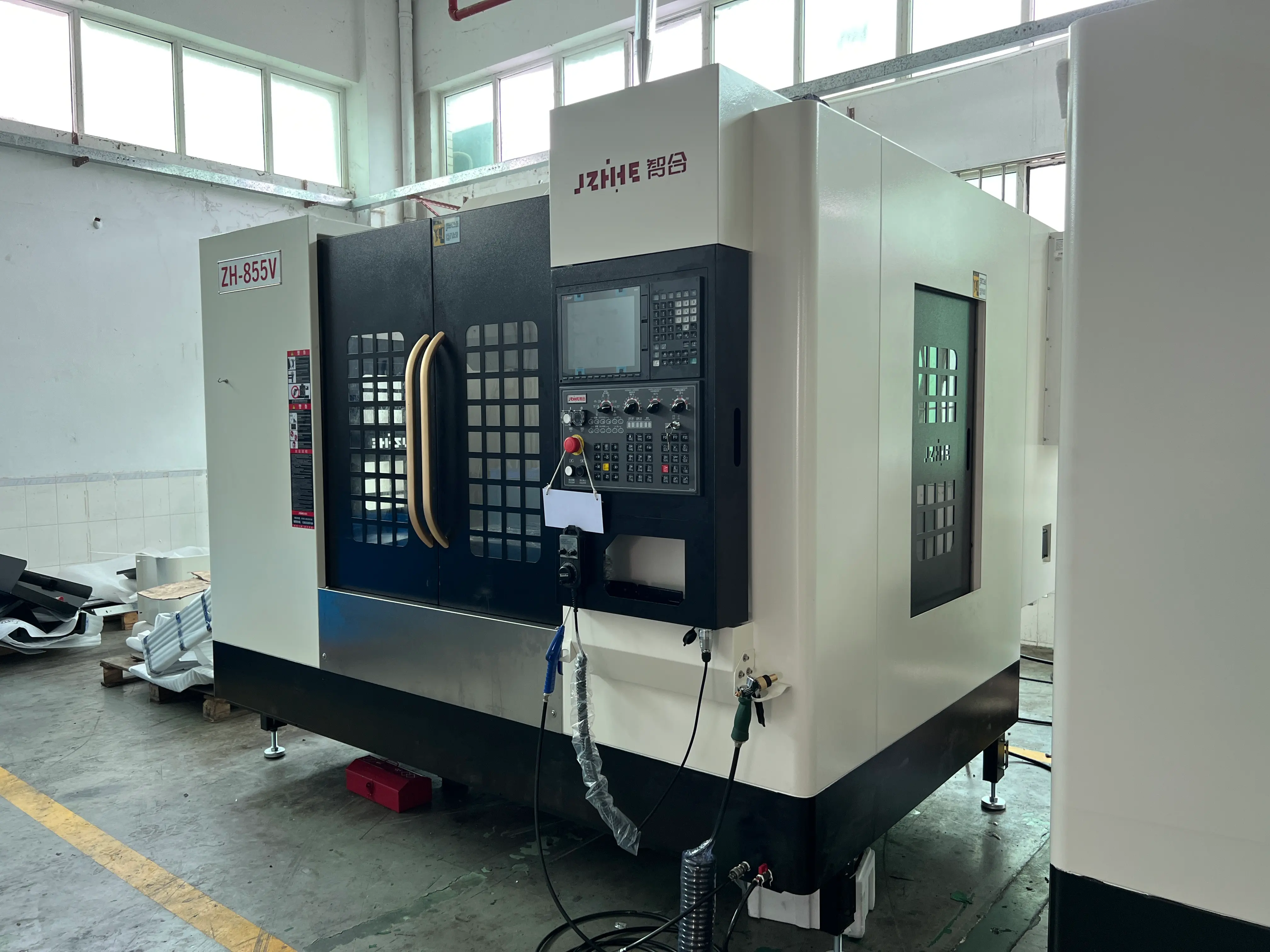
The equipment in this category is designed for precision machining of metal and other rigid parts. In a typical factory layout, a CNC machining center of the vertical type handles general metalworking jobs, fixture parts, tooling components, and small-to-medium batch production. The enclosed cabinet structure seen in many shop-floor installations helps contain chips and coolant, which is one reason buyers still favor the format for organized production environments.
In the case of Zhongshan Zhihe CNC Technology Co., Ltd., the company’s product range includes vertical machining centers, horizontal machining centers, gantry machining centers, drilling and tapping centers, CNC milling machines, and five-axis machining centers. That breadth matters to buyers because it suggests the supplier can recommend a machine family based on the work rather than forcing every application into one model.
Quick buyer takeaways
If you are evaluating a VMC machine manufacturer, focus on three things first:
The machine should match the part family, not just the headline spec sheet.
The supplier should be able to support selection, installation guidance, and operator training.
The machine structure and control arrangement should fit the way your plant actually runs, including loading, chip removal, and maintenance access.
These sound obvious, but they are where many projects drift off course. A machine can look similar in photos and still behave very differently once it is cutting production parts.
What to look for in the machine build
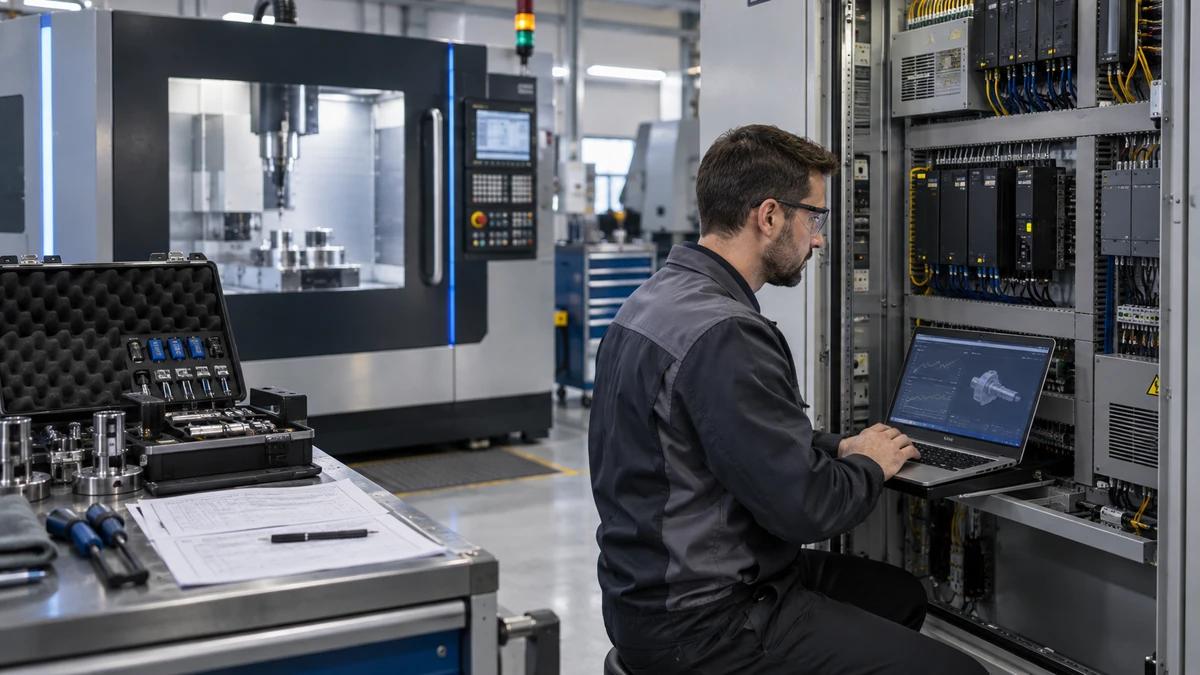
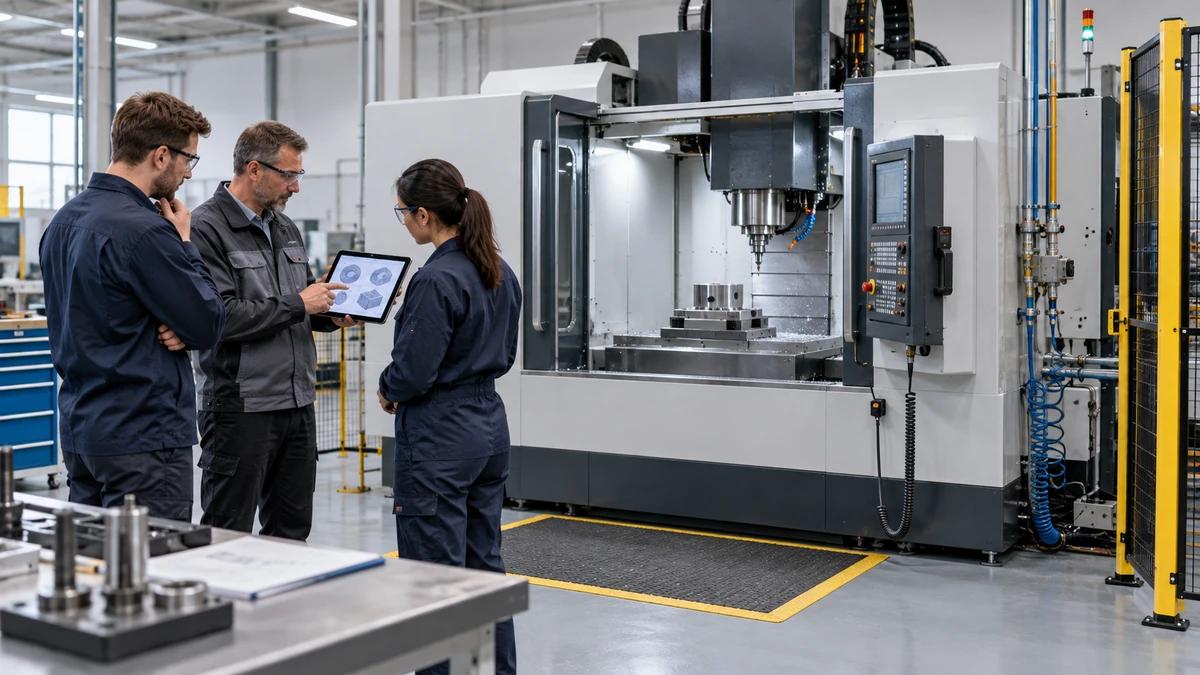
From a buyer’s perspective, the visible construction details tell part of the story. The machines described here use enclosed steel cabinets with white-and-black painted exterior panels, front loading doors with grid-style window panels, and side-mounted CNC control consoles with display and keypad. Overhead stack lights or status indicators are visible, along with hoses and cables at the base. Some units also have access steps or platforms.
Those details are not cosmetic. A clean enclosure, accessible control panel, and organized cable routing usually reflect a shop that expects daily use rather than occasional demonstration. That said, buyers should not assume enclosure quality alone equals machining accuracy. It is still necessary to ask about the exact spindle configuration, work envelope, axis layout, and control system before making a decision.
Practical selection criteria
For most industrial buyers, the useful questions are straightforward:
What parts will be machined most often?
How much floor space is available?
Will the machine be used for drilling, tapping, milling, or mixed operations?
What level of repeatability does the process actually need?
Is the plant set up for single-machine work or a production cell?
Zhongshan Zhihe says its machines are suitable for drilling, tapping, milling, multi-face machining, mold work, and batch production. The company also notes that it can help with machine recommendations, control system selection, fixture support, trial cutting, and after-sales service. For many buyers, that support package may be as important as the hardware.
Where buyers often make mistakes
One common mistake is overbuying. A machine with capabilities far beyond the part requirement can tie up capital and floor area without improving throughput. Another is underestimating support needs. If a supplier cannot help with commissioning, training, or spare parts follow-up, the machine may be cheap on paper and expensive in practice.
A more subtle mistake is assuming all enclosed vertical machining center systems are interchangeable. They are not. Two machines can share a similar footprint and still differ in rigidity, control logic, ease of maintenance, and how comfortably operators can load parts during a long shift.
What this supplier appears positioned to offer
Zhongshan Zhihe CNC Technology Co., Ltd., established in 2018, presents itself as a CNC machine builder with growing engineering, assembly, inspection, and service capability. The company says it serves customers in automotive parts, 3C electronics, aluminum processing, precision hardware, communication equipment, mold making, home appliances, and lithium battery equipment.
That mix of sectors is useful context. It suggests the supplier is used to working with different part sizes, material types, and production rhythms. The company also states that it supports packaging, domestic and international transport, and provides shipment photos and delivery documentation for overseas customers. For buyers managing cross-border sourcing, that kind of logistics support is not a small detail.
FAQ for sourcing teams
Should I ask for test cutting?
Yes, if the part is important or the material is difficult. A trial run can reveal more than a brochure ever will.
Can one vertical machining center cover every job?
Usually not. The better approach is to match the machine to the part family and production volume.
What information should I prepare before requesting a quote?
Provide the part drawing, material, dimensions, accuracy needs, expected machine type, and target output. That gives the manufacturer something usable instead of a vague inquiry.
Next step for buyers
If you are shortlisting a vertical machining center manufacturer, start with your part data and your production constraints, not the machine catalog. Ask for a recommendation based on the workpiece, then confirm the control system, fixture approach, and service support before you compare prices. A good supplier should help you reduce risk, not add another layer of it.
For inquiries, Zhongshan Zhihe CNC Technology Co., Ltd. asks buyers to share drawings and production requirements so it can recommend a suitable CNC machine. That is the right starting point for a serious purchase conversation.