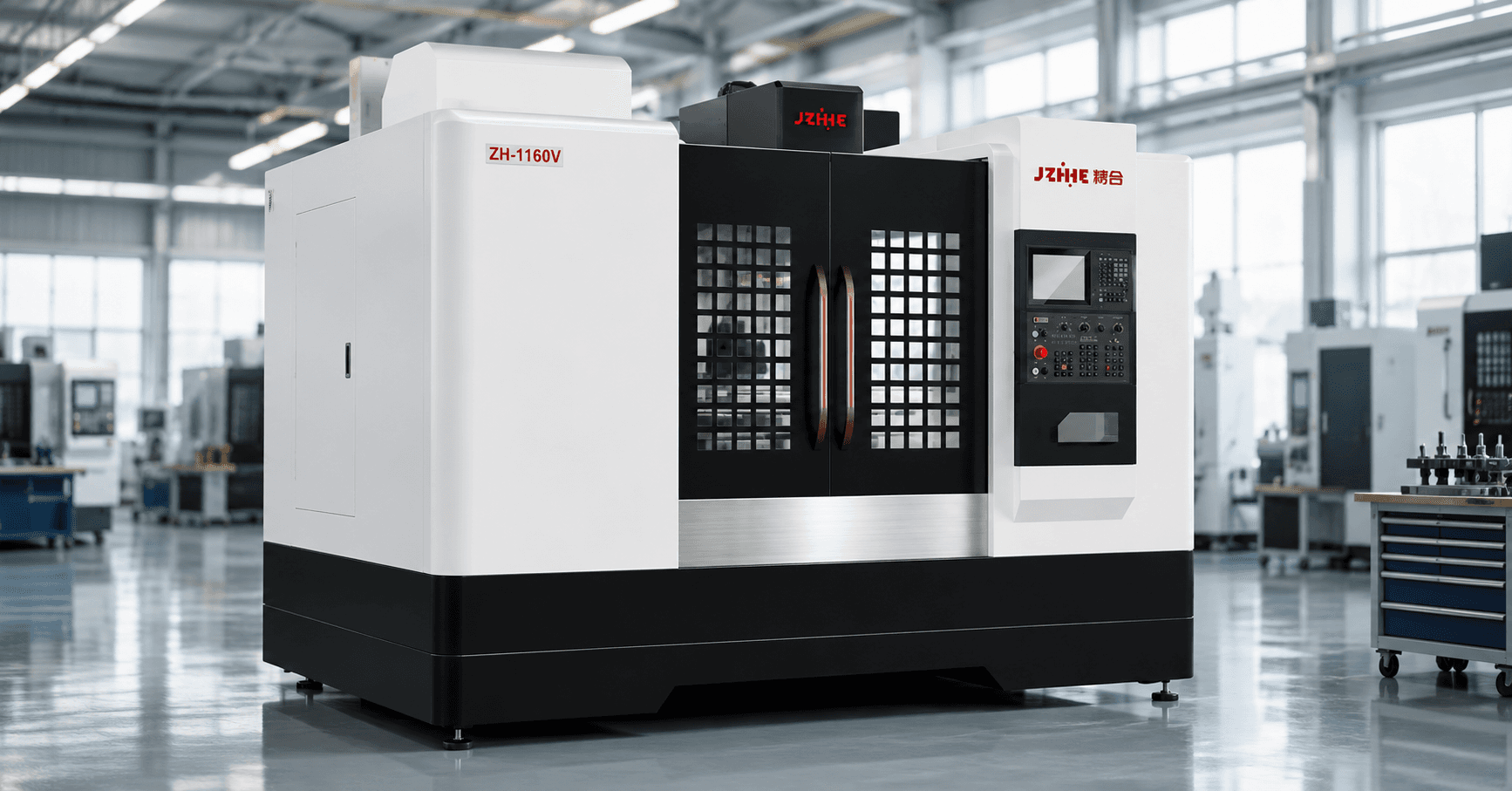
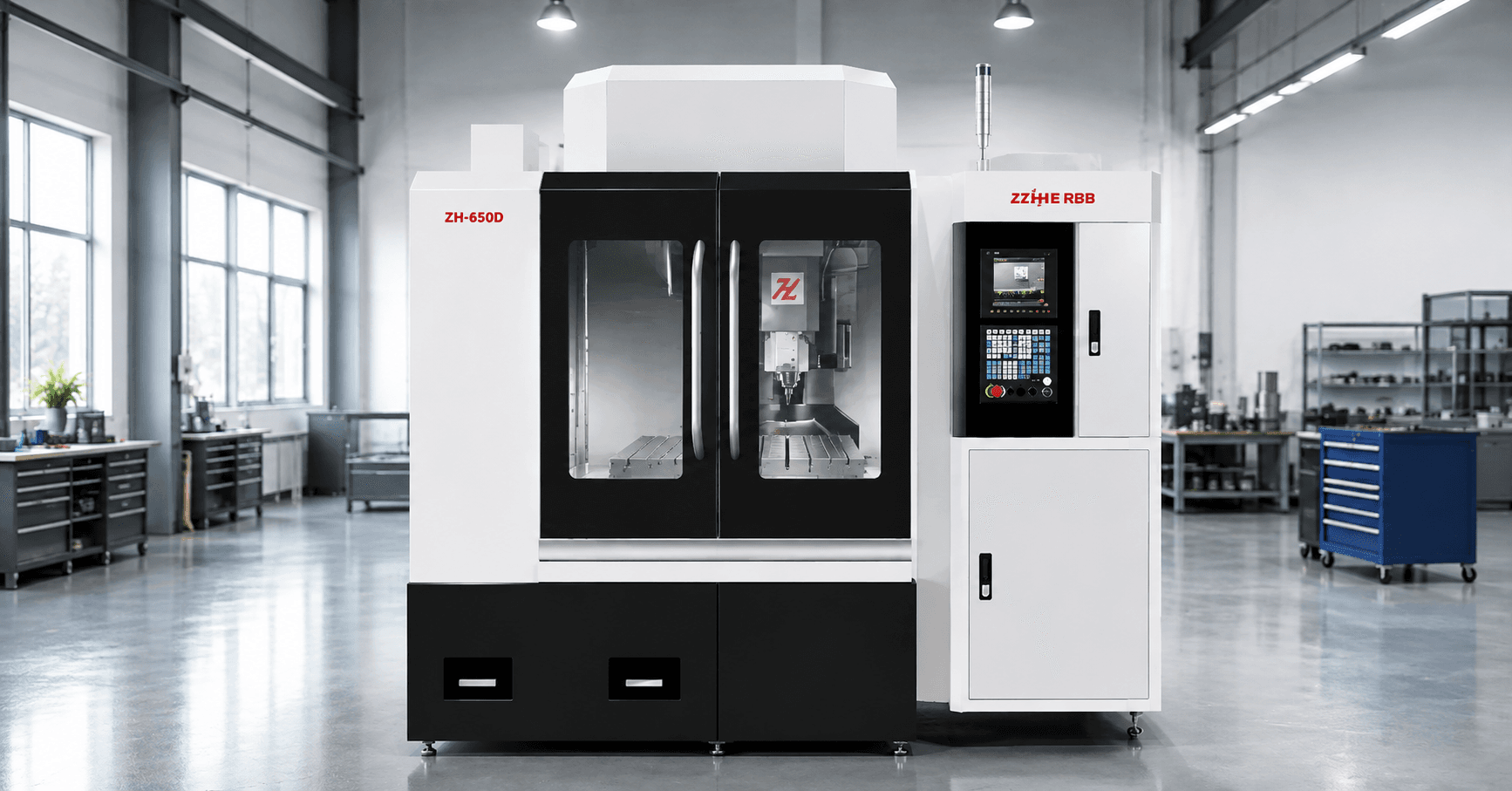
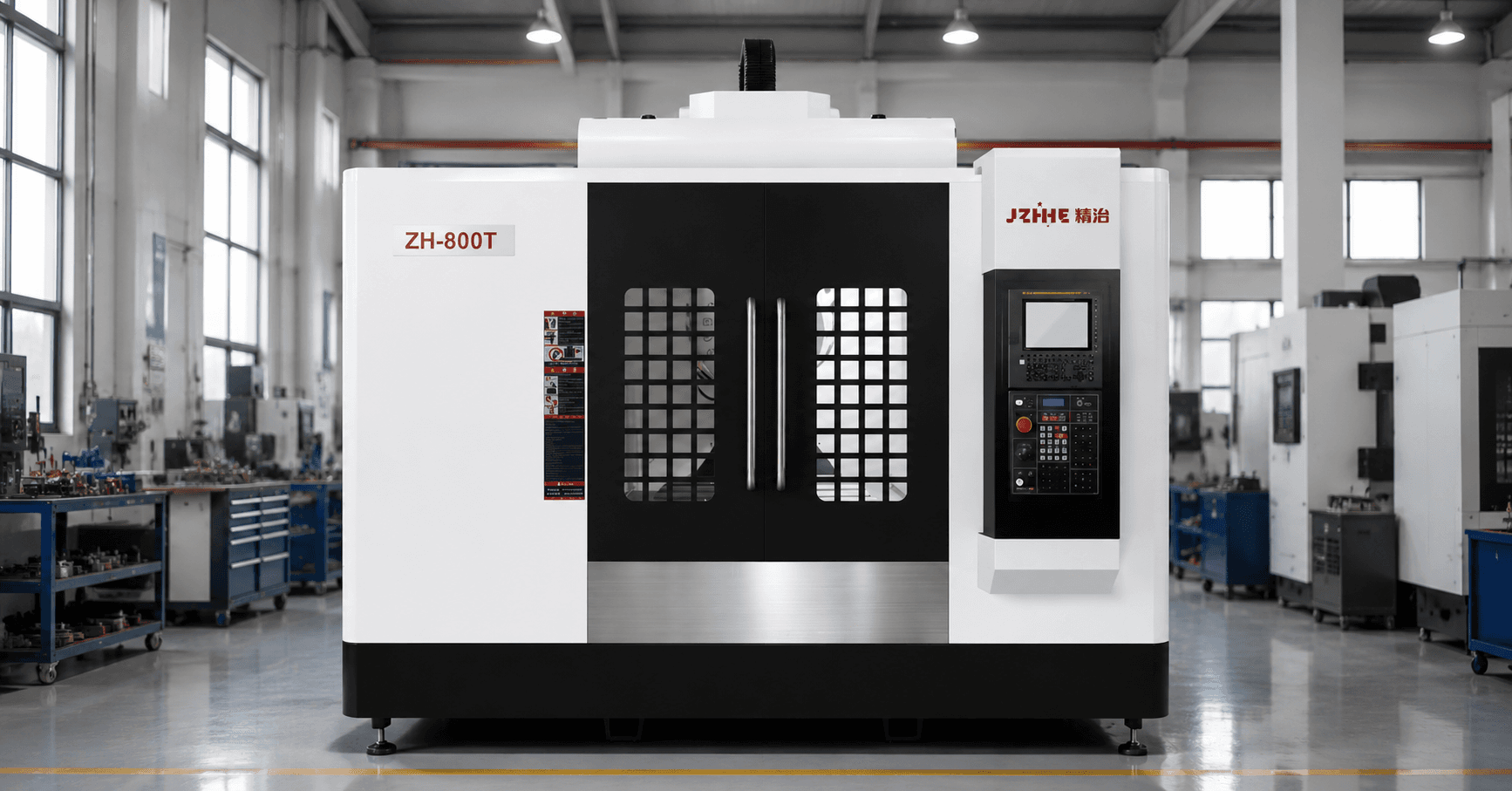
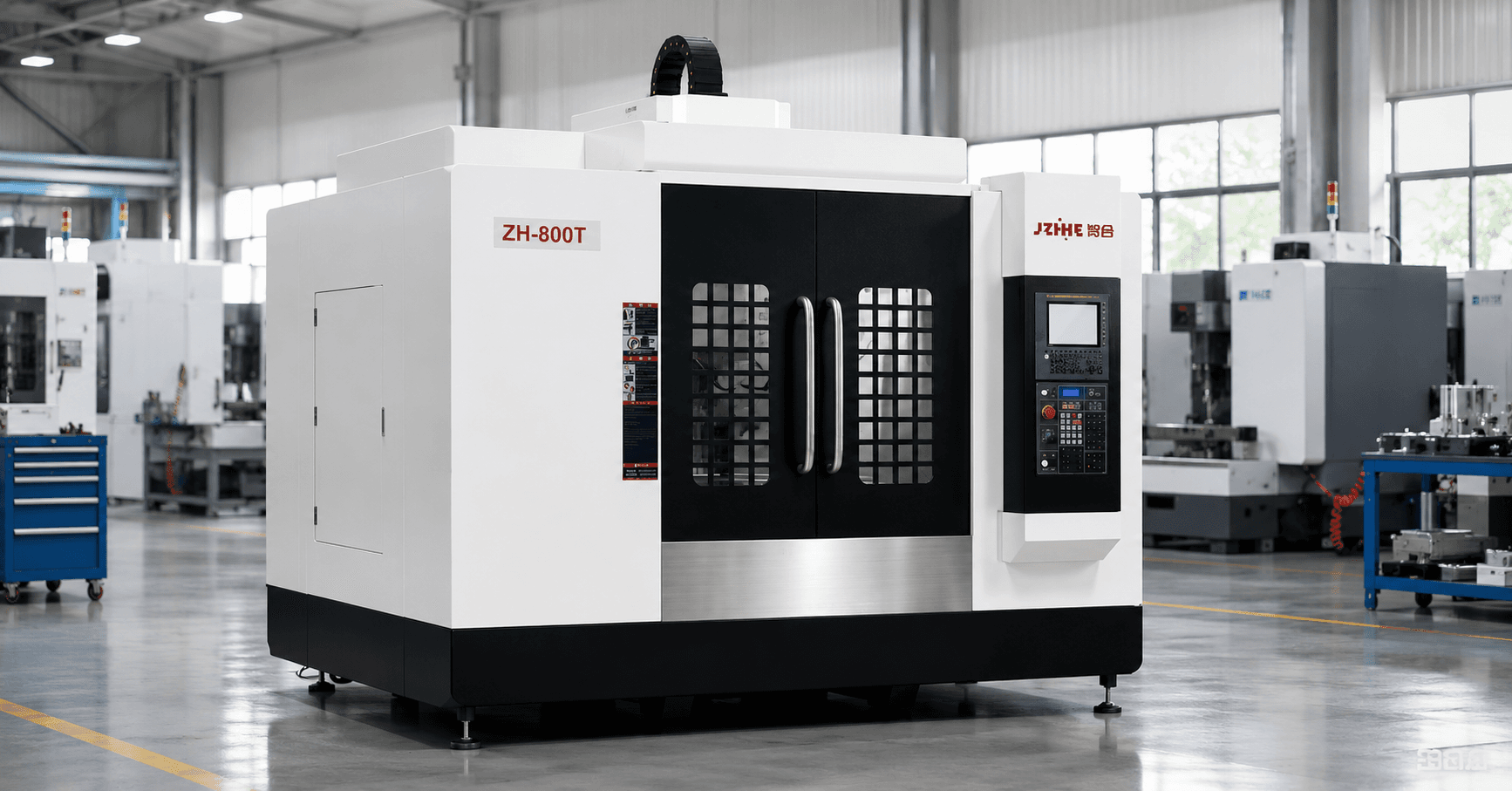
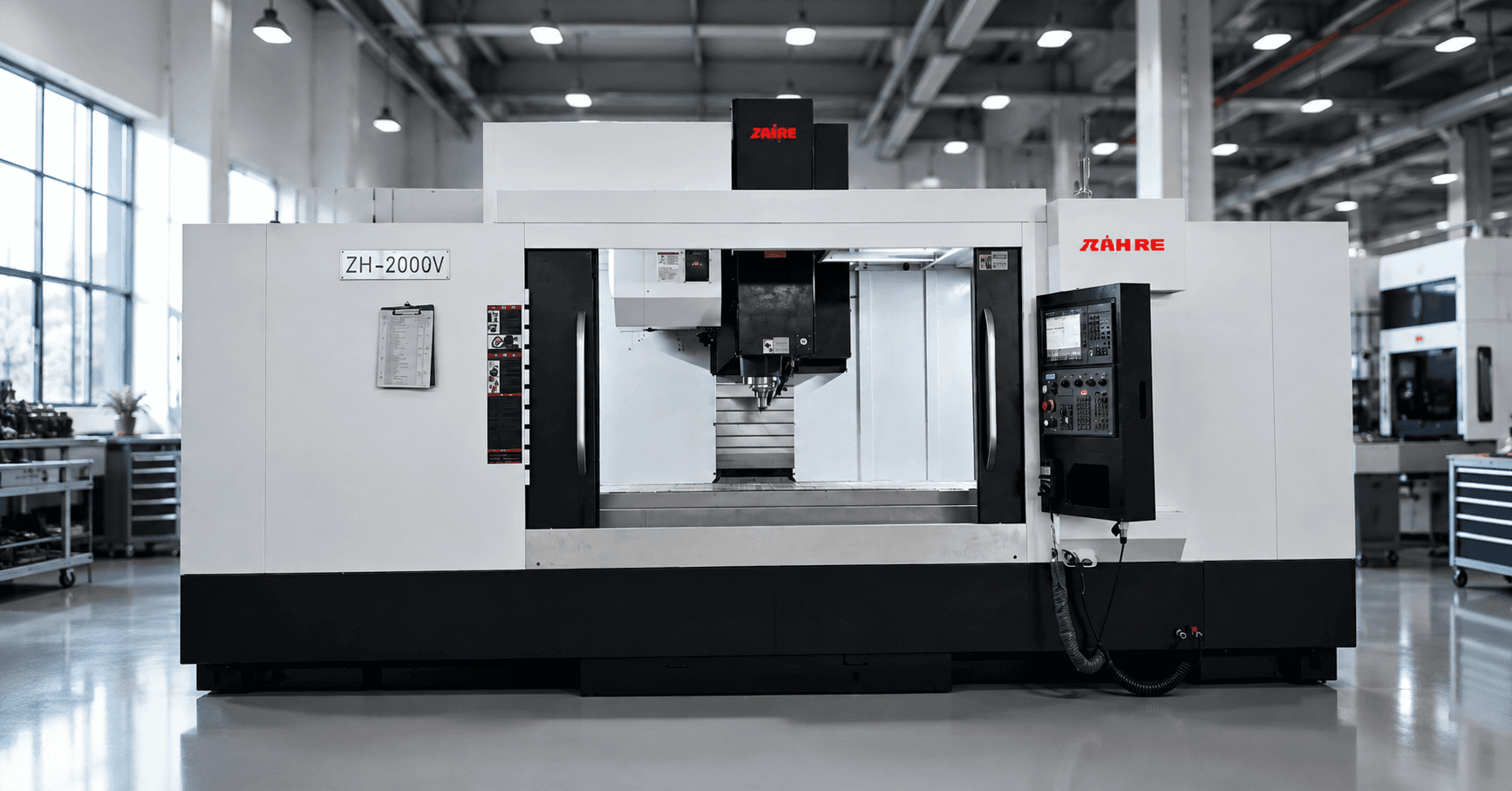
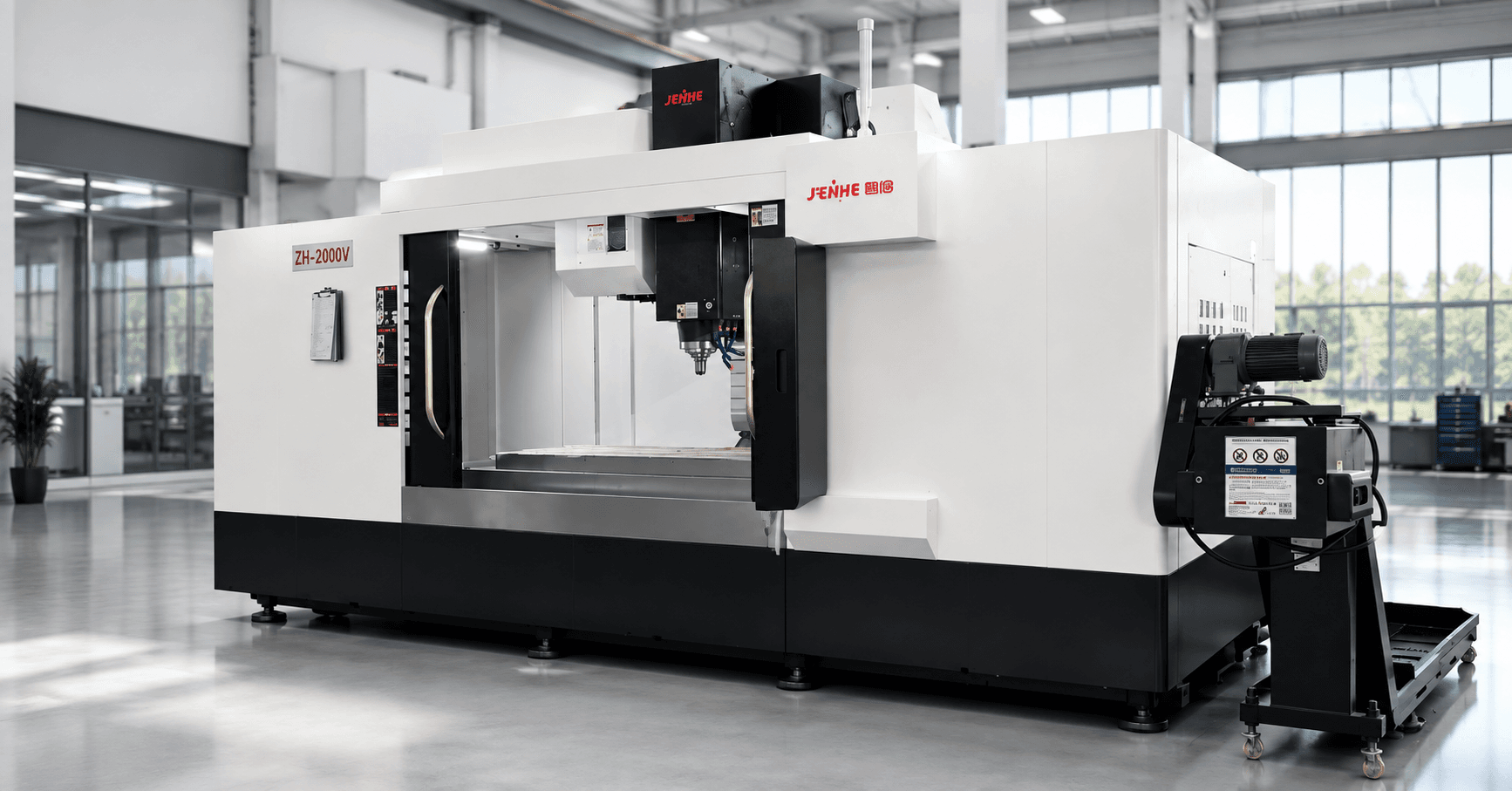
Put the drawing first. When most cuts come from above and the job changes often, a vertical machining center is usually the economical place to start. A housing with bores and mounting faces all around it points in another direction: a horizontal machining center may remove enough reclamping to justify the larger price tag. This is not a contest between two machine layouts. It is a routing decision.
Quotes can make that decision look simpler than it is. Spindle speed, travel, tool capacity, controller brand, and price sit neatly in columns. Setup hours do not. Neither do datum shifts after reclamping or the time an operator spends clearing chips from a deep pocket. The useful question is less tidy: which route produces acceptable parts repeatedly, with the least avoidable handling?
The vertical vs horizontal machining center comparison below follows the part routing rather than the brochure. It looks at a vertical machining center and a horizontal machining center through the work they must actually perform. It is intended for the people who will live with the result: the engineer planning the process, the production manager chasing output, and the buyer who has to defend the investment later.
VMC or HMC: What Is the Short Answer?
- Start with a VMC when most features are machined from above, product mix changes often, and simple setup access matters more than unattended output.
- Shortlist an HMC when the same part needs work on three or more faces, datum relationships are difficult to hold after reclamping, and volume is high enough for setup savings to repeat.
- Compare both routes when the part sits between those cases. A VMC with a rotary table may be the better investment, or it may only move the bottleneck into workholding and handling.
That is the practical answer. The rest of the article shows how to test it against your own drawing, production volume, staffing, and quality risk.
Which Part Drawing Details Determine Whether You Need a VMC or HMC?
Pick two drawings before opening the specification sheets: the awkward part that exposes the process risk and the part that consumes the most machine hours. One reveals whether the machine can do the work. The other reveals whether the investment can pay its way.
Mark up the drawings with the information below. A supplier can work with this; a request that says only "quote an 850 machine" leaves too much to guesswork.
- Stock: material grade, casting or billet condition, raw size, finished size, and weight.
- Access: the faces that need milling, drilling, boring, or tapping.
- Datums: features on different faces that must remain positionally related.
- Handling: the likely number of reclamps on a basic three-axis route.
- Demand: batch size, annual volume, shift pattern, and expected changeovers.
- Staffing: whether an operator stays close or the process is expected to run for longer periods on its own.
With this information, travel becomes a constraint rather than the entire selection method. The discussion can move on to fixture access, spindle torque, tool reach, chip flow, probing, and the number of operations that remain outside the machine.
Vertical vs horizontal machining center: the practical difference
| Decision factor | Vertical machining center | Horizontal machining center |
|---|---|---|
| Spindle direction | Vertical spindle approaches the work from above | Horizontal spindle approaches the work from the side |
| Typical work | Plates, molds, brackets, tooling, and small-to-medium precision parts | Housings, valve bodies, gearbox cases, automotive parts, and multi-face components |
| Operator access | Usually easier to see, load, probe, and adjust | Often requires more deliberate fixture and access planning |
| Multi-face machining | May require reclamping or an added rotary axis | Well suited to indexing several faces in one setup |
| Chip control | Chips can remain on horizontal surfaces and in pockets | Gravity generally helps chips fall away from the work area |
| Production style | Flexible job-shop work and frequent changeovers | Repeat production and processes where setup reduction matters |
| Investment | Typically lower machine, fixture, and integration cost | Typically higher initial cost, with potential savings per completed part |
The table is a starting point, not a purchasing rule. A well-configured VMC can outperform a poorly planned HMC process. An HMC can also be excessive for a shop that produces short runs of simple top-side parts. Machine architecture and production economics must be considered together.
Choose a VMC when flexibility matters more than multi-face output
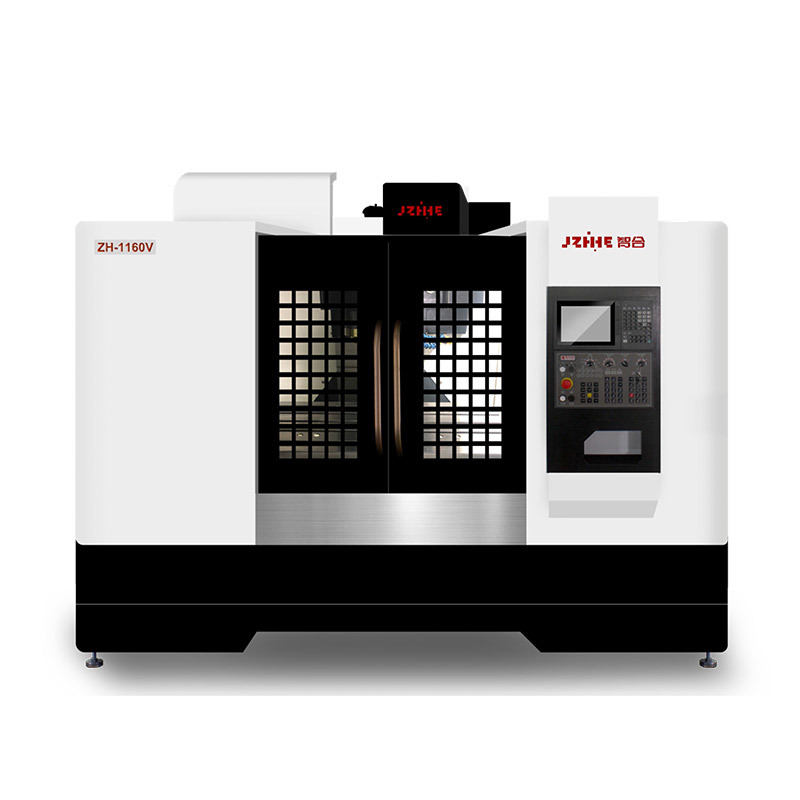
A VMC is often the most practical option when the workpiece can be completed mainly from one direction. The open visual relationship between the spindle, table, fixture, and part also makes process development easier for many teams.
Mold bases, plates, aluminum brackets, fixtures, and precision hardware are familiar VMC jobs. The layout also suits workshops where Monday's work has little in common with Friday's. On a 3 axis vertical machining center, a vise or fixture plate can be changed without turning every new part family into an integration project.
What the vertical layout gives the production team
- Lower entry cost compared with a similarly sized horizontal system.
- Good visibility during setup, proving, and first-piece inspection.
- One platform can move between milling, drilling, and tapping without unusual workholding.
- Standard vises, fixture plates, and common shop tooling are easy to source and reuse.
- A practical fit for mixed production and frequent engineering changes.
The trade-off appears when a part needs features on four sides. Each reclamping step adds handling time and creates another chance for datum error. Chips may also collect in deep pockets, which can affect tool life or surface finish if coolant and evacuation are not planned properly.
A fourth-axis rotary table can bridge part of this gap. It is worth considering when multi-side work is recurring but does not yet justify a full horizontal machining center. The fixture, rotary load, available work envelope, and tool access still need to be checked as one system.
Choose an HMC when repeated handling becomes the bottleneck
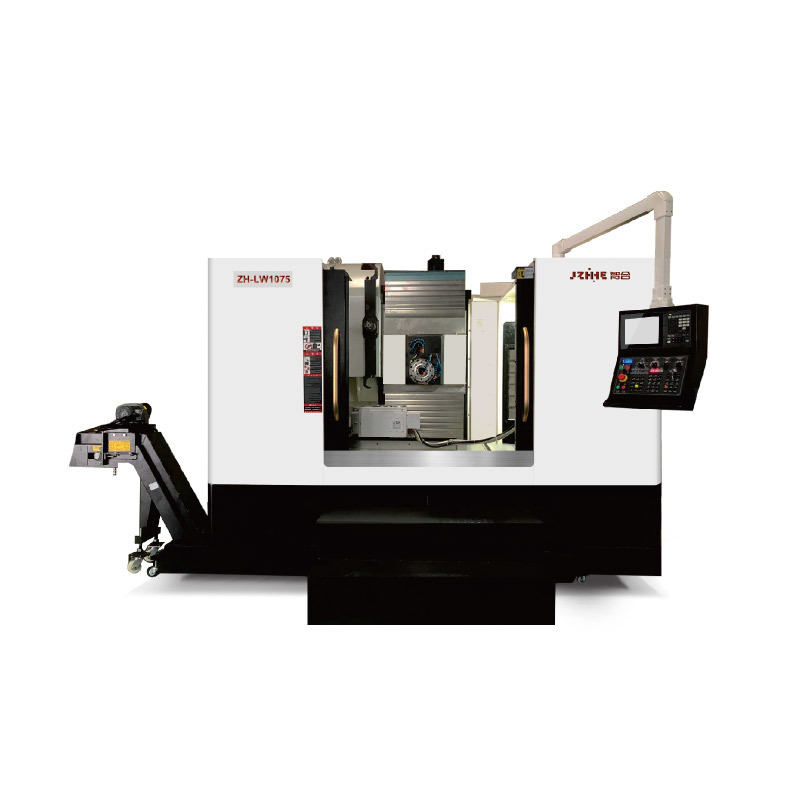
An HMC becomes attractive when several faces must stay related to the same datum. By indexing the workpiece, the machine can reach multiple sides without repeated manual reclamping. This is especially useful for box-type housings, hydraulic components, transmission parts, valve bodies, and other parts with bores or mounting features on different faces.
What changes when several faces stay in one setup
- Fewer setups for multi-face machining.
- Better control of positional relationships between faces.
- More natural chip fall away from the cutting zone.
- Stronger potential for palletized or longer-cycle production.
- Reduced operator handling when fixtures and programs are mature.
These advantages are not free. Fixture design is usually more demanding, programming and collision review need discipline, and the machine may require more floor space and supporting equipment. The business case is strongest when reduced setup time and consistent output are repeated over enough parts.
For example, a low-volume housing that changes every week may remain easier to manage on a VMC with a rotary fixture. A stable automotive housing produced month after month may justify an HMC because the saved setups accumulate across the full production year.
Picture the route for one gearbox housing
On a VMC, the operator may machine the top face, turn the part, locate a fresh datum, and repeat the process for the remaining sides. That route can be perfectly reasonable for prototypes or short batches. The risk grows when every move affects bores and mounting faces that must remain related.
On an HMC, the same housing can be indexed so several faces are reached from one fixture. The benefit is not simply a sideways spindle. It is less handling between related features. The limitation is that the fixture, program, collision checks, and production volume must be mature enough to earn back the added complexity.
What does the accuracy number mean for your part?
The buyer does not receive value from an accuracy figure on a quotation. The value appears when a bore, surface, or hole pattern stays within tolerance across repeated parts. Ask which feature was measured, over what travel, after how much warm-up, and in which fixture. A vertical or horizontal spindle alone does not answer those questions.
It also helps to separate positioning accuracy from repeatability. The International Organization for Standardization describes ISO 230-2 as a method for testing the accuracy and repeatability of positioning of numerically controlled machine-tool axes. In practical purchasing terms, a supplier should be able to explain how a stated accuracy was measured, on which model, under what conditions, and whether an inspection report is available.
In plain terms, laser interferometer calibration checks whether an axis goes where the control says it went. Ballbar testing checks how well several axes move together on a circular path. Renishaw's ballbar testing overview explains the method in more detail. These tests help diagnose the machine, but neither replaces a trial cut based on the buyer's critical features.
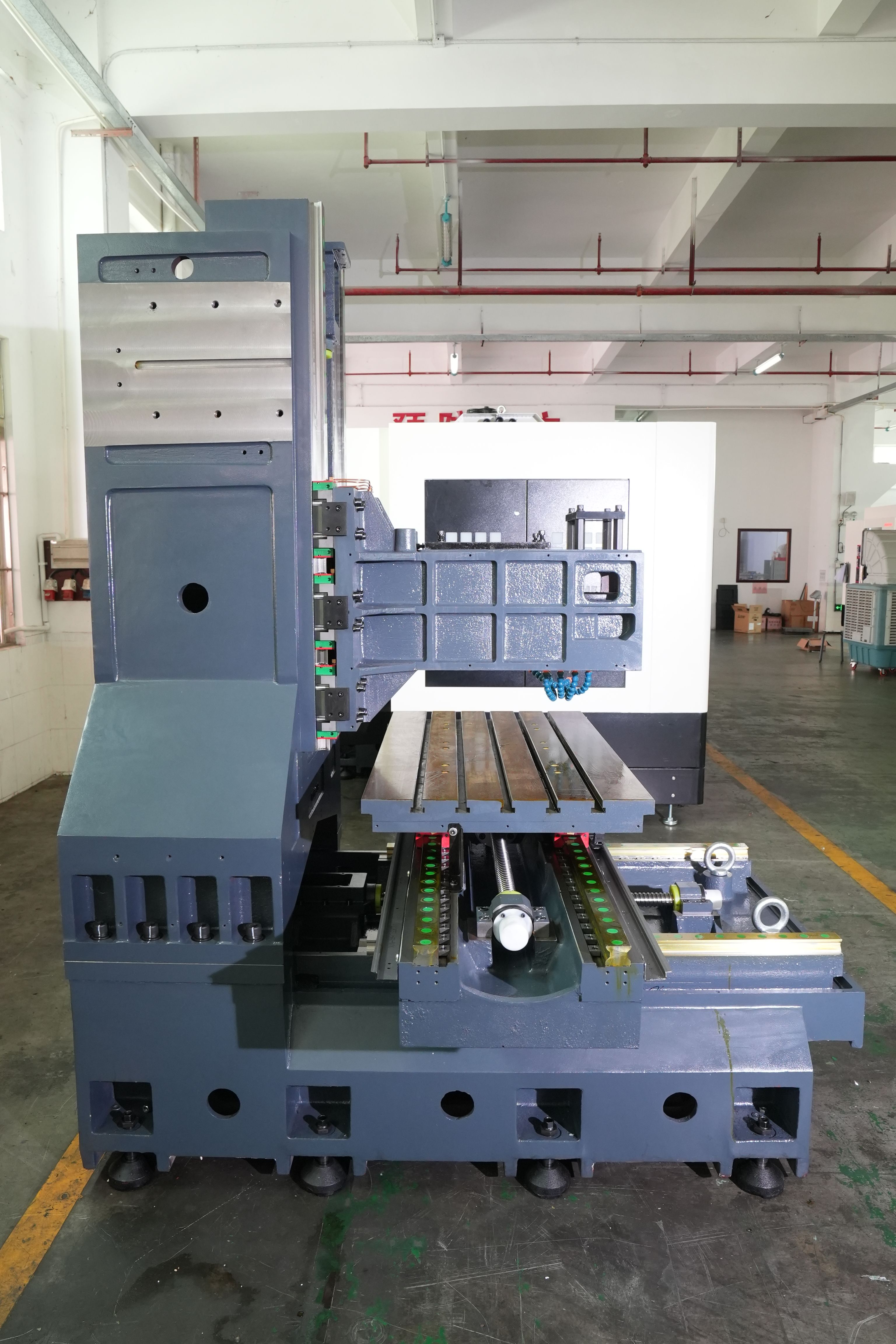
A report proves one part of the story. A sensible acceptance plan adds a trial cut that stresses the feature relationships the buyer actually cares about. Share the drawing, material, tentative fixture, critical dimensions, and inspection method before the test is agreed. A generic aluminum block may show that the machine cuts; it may say very little about a long bore through a cast-iron housing.
Which machine costs less per acceptable part?
A vertical vs horizontal machining center decision becomes clearer when both routes are priced per acceptable finished part, not per machine.
A vertical machining center usually wins the first-price comparison. That does not always mean it is the lower-cost production choice. An HMC may recover part of its higher investment by reducing setups, operator handling, work-in-process, and alignment errors.
Build the comparison around the full routing:
- Estimate cycle time for each operation.
- Add loading, unloading, probing, washing, and manual repositioning time.
- Count the fixtures and setup qualifications required.
- Estimate tool consumption and chip-clearing interruptions.
- Include expected rework or scrap risk at every reclamping step.
- Compare output over a shift, month, and year.
This calculation does not need false precision. Even a simple range is better than comparing machine prices without the production route. If the HMC saves only a few minutes on a small annual batch, the VMC may remain the sound choice. If it removes two setups from a high-volume housing, the result can look very different.
What should a useful machine quotation include?
A useful RFQ should make it difficult for the supplier to return a generic answer. Send enough information for an engineering discussion:
- 2D drawing and, when available, a 3D model.
- Material condition and any hard spots, cast surfaces, or interrupted cuts.
- Raw and finished workpiece dimensions and weight.
- Critical tolerances, datum relationships, and surface requirements.
- Batch size, annual volume, shift pattern, and changeover frequency.
- Preferred controller, tool interface, probing, coolant, and automation needs.
- Factory limitations such as floor space, crane access, power, and foundation.
Then ask the supplier to return a proposed process, not only a specification sheet. The response should explain machine type, travel margin, spindle torque and speed range, tool capacity, fixture concept, expected setups, inspection plan, delivery scope, installation, training, and after-sales support.
How Zhihe CNC turns a drawing into a machine recommendation
Zhihe CNC began operations in Zhongshan, Guangdong, in 2018. Its range now spans vertical, horizontal, gantry, drilling and tapping, milling, and five-axis machining centers. The company's published profile lists more than 21 patents, including work related to spindle structures, tool magazines, guide structures, fixtures, and coolant systems.
For selected models, published positioning accuracy may reach +/-0.005 mm and repeatability +/-0.003 mm, depending on the machine series, travel, and configuration. Those figures are useful for shortlisting. For acceptance, Zhihe can support laser interferometer calibration, ballbar testing, and trial cutting as part of a project-specific verification plan. The purpose is to connect the specification to the feature the customer actually needs to hold.
The most useful starting point is not a model number. Send the workpiece material, size, accuracy requirement, production volume, and drawing. Zhihe's engineering team can then compare a vertical and horizontal solution around the process that the part actually needs.
The product range provides a first look at the available machine layouts. The factory and company profile adds context on manufacturing and inspection. When the shortlist is ready, send the part information and ask for a process-based recommendation rather than a model-only quotation.
Questions buyers ask before sending an RFQ
Will an HMC automatically cut the part faster?
No. Its advantage often appears between cuts: fewer reclamps, less handling, and better access to several faces. A simple plate may still move through a VMC with less fuss and a shorter overall route.
Which machine is better for mold making?
A VMC is commonly used for small and medium molds, plates, and mold bases. Large molds may require a gantry machining center, while complex surfaces may justify five-axis capability.
Which machine is better for box-type parts?
An HMC is usually a strong candidate because several faces can be machined from one fixture and chips tend to leave the cutting area more easily.
Can a fourth-axis VMC replace an HMC?
For some part families, yes. A rotary table can reduce reclamping and provide access to multiple sides. Check rotary load, fixture clearance, travel, tool reach, and the required output before deciding.
Why is a horizontal machining center usually more expensive?
The machine structure, rotary table, chip-management system, fixture requirements, and possible pallet or automation configuration generally increase the initial investment.
What information is needed for an accurate machine quotation?
Provide the drawing, material, raw and finished size, weight, critical tolerances, batch size, annual volume, controller preference, and any automation or inspection requirements.
How should machine accuracy be checked before delivery?
Agree on model-specific geometric and positioning checks, review available laser and ballbar reports, and arrange a trial cut when the part risk justifies it.
Does a VMC have problems with chip evacuation?
Not necessarily, but chips can remain in pockets or on horizontal surfaces. Coolant delivery, enclosure design, chip flushing, and cutting strategy should match the material and part geometry.
When does an HMC make financial sense?
It becomes easier to justify when stable production volume allows setup reduction, multi-face machining, chip control, and unattended time to generate recurring savings.
What is the best next step before choosing a model?
Ask the supplier to compare both machine layouts using one representative part and a proposed process. That discussion is more valuable than selecting a model from travel and spindle speed alone.
Need a machine recommendation? Send Zhihe CNC one representative part drawing with the material, raw size, critical tolerances, expected batch size, and annual volume. Ask the engineering team to return a route comparison: likely setups, fixture approach, inspection plan, and the reason a vertical or horizontal machining center is the better starting point. That gives your team something concrete to review before discussing a model number.