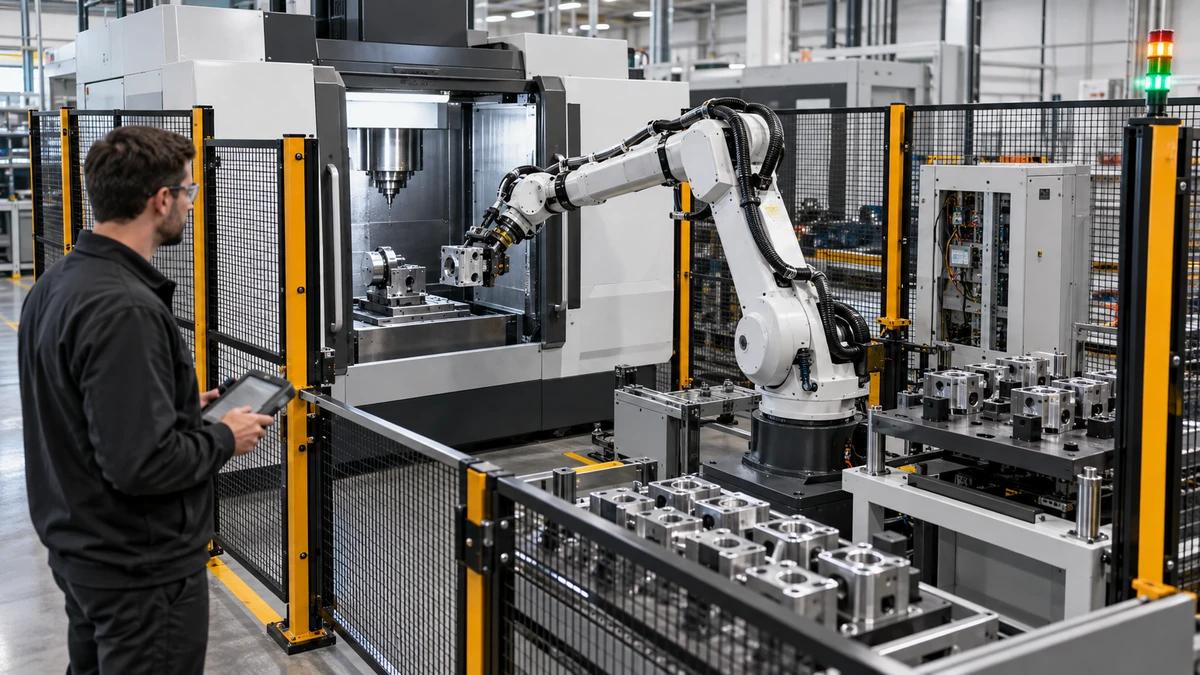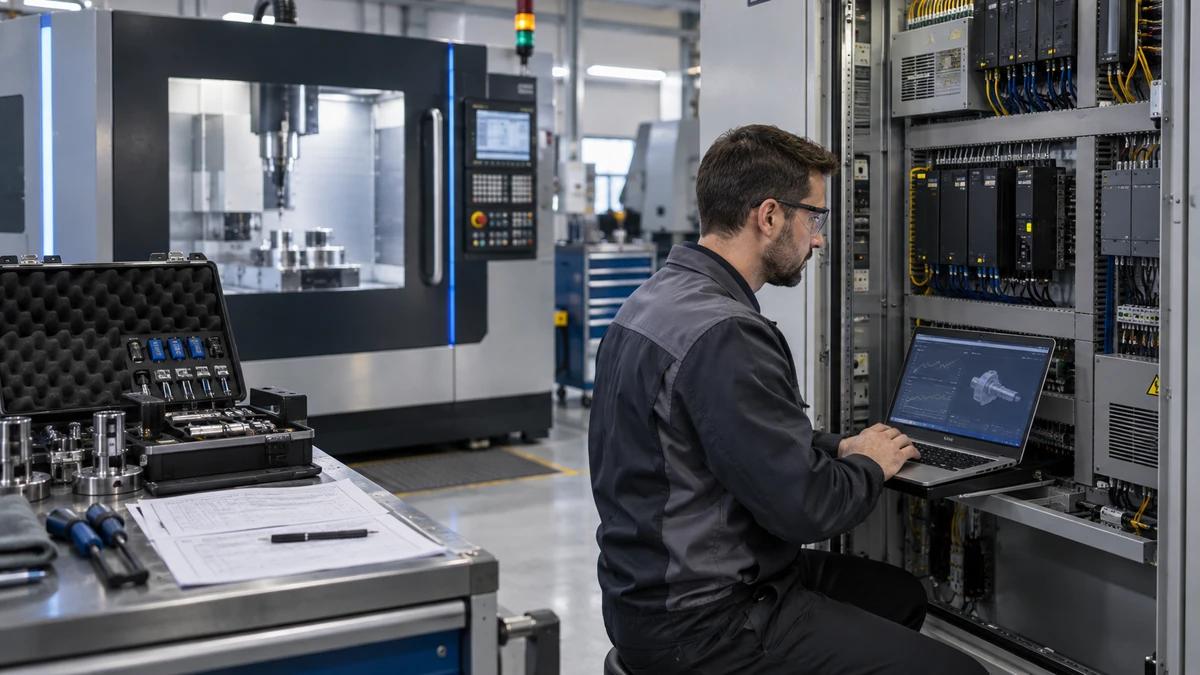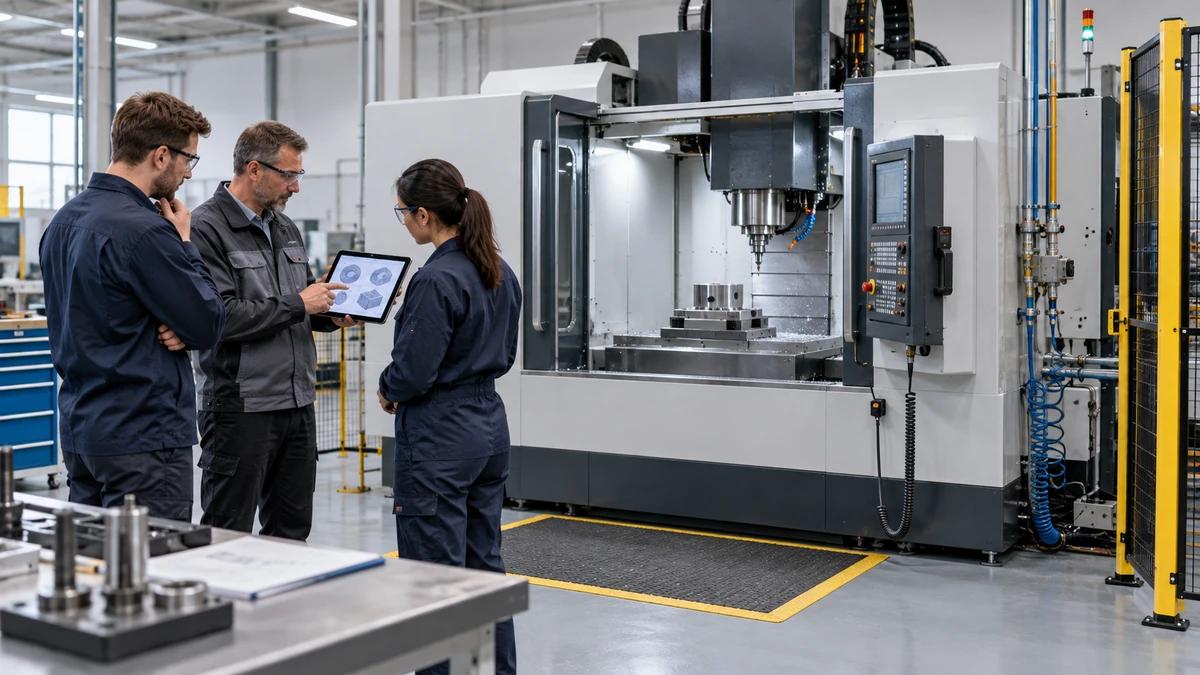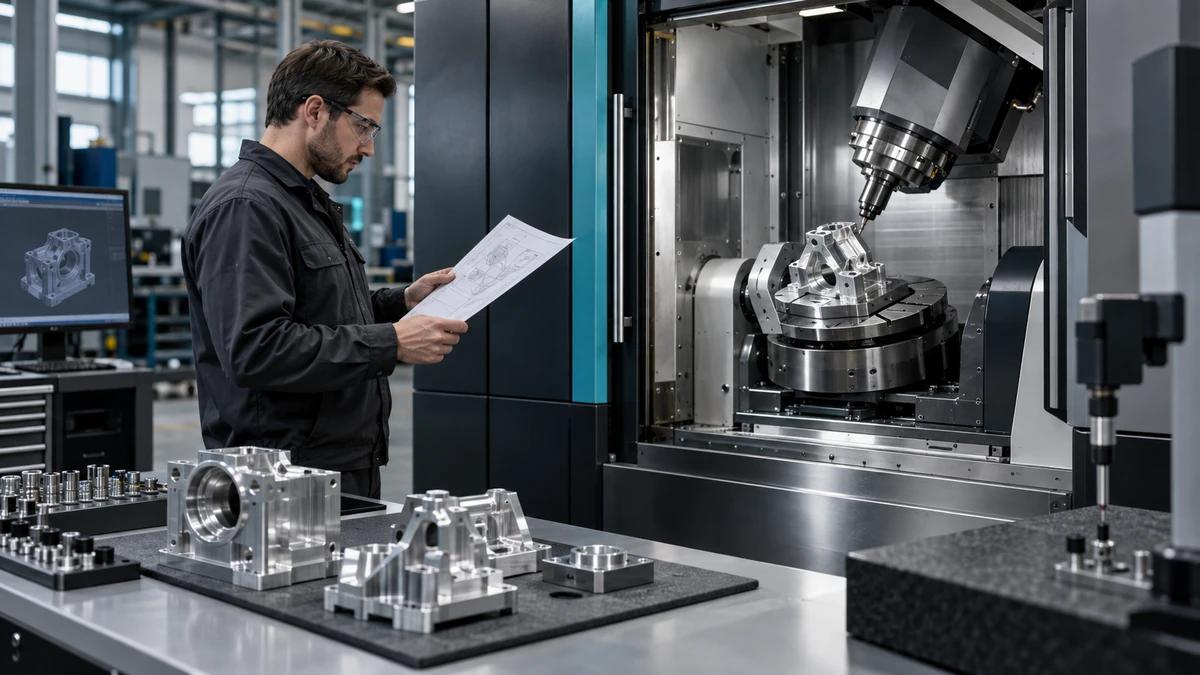
An OEM CNC machine manufacturer should be evaluated by the evidence that turns a pilot build into a repeatable production release. A painted machine, a short cutting video, or an approved sample can all look convincing while leaving ownership, configuration, and change control unresolved. The useful deliverable is a pilot release dossier: one controlled file that shows what was ordered, what was tested, what changed, and what both sides accepted.
This guide is for sourcing managers, manufacturing engineers, plant leaders, and integrators preparing a private-label or customized CNC machine program. It does not prescribe a universal machine specification. Instead, it explains how to connect the commercial agreement, engineering baseline, factory trial, site handoff, and series-build decision without relying on memory.
Begin With the Release Question
Before discussing badges, colors, or annual quantity, write one question at the top of the project file: what evidence must exist before the pilot configuration may be repeated?
The answer should name the representative part or process, the approved machine configuration, the acceptance boundary, open deviations, documentation package, site responsibilities, and final release authority. Without that definition, a pilot can finish successfully while the parties disagree about what was actually proven.
An OEM CNC machine manufacturer may control the mechanical build while a control supplier, tooling partner, local distributor, or buyer controls another part of the delivered system. The dossier should follow those boundaries. It should not imply that one company owns work performed by another.
Freeze the Commercial and Technical Baselines Separately
The purchase specification answers what is being bought. The technical baseline answers which exact configuration was tested. Keep both records, link their revisions, and require an owner for every difference.
The commercial baseline normally covers scope, quantity assumptions, delivery terms, payment milestones, warranty boundaries, language, training, and exclusions. The technical baseline may include the machine model, control, spindle, tool magazine, coolant arrangement, chip handling, probing, workholding interface, electrical standard, guarding, documentation revision, and approved options.
Do not write "standard configuration" without attaching the standard. If a component can change by region or availability, state the approved substitution method before the pilot. NIST's overview of quality management systems is useful context for controlling processes and records; it is not evidence that a particular supplier or machine is certified.
Assemble a Dossier That Survives Staff Changes
A release file should be usable by someone who did not attend the kickoff meeting. The following structure keeps the evidence findable.
| Dossier section | Minimum content | Release owner |
|---|---|---|
| Scope record | Ordered configuration, exclusions, destination, interfaces | Commercial lead |
| Design baseline | Controlled drawings, option list, software and parameter versions | Engineering lead |
| Risk register | Open assumptions, consequence, mitigation, due date | Program manager |
| Trial record | Test method, instruments, results, raw files, deviations | Acceptance lead |
| Change log | Request, reason, affected documents, approval, effective unit | Change authority |
| Handoff pack | Manuals, backups, spares, training, installation inputs | Service lead |
| Release decision | Accepted limits, residual actions, serial-build authorization | Named approver |
The point is not document volume. A thin, controlled dossier is stronger than a large folder of unlabeled screenshots. Each record needs a date, revision, machine identity, author, and approval state.
Choose a Pilot That Can Fail Usefully
The easiest demonstration part is rarely the best pilot. Select work that exposes the decision: a difficult feature relationship, a long cycle with thermal change, a demanding chip path, a tool-change sequence, or an interface that depends on the ordered option set.
Include the largest and smallest relevant variants when one part cannot represent the family. Record blank condition, material, workholding, tool assemblies, offsets, coolant, program revision, inspection method, and operator actions. If the buyer supplies the process, say so. If the supplier develops it, define who owns the final files and who may revise them.
The pilot should create information even when a result misses the target. A planned stop rule, measurement method, and deviation form turn a miss into an engineering decision rather than a disagreement.
Convert Requirements Into Testable Statements
Terms such as accurate, stable, production-ready, or easy to service are too broad for acceptance. Rewrite each important requirement as an observable test with a defined condition.
For example, instead of requesting "stable production," identify the representative cycle, duration, environmental assumptions, measurement interval, characteristic, instrument, and decision rule. Instead of "complete documentation," list the manual languages, wiring documents, parameter backup, alarm list, maintenance schedule, and file formats required.
An OEM CNC machine manufacturer should be able to identify which results depend on the machine as supplied and which depend on tooling, fixtures, material, programming, utilities, or the operator. That distinction prevents a process result from being misrepresented as an unconditional machine guarantee.
Track Every Deviation Before It Becomes the New Standard
Pilot projects change. A sensor moves, a supplier substitutes a component, a fixture gains height, a parameter is tuned, or the buyer changes a part revision. The danger is not change itself; it is an undocumented change that quietly becomes the series baseline.
Use a short deviation form containing the requested change, reason, affected unit, safety and performance review, documents to update, validation required, cost or schedule effect, approvers, and effective serial number. Photograph labels only as supporting evidence, not as the sole configuration record.
No open deviation should disappear into meeting notes. Close it by incorporating the change, rejecting it, limiting it to the pilot, or accepting it as a named residual condition.
Separate Factory Acceptance From Site Acceptance
Factory acceptance can verify the build, specified functions, selected process trials, documentation, and shipment readiness under factory conditions. Site acceptance confirms the installed machine with destination utilities, foundation, extraction, safety integration, local tooling, and production staff.
These are linked gates, not interchangeable events. The CNC machine acceptance test guide can help buyers organize evidence, while the installation and training handoff frames the receiving side. The purchase agreement should state which unresolved factory items may travel to site and who owns them.
Audit the Serial-Build Repetition Path
One accepted pilot does not prove that unit two will match it. Before release, walk through how the approved baseline becomes a work order, bill of materials, software load, inspection plan, label set, document pack, and shipment record for later units.
Ask the OEM CNC machine manufacturer to trace one critical option and one software or parameter item through the planned build system. Check how an obsolete component, supplier change, or engineering correction reaches units already ordered. NIST's manufacturing improvement resources provide broader context for disciplined operational improvement.
The buyer should also decide whether a repeat unit needs a full acceptance trial, a reduced verification, or sampling. Tie that decision to risk and change history, not only to order quantity. This is where an OEM CNC machine manufacturer demonstrates that pilot learning reaches later serial numbers.
Score Evidence, Not Presentation Quality
Use a weighted scorecard after the acceptance criteria are fixed. A polished meeting should not outweigh an unresolved interface.
| Review area | Strong evidence | Warning sign |
|---|---|---|
| Configuration | Revision-controlled option and software baseline | Generic brochure or undated list |
| Pilot method | Representative part, stated conditions, raw results | Edited video without test record |
| Change control | Named authority and effective-unit traceability | Verbal approval only |
| Series repeatability | Build traveler and verification route | "Same as sample" without records |
| Handoff | Site inputs, backups, training and spares assigned | Documentation promised after shipment |
| Support boundary | Escalation path and response ownership defined | Manufacturer, dealer and integrator point elsewhere |
Keep comments beside every score. The goal is to expose the next decision, not to manufacture a high total.
Protect Serviceability and Lifecycle Records
The release dossier should continue working after installation. Include parameter and software backups, consumable and spare-part references, maintenance tasks, alarm escalation, service access requirements, and the owner of future updates. The CNC machine spare-parts planning guide helps frame stocking decisions without assuming every component belongs on site.
For private-label programs, define how the end user identifies the machine when requesting support. Decide which serial number, documentation portal, brand name, and service channel controls the case. A hidden identity chain can delay troubleshooting even when the technical answer is available.
Keep Branding Downstream of Engineering Release
Branding matters, but it should follow the controlled configuration. Approve nameplates, colors, interface language, manuals, packaging, and marketing claims against the released machine. Do not let a badge approval imply that technical acceptance is complete.
Check ownership of photos, drawings, software, translated content, and model names. Also define which party may make performance claims. The safest claim is one tied to a stated configuration and test condition, not a broad statement that every future application will achieve the pilot result.
Run a Final Release Meeting With Three Outcomes
At the release meeting, every item should end in one of three states: released for series production, conditionally released with named actions and limits, or not released. Avoid "mostly complete." It hides whether a unit may actually be built and shipped.
Read the configuration, deviations, trial summary, site prerequisites, documentation gaps, and commercial effects aloud. Record the decision owner and effective unit. Send the approved index of records with the decision, so the release can be reconstructed later.
Questions Procurement Teams Ask
What is the main purpose of a pilot release dossier?
It creates one traceable link between the ordered scope, tested configuration, accepted evidence, open deviations, and permission to repeat the build. It reduces reliance on individual memory.
Is a successful sample part enough to release production?
No. A sample may demonstrate a process under stated conditions, but it does not by itself prove configuration control, documentation, repeat-build routing, support ownership, or site readiness.
What should an OEM CNC machine manufacturer own?
Ownership should follow the contract and real work split. The manufacturer commonly owns its machine build and records; tooling, process engineering, automation, local integration, and installation may have different owners.
How many parts should a pilot run include?
There is no universal count. Choose a duration and quantity that expose the relevant risks, such as repeated loading, tool changes, thermal behavior, chip handling, inspection, and restart conditions.
Can factory acceptance replace site acceptance?
No. Factory acceptance tests the agreed scope at the builder's facility. Site acceptance addresses destination utilities, installation, local interfaces, operators, and production conditions.
How should substitutions be approved?
Use a controlled request that states the reason, affected requirements, validation, document updates, cost or schedule effect, approvers, and the first serial number using the substitute.
Who owns the process program after the pilot?
The contract should name the owner and permitted users of CNC programs, posts, macros, parameters, fixtures, drawings, and inspection routines. Do not infer ownership from who created a file.
What evidence matters for repeat machines?
Keep the released bill of materials or option baseline, software versions, build and inspection records, controlled changes, serial-number traceability, and the agreed repeat acceptance method.
Should a buyer require certification?
Require only certifications that matter to the destination, contract, and risk. Verify their scope and validity directly; do not treat a logo or a general quality statement as machine-specific proof.
When is the pilot ready for a conditional release?
Only when remaining items have named owners, deadlines, limits, verification methods, and an explicit decision that they do not block the defined series scope.
Release the Evidence Before the Series Order
When evaluating an OEM CNC machine manufacturer, send Zhihe CNC the controlled drawings, intended part family, destination requirements, option list, production assumptions, acceptance priorities, branding scope, and service model. Review the relevant vertical machining centers, milling machining centers, or the wider product range, then contact Zhihe CNC to build a pilot dossier around a real configuration. The goal is a defensible release decision, not a decorative approval badge.